

What are the new challenges of sustainable condominium management?
What are the new challenges of sustainable condominium management?
Dicas para Síndicos e PMES
 06/11/2026
 5 min
For many years, sustainability played a secondary role in condominium management. When it came up at residents’ meetings, it was usually associated with replacing light bulbs in communal areas, installing recycling bins or running occasional awareness campaigns. These initiatives remain important, but they are no longer enough to meet the expectations of the market, residents or the way modern condominiums operate.
Since 2020, a series of economic, social and technological changes has profoundly altered the way condominium managers, managing agents and management committees need to approach sustainability. Rising operating costs, the growing prominence of ESG, the increased value placed on sustainable properties, the wider adoption of electric vehicles, the digitalisation of management and the increasingly visible effects of climate change have made the subject significantly more complex.
As a result of this transformation, sustainability is no longer treated as a set of isolated initiatives and has become part of developments’ long-term strategy. Today, managers need to balance financial efficiency, modernisation, property value, quality of life and environmental responsibility within a single agenda.
Against this backdrop, a new figure is emerging in the condominium market: the Green Visionary Condominium Manager. This is not simply a manager concerned about environmental issues, but a leader capable of using sustainability as a tool for organisation, predictability and enhancing the condominium’s value.
Challenge 1: engaging residents with different priorities
Perhaps no challenge is as complex as resident engagement. Virtually every condominium includes a diverse range of profiles, expectations and priorities. Some residents closely follow sustainability issues and enthusiastically support environmental investment. Others focus primarily on reducing service charges. There are also those who resist any change that disrupts established routines.
This diversity means that excellent initiatives can face difficulties in gaining approval or being implemented. A water reuse project, for example, may seem an obvious step to some residents, while others question its upfront cost or whether it is genuinely needed. The same applies to consumption monitoring systems, electric vehicle charging stations or innovative energy solutions.
The best way to address this challenge is to build a narrative around tangible benefits. Rather than presenting sustainability solely as an environmental cause, the manager should demonstrate how a particular action can improve residents’ lives. Less waste, greater financial predictability, enhanced property values and modernised infrastructure tend to win more support than exclusively environmental arguments.
It is also important to involve residents from the earliest stages of projects. Opinion surveys, advisory groups and preliminary presentations reduce resistance and strengthen the sense of participation in decision-making.
Challenge 2: balancing sustainability and financial control

Until a few years ago, many people believed that sustainability meant higher expenditure. Although this perception is changing, it remains a significant challenge for condominium managers and managing agents.
The reality is that many sustainable measures have the potential to reduce waste and improve efficiency. Problems arise when projects are implemented without adequate technical, financial and operational feasibility studies. In such cases, even a good idea can deliver results below expectations.
Imagine a condominium that decides to invest in sophisticated technology without properly analysing how it will be used in the future. If resident uptake is low or maintenance costs outweigh the benefits, perceptions of sustainability could be damaged for years to come.
Modern sustainable management therefore requires a rigorous financial approach. Before implementing any solution, it is essential to assess indicators such as the initial investment, the projected impact on the budget, maintenance costs, the solution’s service life and its potential to create value for the development.
Transparency is also essential. The more clearly the condominium manager can demonstrate where funds will be spent and what results are expected, the greater residents’ trust is likely to be.
Challenge 3: adapting condominiums to the arrival of electric vehicles
The growth of electric vehicles has brought condominiums a discussion that barely existed before 2020. As more residents start using electrified vehicles, demand for charging infrastructure is growing. What appears to be a straightforward installation of chargers in the car park often involves far more complex technical, financial, operational and legal issues.
Many developments were designed at a time when no one envisaged this type of requirement. As a result, their electrical infrastructure may not have sufficient capacity to support multiple chargers operating simultaneously.
Alongside the technical assessment, there is the challenge of managing costs. How should individual energy consumption be recorded? How can other residents be prevented from subsidising private expenses? How can the safe use of equipment be ensured?
The solution lies in planning. Before approving any project, it is advisable to commission specialist studies of the existing infrastructure, assess future demand growth scenarios and establish clear rules for using the equipment. Condominiums that anticipate this trend will find it easier to meet new demands without compromising the operation of their existing infrastructure.
Challenge 4: turning environmental data into management decisions
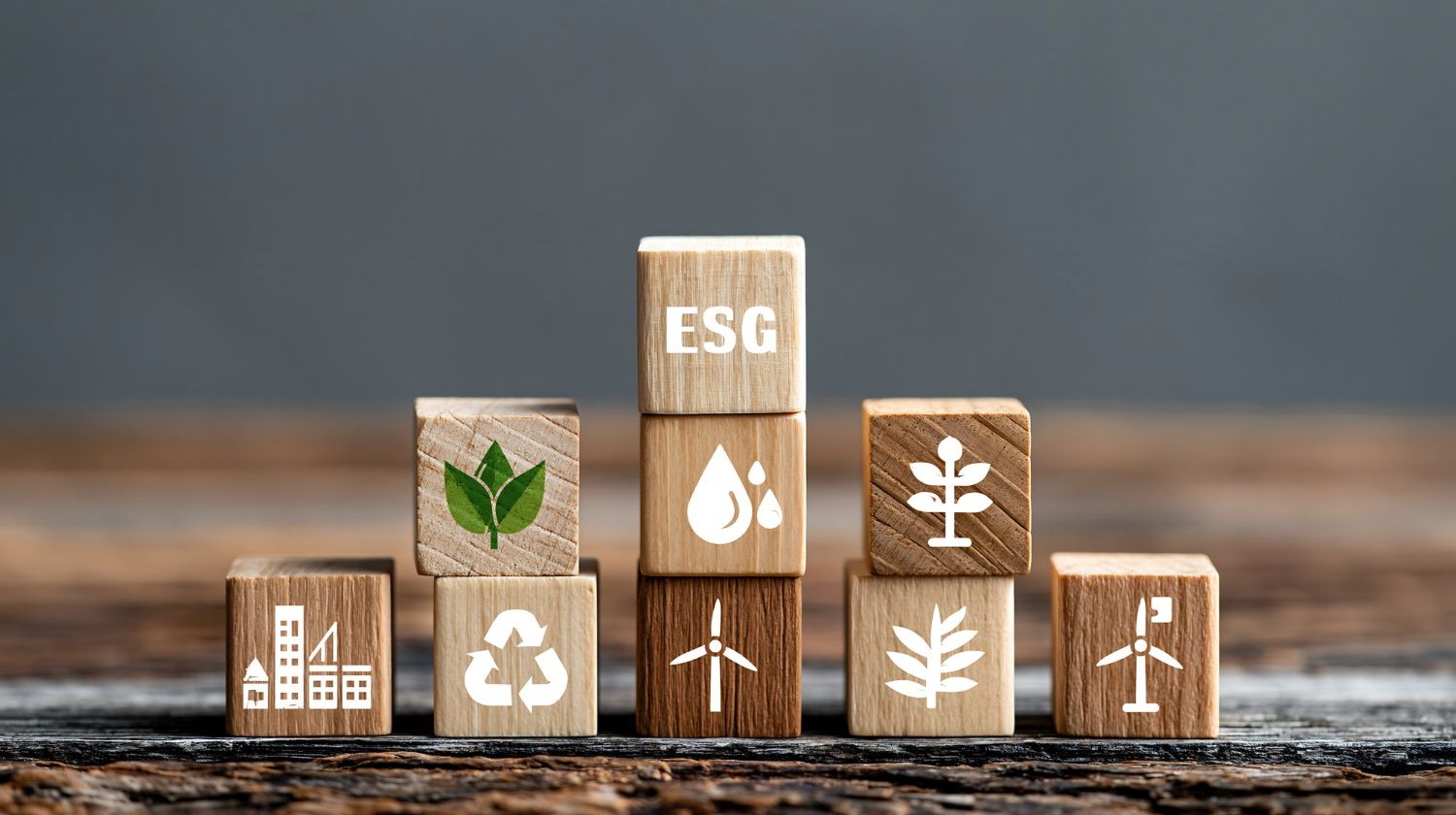
Another development that has gained considerable momentum in recent years is the growing importance attached to indicators. Residents have increasingly demanded greater transparency. Today, it is not enough to state that a particular initiative is sustainable. Tangible results must be demonstrated.
This represents a significant change in the way environmental projects are presented. In the past, many decisions were based solely on perceptions or expectations. Today, residents want to see figures, reports and comparisons that clearly demonstrate the effects of the initiatives implemented.
For example, after switching to LED lighting, a condominium should monitor indicators relating to energy consumption, maintenance costs and lighting performance. This information helps demonstrate the measure’s effectiveness and supports future sustainability decisions.
The same reasoning applies to monitoring water consumption, waste generation, recycling and other environmental indicators. The more data a condominium has, the easier it will be to make strategic decisions and justify new investment. Modern sustainable management is evidence-based management.
Challenge 5: choosing sustainable innovations without falling for passing trends
The number of solutions aimed at the condominium market has grown exponentially in recent years. Today, there are digital platforms, smart sensors, automated systems, connected devices, energy management solutions, environmental monitoring equipment and countless other innovations promising to transform the management of developments.
However, not every innovation creates real value. One of the biggest risks for condominiums is adopting technologies simply because they are attracting market attention. Projects that appear modern may see little use, incur high costs or prove incompatible with a development’s specific circumstances.
Before implementing any innovative solution, the condominium manager should answer some fundamental questions:
Does the condominium actually have this problem?
Does the solution address a genuine need?
Will residents use it?
Can the current infrastructure support its implementation?
Can the budget accommodate this investment?
Are there simpler alternatives capable of delivering similar results?
This analysis prevents waste and helps direct resources towards initiatives that genuinely add value to the community.
Challenge 6: preparing the condominium for more extreme weather events

Climate change is no longer a distant debate; it has become a practical concern for condominium management. Heavier rainfall, prolonged heatwaves, periods of drought and extreme weather events are having a direct impact on condominium infrastructure. Drainage systems, green spaces, water storage tanks, roofs and equipment are being subjected to conditions for which many developments were not originally designed.
This requires a new approach from management. Sustainable management should not be limited to reducing environmental impacts. It also needs to focus on adapting the condominium to changing climatic conditions. Investment in efficient drainage, preventive maintenance, water management and infrastructure monitoring is becoming increasingly strategic in reducing future risks.
How to communicate sustainability effectively to residents
A sustainable project can be technically flawless and still fail if communication is inadequate. Many residents lack technical knowledge of energy, water, waste or operational efficiency. It is therefore management’s responsibility to translate complex concepts into easily understood benefits. An effective approach is to answer three basic questions:
What problem currently exists?
How will the solution work?
What benefits will it bring residents?
When these answers are communicated simply and clearly, engagement increases naturally. Communication must also be ongoing. It is not enough to present the project when seeking approval and then disappear afterwards. Residents need to be kept informed about its progress and results over time.
How to present results clearly at residents’ meetings
Residents’ meetings remain one of the main opportunities to strengthen a condominium’s sustainability culture. However, the case needs to be presented appropriately. Rather than focusing solely on abstract concepts, it is advisable to use tangible indicators and historical comparisons.
Presenting consumption trend charts, comparison tables, efficiency indicators and visual reports helps residents understand the real impact of the measures adopted. Sustainability stops being an idea and starts being seen as a result. This shift in perception strengthens trust in management and increases the likelihood of future projects being approved.
How NewSun’s clean energy subscription helps address the new challenges of sustainable management

Among the many solutions available on the market, one of condominium managers’ greatest needs remains finding alternatives that combine sustainability, operational simplicity and financial viability. This is precisely where the clean energy subscription from NewSun stands out.
The model allows the condominium to participate in a solution based on renewable sources without building work, solar panel installation, purchasing its own equipment or making structural changes to the development. The supply from the electricity distributor remains exactly the same, avoiding any additional complexity for management.
Alongside its environmental dimension, the solution directly addresses one of today’s main challenges: the search for financial predictability in the face of the Force of Unpredictability. Against a backdrop of constant economic fluctuations and rising operating costs, initiatives that bring greater organisation to energy management are becoming increasingly relevant.
The future of sustainable management will be more strategic, more technological and more human
The challenges of condominium sustainability have changed profoundly since 2020. Today, being sustainable involves much more than reducing resource consumption. It means making data-driven decisions, communicating benefits effectively, preparing the condominium for new technological demands, adapting infrastructure to climate risks and building a more engaged community.
Against this backdrop, the role of condominium managers and managing agents has become even more strategic. Managing the present is not enough. The condominium must be prepared for the future.
Developments that successfully balance sustainability, financial efficiency, innovation and resident participation will be better positioned to face the next challenges in the property market. And this is precisely the essence of modern sustainable condominium management: turning uncertainty into planning, challenges into opportunities and sustainability into value for the whole community.
You may also like
- Dicas para Síndicos e PMES
 06/11/2026
 5m
- Dicas para Síndicos e PMES05/11/20265m
- Dicas para Síndicos e PMES04/11/20265m



Stop paying more for your energy bill
Find out in less than 1 minute how much you could save with clean energy every month — no works and no bureaucracy.
Join the energy revolution
Subscribe to our newsletter and receive exclusive content