

Late Payments: How to Plan Your Building's Finances
Late Payments: How to Plan Your Building's Finances
Dicas para Síndicos e PMES
 14/05/2026
 5 min
5 minManaging a residential building in contemporary Brazil has stopped being a merely administrative task and become a complex exercise in financial engineering and conflict mediation. At the heart of this shift lies the need for financial planning that accounts not only for the upkeep of common areas, but also for resilience against the economic swings that directly affect residents' pockets. When a building's late-payment rate starts to climb, the impact is felt in a cascade: from postponing necessary works to struggling to honour basic commitments to staff and suppliers. For the modern building manager, understanding that non-payment is not merely an exception but a variable to be managed is what separates chaotic management from administration of true excellence.
Between 2024 and early 2026, the late-payment landscape in Brazil showed shifts that demand close attention from managers. The rate of arrears exceeding 30 days on service charges closed out the second half of 2025 at levels close to 11.66%, a noticeable rise from the 9.83% recorded in the same period the year before. This movement is not random; it reflects the indebtedness of Brazilian households, which face a scenario of elevated interest rates, with the Selic rate hitting severe marks of 15% a year, draining purchasing power and forcing households to prioritise other debts over the service charge. Since, in many people's perception, it is a bill that does not trigger an immediate cut of services the way electricity or a phone line might, the service charge ends up as one of the last items on a defaulting resident's list of financial priorities.
Given this backdrop, a building's financial planning must be built on realistic foundations. It is not simply a matter of projecting expenses and dividing them across the number of units, but of applying data-driven intelligence that factors in the safety margin needed to withstand the absence of income from one or more persistent defaulters.
The Landscape of Late Payments in Brazilian Buildings
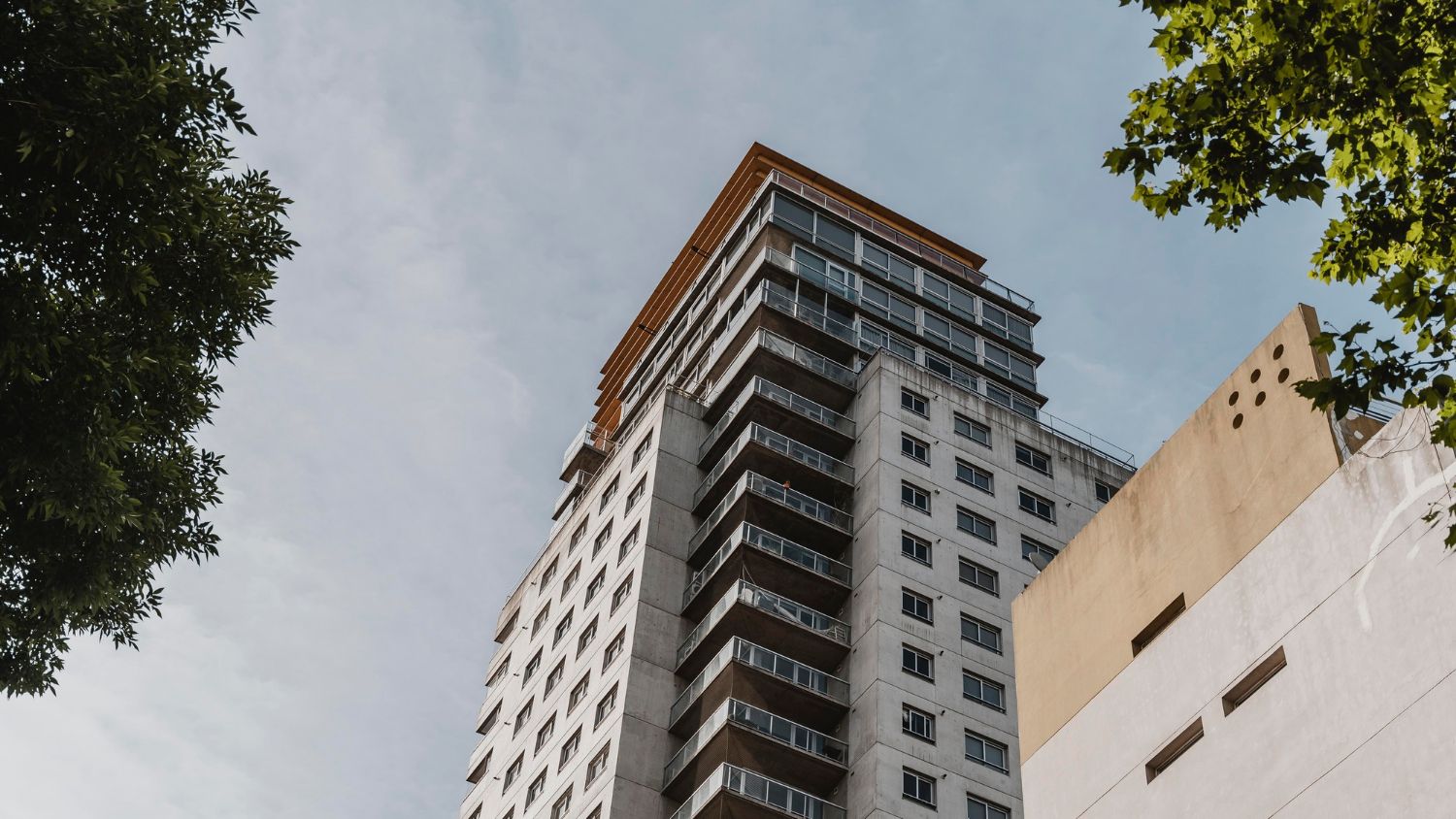
Recent historical analysis shows that a building's financial health is intrinsically tied to national macroeconomic stability. In the first half of 2025, Brazil hit a historic record for condominium late payments, reaching 11.95%, which raised a widespread alarm among management companies and building managers. Although there was a slight pullback in the second half of the year, the forecast for 2026 is that the rate will remain elevated, stabilising at around 11%, which severely undermines cash-flow predictability. When more than a tenth of the expected revenue simply fails to come in, the building is forced to draw on its reserve fund or pass the shortfall on to residents who pay on time, generating a cycle of dissatisfaction.
Regional variation in late payments also offers important lessons for financial planning. Data indicate that the North region leads arrears rates, reaching 9.63% in certain periods, followed by the Northeast at 7.02%, while the South shows more contained rates, around 5.72%. Other surveys show states such as Ceará facing peaks of 16.20%, which requires the local building manager to adopt a far more conservative planning stance than a manager in Paraná, where the rate hovers around 6.93%. This regional disparity reinforces that there is no single formula, but rather a need for a tailored analysis of each building's history to define the ideal safety margin.
Besides late payments, the average service-charge amount also came under inflationary pressure, rising from R$413 in 2022 to R$522 in 2025, a nominal increase of 26.3% over three years. For many residents, this rise, coupled with the higher cost of living, makes the service-charge bill a heavy burden to carry. That is why financial planning must focus intensively on cutting operating expenses so that the charge does not rise abruptly, which in turn helps reduce late payments themselves by making the obligation easier to fit into the household budget.
The Impact of the Economic Landscape on Collective Cash Flow
The indebtedness of Brazilian households is the driving force behind late service-charge payments. According to CNC data, around 79.5% of families have outstanding financial commitments, and of that total, 30.5% already have debts that are actually overdue. Within a building, this pattern of spending and paying reflects a strategic choice by the debtor: they prioritise paying off the credit card or the rent, whose penalties are perceived as more immediate or costly, leaving the service charge in second place. This "hierarchy of debt" is the great challenge for financial planning, since the building manager needs immediate resources to maintain security and cleaning, which cannot wait.
Persistent inflation and continued high interest rates reduce the population's purchasing power, which directly impacts the late-payment rate. Experts point out that when people stop paying their service charge, it is a maximum warning sign that the household budget has already collapsed, since the service charge underpins the home itself. For the building, this results in the need for financial planning that does not depend on full collection to survive. The manager must work on the assumption that part of the revenue will always be deferred, that is, recovered only in future through settlements or through the courts.
Keeping this late-payment rate in double digits undermines not just day-to-day operations, but the building's asset value. Without cash for preventive maintenance, the building begins to suffer physical deterioration, which can lead to far more expensive emergency repairs down the line, requiring special assessments that can push even more residents into default. Therefore, preventive financial planning is the only way to break this vicious circle, ensuring the building has a contingency reserve and seeks alternatives to reduce its dependence on the full monthly charge.
Understanding the Legal Concept of the Persistent Defaulter
One of the key points for financial planning is correctly identifying the persistent defaulter. Unlike the resident who falls behind on the charge occasionally due to forgetfulness or a temporary financial hardship, the persistent defaulter is someone who, repeatedly and systematically, fails to meet their financial obligations to the building. In legal terms, the Superior Court of Justice (STJ) has established that this recurring behaviour goes beyond simple involuntary default, and can be classified as antisocial conduct, since it unfairly burdens the other co-owners who must cover the cash shortfall caused by the non-payment.
The persistent defaulter is often an individual or company that uses the building as a form of cheap credit, since the standard late fee is only 2%, a figure far below the interest rates charged by banks or credit-card companies. However, the Civil Code, in Article 1,337, offers a powerful tool for financial planning: the application of a punitive fine that can range from five to ten times the amount of the service charge. This penalty is not to be confused with the 2% late fee; it serves as a punishment for the debtor's disrespectful conduct towards the community, acting as a deterrent against persistent default.
For the building to apply this sanction against the persistent defaulter and include it as a possible recovery item in financial planning, strict legal procedures must be followed. The penalty must be approved at a general meeting by a quorum of three-quarters of the remaining co-owners, guaranteeing the accused the right to a defence. Recognising this legal concept allows the building manager to act more firmly against those who deliberately harm the building's financial health, turning collection into a mechanism of distributive justice within the building.
Financial Planning Strategies Against Late Payments

The financial planning of a building struggling with late payments must be structured around predictability and cash protection. The first step is rigorous weekly monitoring of accounts, identifying who is up to date and who has fallen behind within the first five days after the due date. This monitoring allows the management company to act quickly, sending friendly reminders and making it easy to reissue bills, which drastically reduces delays caused by mere personal disorganisation on the resident's part. Effective financial planning does not wait for the month to end before reacting to a collection shortfall.
Another vital strategy is building up and reinforcing the reserve fund. Provided for under Law 4,591/1964, this fund acts as savings for emergency expenses, but in scenarios of high late payment, it serves as the building's financial lung. In the annual financial plan, the building manager should set a contribution rate for this fund sufficient to cover at least three months of the building's basic operations. This ensures that, even faced with an unexpected spike in defaulters, staff wages and utility bills are not interrupted, avoiding interest charges on the building's own debts.
Auditing and renegotiating contracts also form part of a containment-focused financial plan. Rather than simply accepting annual price increases from maintenance, security and cleaning companies, the manager should seek more competitive offers on the market or renegotiate current ones based on the volume of services. Reducing fixed costs is the most sustainable way to plan finances, since it lowers the absolute amount that needs to be collected and, as a result, makes the building less vulnerable to a few units' non-payment. Every real saved on a service contract is one real less that needs to be collected from residents who may be facing financial difficulties.
The Maths Behind the Budget Safety Margin
For financial planning to be resilient, it must be calculated with a safety margin that reflects the building's historical late-payment rate. If over the past twelve months the building recorded an average delinquency of 10%, next year's budget cannot be drawn up assuming 100% of units will pay. The recommended technique is to apply a "collection discount" to the budget forecast. In other words, if the building needs R$100,000 to operate, the manager should calculate the assessment so that 90% of payments are enough to cover the R$100,000.
This mathematical approach prevents the building from operating at the edge of its cash position every month. When financial planning ignores late payments, any occasional delay creates a hole that must be covered by the reserve fund or, worse, by a bank loan. By setting bills at an amount that already factors in the safety margin, the building ensures monthly cash flow stays positive even with defaulters. At the end of the year, if late payments turn out lower than forecast, the surplus collected can be directed towards building improvements or back into the reserve fund, strengthening the shared assets.
The late-payment rate calculation should be transparent and presented to residents monthly. Dividing the number of defaulters by the total number of paying units gives the simple sum for finding the month's delinquency percentage. However, for more robust financial planning, it is best to calculate the financial value of late payments against total expected revenue, since a unit that owes a high charge (such as a penthouse) impacts cash flow far more severely than a smaller unit does. Keeping these statistics up to date allows the building manager to adjust financial planning in real time, preventing a debt "snowball" from undermining management.
Ethical and Effective Communication with Defaulting Residents
How a building communicates a debt is a determining factor for amicable debt recovery and for maintaining social harmony. Financial planning should set out communication protocols that are firm, yet thoroughly ethical and private. Public approaches, such as posting lists of names in the lift or exposing a defaulter at a general meeting in a humiliating way, are strictly prohibited under case law and can result in the building being ordered to pay damages for emotional distress. Collection should preferably be carried out through digital channels or sealed letters, ensuring that only the person concerned has access to the information.
The tone of communication should be informative and conciliatory, avoiding accusatory language that could push the debtor away from negotiation. Phrases such as "we have identified an outstanding balance on our system" are far more effective than "you owe the building money". The goal of communication within financial planning is to open a door to dialogue, allowing the building manager to understand whether the delay stems from a temporary health issue or unemployment. Offering instalment plans and being flexible with deadlines for out-of-court settlement often brings money back into the account far faster than a court case, which can take years.
Beyond direct collection, financial planning benefits from collective awareness campaigns. Posters explaining the importance of the service charge for the building's security and upkeep help build a culture of shared responsibility. When a resident realises that their own late payment directly harms the quality of the concierge service or the upkeep of the lifts they themselves use, legitimate social pressure and a sense of belonging act as motivators for timely payment. Ethical communication turns the defaulter into a partner seeking to put things right, rather than an adversary of management.
Shielding Against Late Payments with NewSun Energy

One of the smartest ways to optimise a building's financial planning is to tackle the fixed costs that weigh most heavily on the monthly charge. The electricity bill for common areas — which powers lifts, pumps, security lighting and leisure areas — tends to be one of the largest ordinary expenses. In this context, a clean-energy subscription from NewSun Energy Group emerges as a strategic solution for building managers seeking predictability and savings. Through this model, the building starts consuming energy generated at NewSun's solar or renewable plants, receiving credits that are deducted directly from the local distributor's bill.
The great benefit for financial planning is the stability that a NewSun subscription provides. Unlike conventional energy, which is subject to the unpredictable swings of tariff flags (yellow, red 1 and red 2), NewSun's subscription energy shields the building's bill against these sudden increases. With a more predictable tariff and discounts that deliver progressive savings, the building manager can forecast the year's energy spend with far greater precision, reducing the need for wide margins of error in the budget. NewSun also offers genuinely human support, helping the manager understand every detail of their energy consumption.
To further strengthen management, NewSun provides the NewSun Energy Club, an exclusive and intuitive platform for tracking energy spend and the savings generated. Having access to this data in real time allows the building manager to report back to residents in a far more transparent and efficient way. By drastically cutting energy costs — a resource the building consumes 24 hours a day — financial planning gains room to absorb the occasional late payment without needing to draw on the reserve fund or raise the bill for those who pay on time.
Find out more about our Solutions for Residential Buildings.
Contract Auditing and Cutting Fixed Costs
Within a resilience-focused financial plan, periodic auditing of contracts is an indispensable tool. Many buildings keep service contracts — for lift maintenance, concierge, cleaning and gardening — for years on end, without ever questioning the fees or the quality of delivery. A technical audit makes it possible to identify whether the building is paying market rates or whether there is room for renegotiation. In times of high late payment, securing a 10% to 15% reduction on a security contract can be the difference between closing the month in the black or in the red.
Cost analysis should categorise expenses as essential or supplementary. Security services and preventive maintenance of vital equipment, such as fire pumps and lifts, are untouchable in terms of quality, but can be renegotiated in terms of timeframes and payment terms. Meanwhile, supplementary landscaping or aesthetic services can be adjusted or carried out less frequently during periods of collection crisis. Intelligent financial planning seeks maximum operational efficiency, using technology such as remote concierge services or AI-based monitoring systems to cut payroll costs while maintaining or even raising the level of security.
Cutting expenses must also involve residents' behaviour. Water- and electricity-saving campaigns, when well executed, can generate significant reductions in shared consumption bills. In financial planning, these savings targets should be turned into management performance indicators. By showing the general meeting that management is trimming the fat and pursuing efficiency, the building manager earns the moral authority to demand punctuality from defaulters, proving they are doing their part to keep the service charge as low as possible.
The Role of Technology in Preventing Late Payments
Technology is the building manager's greatest ally in carrying out modern, effective financial planning. Building-management software allows collection tracking to move away from manual spreadsheets and become an automated, error-free process. With these tools, it is possible to set up an automatic "collection sequence" that sends friendly reminders by SMS, email or app notification days before the bill is due. This proactive communication helps prevent delays caused by pure forgetfulness, which is one of the most common causes of light late payment in Brazil.
Beyond collection, technology makes life easier for residents, letting them reissue a bill instantly or pay via PIX, reducing bureaucratic barriers to settling debts. For financial planning, having access to dashboards that show the building's financial health in real time allows the manager to make quick decisions, such as postponing a purchase of cleaning supplies or renegotiating a deadline with a supplier, before cash flow collapses. The transparency generated by these systems also boosts residents' trust in management, which is an important psychosocial factor for maintaining high rates of on-time payment.
The use of integrated platforms, such as the NewSun Energy Club for energy monitoring, completes a building's digitalisation. By centralising financial, operational and consumption information in digital tools, the building manager stops being a "firefighter" and becomes a strategic asset manager. Technology allows financial planning to be based on facts and hard data, minimising the impact of late payments through extremely precise cost management and far more agile, efficient collection.
Community Awareness and Financial Sustainability
The long-term sustainability of a building depends on building a culture of collective responsibility. Financial planning should not be seen as a secret held by management, but as a shared project belonging to all residents. When the community understands that the building is not for profit and that all money collected is reinvested for their own benefit, perception of the monthly charge shifts from a "tax" to an "investment in the property". Campaigns that showcase the results of improvements funded by timely collection are essential for motivating residents to keep their payments up to date.
In addition, financial planning should include incentives for good payers. Although the law limits discounts for punctuality, the building can create indirect benefits, such as priority booking of leisure spaces or partnerships with local businesses for those whose accounts are up to date. These positive measures, combined with firmness against the persistent defaulter, create an environment where paying correctly is valued. Financial sustainability is achieved when there is a balance between strategic cost containment, the use of clean, affordable energy sources such as NewSun Energy Group's, and residents' genuine engagement with the health of the collective accounts.
In conclusion, financial planning for a building with defaulters requires a combination of mathematical prudence, legal rigour and technological innovation. By adopting realistic safety margins, using legal tools against persistent default and investing in energy-efficiency solutions that cut fixed costs, the building manager shields the building against crises and safeguards the quality of life of all residents. Professional, transparent, data-driven management is the only path to turning the challenge of late payments into an opportunity for modernisation and strengthening the residential community.
You may also like
- Casos de Sucesso
 20/10/2026
 5m
5m - Dicas para Síndicos e PMES16/10/20265m
- Dicas para Síndicos e PMES13/10/20265m





Stop paying more for your energy bill
Find out in less than 1 minute how much you could save with clean energy every month — no works and no bureaucracy.
Join the energy revolution
Subscribe to our newsletter and receive exclusive content