
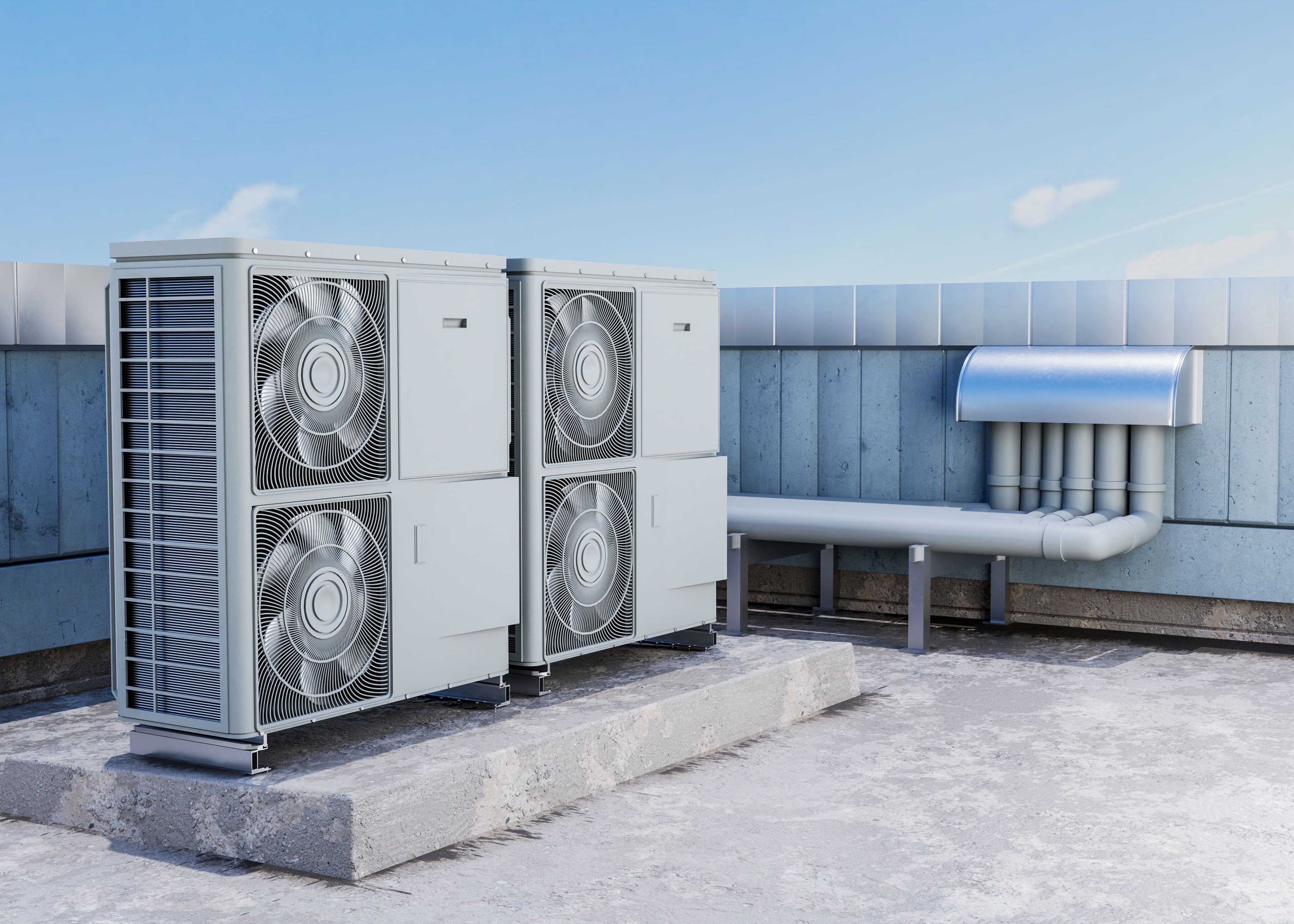
Why do buildings and condominiums ban air conditioning?
Why do buildings and condominiums ban air conditioning?
Dicas para Síndicos e PMES
 30/03/2026
 5 min
5 minThe climate phenomenon of extreme heatwaves has been pushing the Brazilian market to historic levels, making thermal comfort an absolute priority for survival and well-being at home. In 2024, Brazil established itself as the world's second-largest manufacturer of air conditioning units, reaching a record 5.9 million units manufactured, representing a striking 38% increase on the previous year. This surge in appliance purchases, however, creates a direct challenge for condominium management, since building infrastructure, often designed decades ago, has not kept pace with the energy and structural demands of this equipment. For the property manager, balancing residents' legitimate desire for cool comfort with the building's safety and legal compliance becomes a constant source of conflict and administrative dilemmas.
The impact of record growth in the air conditioning sector
Brazil's economic climate, marked by tighter control of inflation in the first half of 2024 and rising employment, made it easier for the population to access durable goods, with air conditioning as the standout of this trend. Data from the National Association of Electronics Manufacturers shows that, beyond the economic factor, elevated average global temperatures were the trigger driving consumers to seek comfort, pushing the sector's projected revenue above 55 billion reais. However, the technical reality of many buildings puts the brakes on this expansion. Only 20% of Brazilian homes have units installed, which reveals a promising market, but also growing pressure on the rules that govern condominiums.
When individual demand for air conditioning runs up against a collective ban, the property manager must act as guardian of the building's integrity. The ban is not usually an arbitrary choice, but a response to severe physical limitations that, if ignored, could compromise electrical safety and the stability of the walls. Management's role is to ensure that technological progress does not lead to fire risks or structural collapse, while maintaining strict compliance with the condominium regulations and federal legislation.
Legal grounds and the Civil Code in building management
The legal basis underpinning the ban or restriction on installing air conditioning units is deeply rooted in the Brazilian Civil Code. Article 1,336, item III, is explicit in establishing that it is the co-owner's duty not to alter the shape or colour of the facade, nor of the condominium's external window and door frames. Any intervention that changes the original architectural design without unanimous approval, or a qualified quorum at a general meeting, is considered unlawful and subject to forced removal through the courts. In addition, Law 4,591/64 reinforces that the facade forms part of the common areas, and its aesthetic and structural integrity is a right shared by all owners.
The understanding of Brazilian courts, such as the Court of Justice of Goiás and of the Federal District, reaffirms that installing condenser units in locations not envisaged by the original design constitutes a breach of the condominium regulations. Even if a resident argues that other neighbours have already committed the same irregularity, case law indicates that this does not make the conduct legitimate, and it falls to the manager to take the steps needed to ensure the rules are applied fairly to everyone. The property manager has the power and duty to inspect and formally notify residents who install air conditioning units that do not comply with approved standards, thereby protecting the property value of the entire building.
The facade issue and the depreciation of the asset
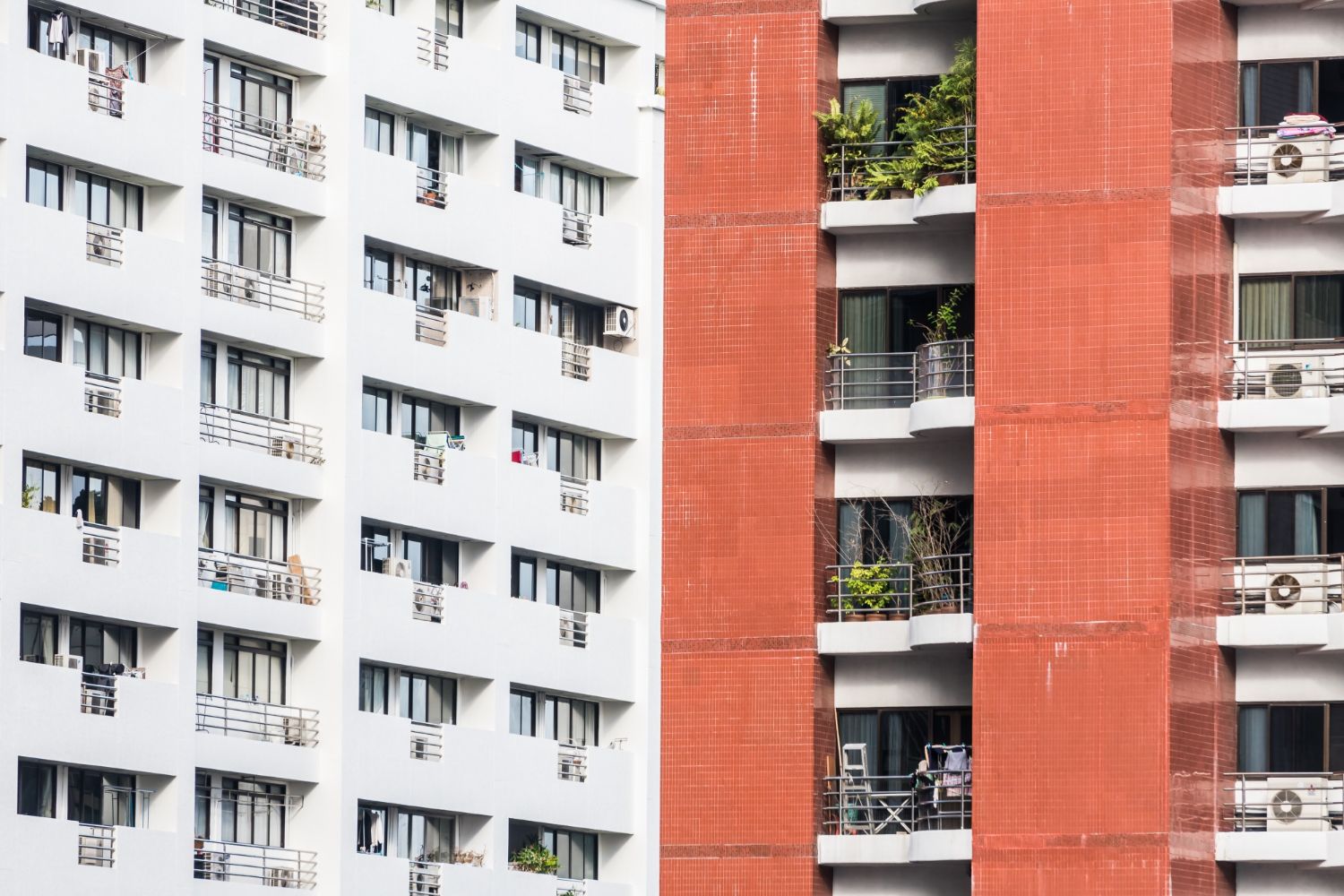
A building's facade does not serve a purely aesthetic function; it is an asset that reflects the care taken by management and the quality of the condominium's maintenance. Disorderly installation of air conditioning units, with holes drilled at random, exposed copper piping and constant dripping in common areas, creates visual clutter that erodes the market value of the units. To avoid this scenario, many condominiums choose to set clear installation standards, defining specific locations and even bracket models that minimise the visual impact.
Altering the facade without the unanimous consent of all co-owners is one of the topics that generates the most case law at the Superior Court of Justice, which frequently rules in favour of dismantling works that harm the harmony of the building. In recent cases, the courts have ordered the removal of units installed in locations deemed "bizarre" or inappropriate, such as above the entrances to party rooms or on shared side walls, under penalty of daily fines that can reach 1,000 reais. Preserving the original aesthetic is, therefore, one of the main reasons the condominium regulations prevent thoughtless individual interventions.
Electrical limitations and the risk of system-wide overload
One of the most serious technical reasons for banning air conditioning is the obsolescence of the electrical infrastructure. In buildings constructed more than 20 or 30 years ago, the electrical design was sized for a significantly lower load, based on basic household appliances. An older condominium's electrical grid may not be able to handle the current demanded by multiple air conditioning systems running simultaneously, creating a risk of overload, short circuits and catastrophic fires. Data shows that a significant proportion of urban residential fires originate from faults in air conditioning electrical installations carried out without the proper technical assessment.
The property manager should consult the local energy utility and hire an electrical engineer to carry out a feasibility study before authorising new installations. This load-increase project must strictly follow the NBR 5410 standard, which covers low-voltage electrical installations, and be approved at a general meeting. Without this modernisation, banning air conditioning becomes the only responsible measure to prevent constant power outages in the condominium and to safeguard residents' physical safety.
Structural masonry: why drilling into the wall is dangerous
The construction method known as structural masonry, very common in modern buildings due to its low cost and fast build time, is a serious technical obstacle to installing certain air conditioning models. In this method, the walls are not mere partitions; they are key elements that support the entire weight of the slab and the building's vertical loads. Unlike conventional masonry, where beams and columns absorb the stresses, in structural masonry, any gouge, large-diameter hole or cut in the wall to run air conditioning piping can weaken the building's supporting base.
Accidentally drilling into a structural block can cause cracks and fissures and compromise the overall stability of the building, potentially leading, in extreme cases, to partial or total structural collapse. Because of these risks, the Owner's Manual and the condominium regulations in buildings of this type typically strictly forbid holes in load-bearing walls. The property manager should watch out for unauthorised renovations and require that any intervention be overseen by a structural engineer, who will issue a Technical Responsibility Record (ART) guaranteeing the safety of the works.
NBR 16280 standard and strict control of renovations

Since its implementation and update following cases of urban building collapses, the ABNT's NBR 16280 standard has changed the paradigm for works carried out in condominiums. It establishes that any renovation that could affect the building's integrity, including air conditioning installations that involve drilling into the facade or electrical changes, must be preceded by a detailed renovation plan. This plan must be submitted to the property manager for review, bearing the signature of a qualified professional (ART or RRT).
This standard protects the manager and the community as a whole, as it transfers technical responsibility for the work to the engineer or architect hired by the co-owner. The property manager has the legal authority to block entry to service providers and materials if the documentation required by NBR 16280 has not been submitted and approved in advance. Failing to enforce this standard can result in civil and criminal liability for the property manager in the event of accidents, making rigorous oversight an absolute administrative necessity within the condominium.
The drainage challenge and civil liability for condensate
A recurring problem that justifies banning or requiring strict adjustments is dripping from air conditioning units, popularly known as "pinga-pinga" (drip-drip). Condensation water falling freely from the units can cause facade infiltration, encourage the growth of algae and mould on the external cladding, and create noise and physical nuisance for residents below or anyone passing through common areas. In addition, the build-up of water can deteriorate paintwork and decorative features of the condominium, generating maintenance costs that end up being shared by everyone.
Legislation in several Brazilian cities, such as Rio de Janeiro, bans discharging air conditioning water onto public streets, requiring the condensate to be directed into the internal rainwater drainage system. The condominium regulations must be specific about the need for a standardised drainage system, preventing one resident's comfort from resulting in damage to someone else's property or in environmental and municipal infringements. The owner of the unit is civilly liable for any damage caused by their equipment, including infiltration arising from poorly installed or blocked drains.
A practical guide for the property manager: handling residents
Turning down a request to install air conditioning is one of the most draining tasks for a property manager, especially when the resident pushes back or tries to get around the condominium regulations. To manage these conflicts, using Non-Violent Communication (NVC) techniques and complete transparency is essential. Below is a guide to handling these situations:
Technical and documented grounds: When turning down a request, present the condominium's electrical and structural feasibility reports. Show that the refusal is not personal, but based on real fire or structural damage risks documented by specialists.
Citing the regulations and the Civil Code: Reinforce that the facade and the electrical grid are common assets and that the property manager has a legal duty, under Article 1,348 of the Civil Code, to safeguard the building's safety and upkeep.
Empathetic dialogue and active listening: Listen to the resident's complaints about the heat, but remain impartial. Explain that individual comfort cannot override collective safety and other neighbours' peace and quiet.
Presenting viable alternatives: If the condominium allows portable or window units that don't affect the facade or the structure, guide the resident towards these options. If there are plans for a future electrical retrofit, share the timeline with the community.
Formal record of all communications: Keep a record of emails, notices and conversations. This protects the condominium in the event of legal proceedings and shows that management tried to resolve the impasse amicably and transparently before applying sanctions.
A property manager who acts as an impartial mediator and relies on facts and technical standards can reduce tension and foster an atmosphere of mutual respect within the condominium.
NewSun Energy: a smart energy solution for condominiums
While individual units look for ways to keep cool, the condominium as a whole faces the challenge of managing the energy costs of common areas, which tend to rise as facilities are modernised. NewSun Energy Group offers an innovative clean energy subscription that stabilises the electricity bill for the condominium's common areas, shields it from tariff-band fluctuations, and delivers progressive savings over time. This solution is ideal for managers seeking financial efficiency without the need for building works or installing solar panels on the roof, thereby avoiding fresh dilemmas around the facade or structural load.
Beyond the direct financial benefit, NewSun stands out for its genuinely human service, offering direct support Monday to Friday to answer questions and optimise the condominium's energy consumption. Property managers get exclusive access to the NewSun Energy Club, a comprehensive digital platform for tracking energy usage in real time, viewing energy credits and managing the savings generated. This transparency makes reporting back at general meetings easier and demonstrates a genuine commitment to sustainability and modern management, transforming how the condominium consumes and pays for its electricity.
Discover NewSun's Solutions for Condominiums!
The future of air conditioning and property value
The global trend towards warming and advancing technology suggest that air conditioning will stop being an optional extra and become a basic requirement in any property valuation. Condominiums that fail to plan for this reality tend to suffer gradual depreciation, as their units become less attractive to new buyers and tenants. The role of a forward-thinking property manager, therefore, is to lead discussions on modernising infrastructure, proposing feasibility studies and electrical upgrades that allow the building to enter the era of thermal comfort safely and consistently.
Efficient condominium management relies on strict compliance with technical standards, but also on the pursuit of solutions that bring prosperity to residents. By banning irregular installations, the property manager protects lives; by planning modernisation and adopting strategic partnerships, such as energy subscription services, they add value to the asset and secure the building's sustainability for generations to come. The balance between rules and progress is what defines administrative excellence in today's world.
You may also like
- Casos de Sucesso
 20/10/2026
 5m
5m - Dicas para Síndicos e PMES16/10/20265m
- Dicas para Síndicos e PMES13/10/20265m




Stop paying more for your energy bill
Find out in less than 1 minute how much you could save with clean energy every month — no works and no bureaucracy.
Join the energy revolution
Subscribe to our newsletter and receive exclusive content