
The vital role of emergency lighting in safety
The vital role of emergency lighting in safety
Dicas para Síndicos e PMES
 29/04/2026
 5 min
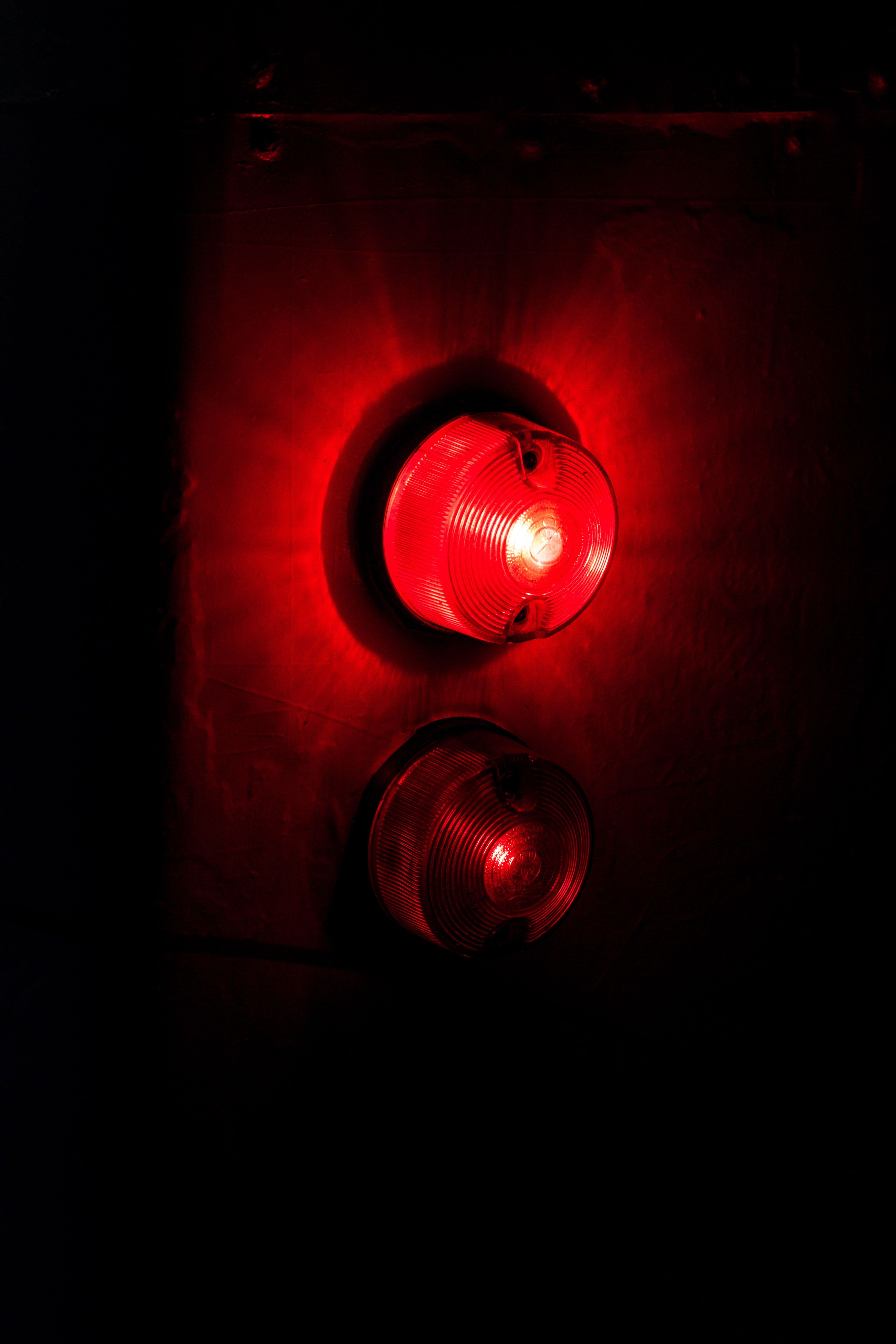
5 minEmergency lighting is a safety component that often goes unnoticed by residents until the moment it becomes strictly necessary. The primary purpose of this system is to illuminate dark areas of horizontal and vertical passageways, including stairwells, corridors, garages and technical areas, in the event of an interruption to the normal electricity supply. For the building manager, ensuring that this system is operational is not just a matter of comfort, but a legal and technical obligation that directly impacts the preservation of the physical safety of all building occupants.
According to Brazilian standards, emergency lighting must allow people to leave the building safely, avoiding accidents on stairs and obstacles that could cause falls and serious injuries. In fire situations, for example, a lack of light can generate widespread panic, making it harder to locate emergency exits and delaying evacuation. For this reason, the system must be designed to switch on fully automatically, without relying on human intervention, ensuring that the transition between normal lighting and backup lighting occurs within seconds.
Beyond its evacuation function, emergency lighting is essential so that rescue teams, such as the Fire Department, can carry out their work more efficiently and safely inside the building. Critical areas such as generator rooms, lift machine rooms and electrical metering centres must be adequately lit to allow technicians to carry out restoration work on essential services without additional risk. Therefore, rigorous maintenance of this system is one of the greatest responsibilities of preventive building management.
Technical standards and the building manager's civil liability

When taking on the management of a residential complex, the building manager becomes legally responsible for keeping the building compliant with current technical standards. In the case of safety systems, the governing standard is NBR 10898, which sets out all the minimum requirements for the design, installation, performance and maintenance of emergency lighting in Brazilian buildings. Knowledge of this standard is essential so that the manager can require contractors to deliver an installation that genuinely guarantees safety in residential complexes and the validity of essential documents such as the Fire Department Inspection Certificate (AVCB).
NBR 10898 sets out precise technical parameters, such as a minimum illuminance of 1 lux on the floor along escape routes in flat areas, and 5 lux in locations with obstacles or changes of direction, such as stairwells. Another critical requirement is the system's autonomy, which must be at least 2 hours, ensuring sufficient time for full evacuation even in large buildings. Failure to comply with these technical parameters not only puts lives at risk, but also exposes the building manager to civil and criminal liability in the event of accidents, as well as potentially voiding insurance cover in the event of a claim.
Recently, the standard underwent updates that established even stricter criteria for system acceptance and for making inspections by firefighters easier. It is essential that the building manager check whether the complex has the emergency lighting design on file and whether monthly maintenance is being logged in a dedicated book or digital platform. Compliance with NBR 10898 is the guarantee that, in a moment of crisis, the emergency lighting system will fulfil its role of saving lives and protecting property.
High-performance equipment for outdoor lighting
When selecting equipment for outdoor lighting, the building manager should prioritise products that combine durability, energy efficiency and high lighting capacity. Unlike indoor environments, outdoor areas are exposed to weather variations, moisture and dust, which requires fittings with appropriate protection ratings. The Ingress Protection (IP) rating is the indicator that defines the equipment's degree of sealing; for gardens exposed to rain, it is best to use fittings with IP65 or higher, while areas such as swimming pools require fully watertight IP68 equipment.
LED technology has established itself as the best choice for outdoor lighting due to its versatility and low operating cost. High-performance LED floodlights are the most suitable equipment for lighting large areas such as car parks, sports courts and wall perimeters. They provide powerful, even light, eliminating the shadows that intruders often use as hiding spots. In addition, LEDs have a lifespan that can exceed 50,000 hours, drastically reducing the need for constant replacements and maintenance costs.
Another key piece of equipment in the safety in residential complexes strategy is bollard lights and mini posts. These fixtures are installed close to the ground to light pathways, walkways and outdoor stairs, ensuring that residents and visitors move around safely without the risk of tripping. The correct choice between cool white light, better suited to surveillance areas as it offers greater contrast, and warm white light, ideal for visual comfort in communal areas, allows outdoor lighting to serve multiple functions harmoniously.
The LED revolution in building energy efficiency
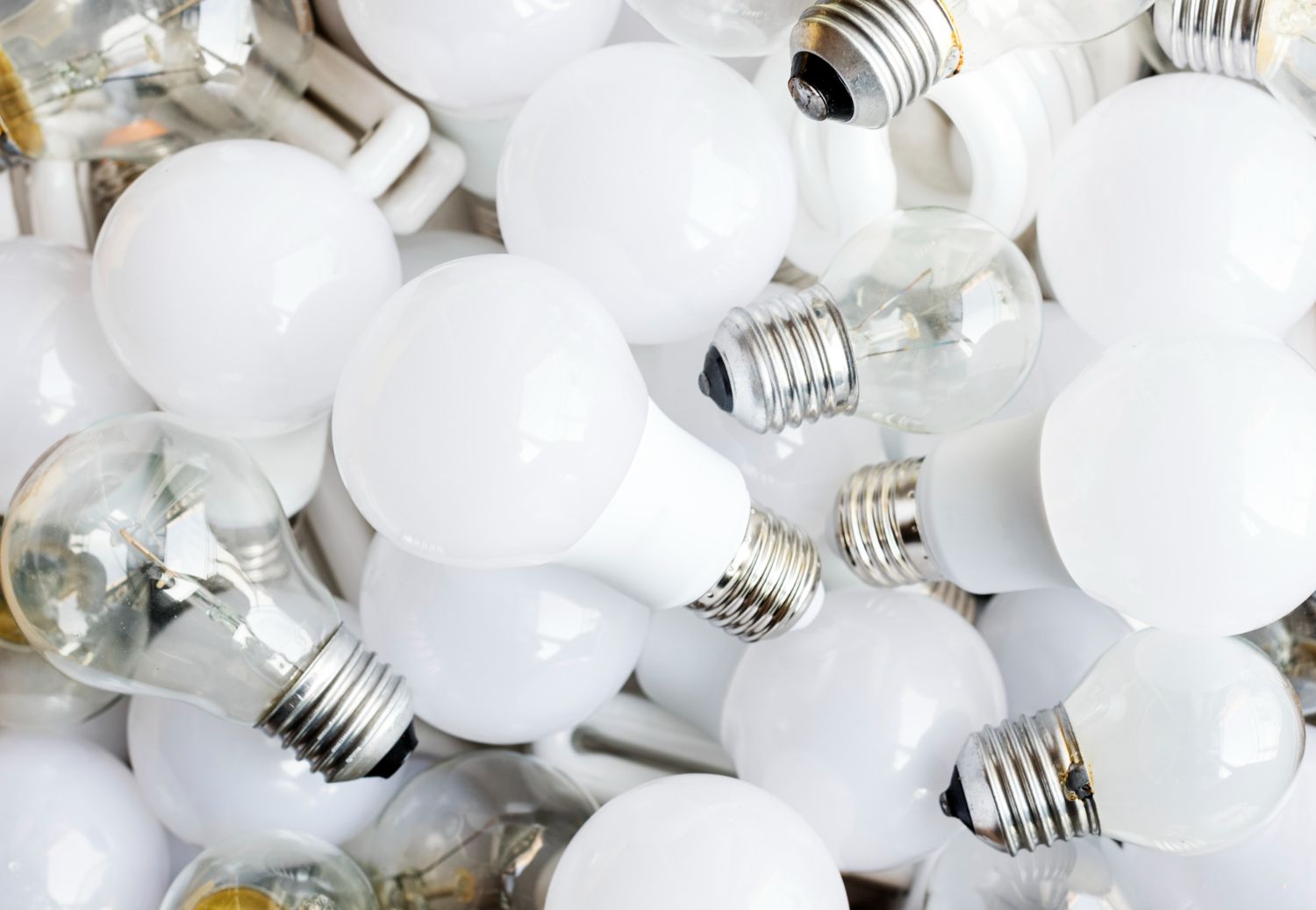
The shift to LED technology represents one of the greatest savings opportunities for a residential complex's bills. It is estimated that replacing conventional lamps (such as fluorescent or metal halide) with LED systems can reduce energy consumption in common areas by up to 80%. This reduction has a direct impact on the condominium fee, freeing up funds for other priority improvements to the building. Beyond the financial savings, LEDs contribute to the complex's sustainability goals, reducing the building's carbon footprint.
One of the great advantages of LEDs in outdoor lighting is their physical and thermal resistance. While traditional lamps are fragile and sensitive to vibration, LED fittings are manufactured from solid-state materials, making them far more durable in harsh outdoor environments. For emergency lighting, LEDs also bring significant technical advantages: because they draw very little power, they allow the batteries in self-contained units to last much longer, or allow the system to use smaller, lighter batteries, making installation easier in hard-to-reach locations.
Below are the main benefits of LED technology for building management:
A drastic reduction in monthly electricity consumption.
Extended lifespan, reducing the frequency of maintenance and replacements.
Instant switch-on, ideal for integration with motion sensors.
Directional light, which avoids wasted brightness and reduces light pollution.
High resistance to impacts, vibration and weather variations.
Sensors and automation as allies of efficient management
Lighting automation is an indispensable tool for building managers seeking to optimise energy efficiency and strengthen safety in residential complexes at the same time. Motion and presence sensors ensure that outdoor and indoor lighting is activated only when genuinely needed, eliminating wasted light in low-traffic areas such as service corridors and garages during the early hours. When it detects the heat or movement of a person, the sensor triggers the light instantly, providing comfort and deterring suspicious activity through the element of surprise.
There are different types of detection technology that can be applied depending on the needs of each environment. Passive infrared (PIR) sensors are the most common, ideal for detecting people's movement through body heat radiation. For large areas or those with many obstacles, microwave or ultrasonic sensors may be more effective, as they offer greater range and sensitivity. The building manager should work together with specialists to calibrate these devices, avoiding false triggers caused by pets or swaying trees, which could cause inconvenience to residents.
In addition to sensors, the use of light timers and photocells allows for intelligent scheduling of outdoor lighting. Timers can be set to turn on the facade or garden lighting only at specific times, while photocells ensure that the lights switch off automatically as soon as the sun rises, regardless of the programmed time. This combination of technologies removes from the doorman the manual responsibility of turning hundreds of lamps on and off, allowing them to focus entirely on surveillance and access control at the complex.
Landscape lighting: beauty that promotes security
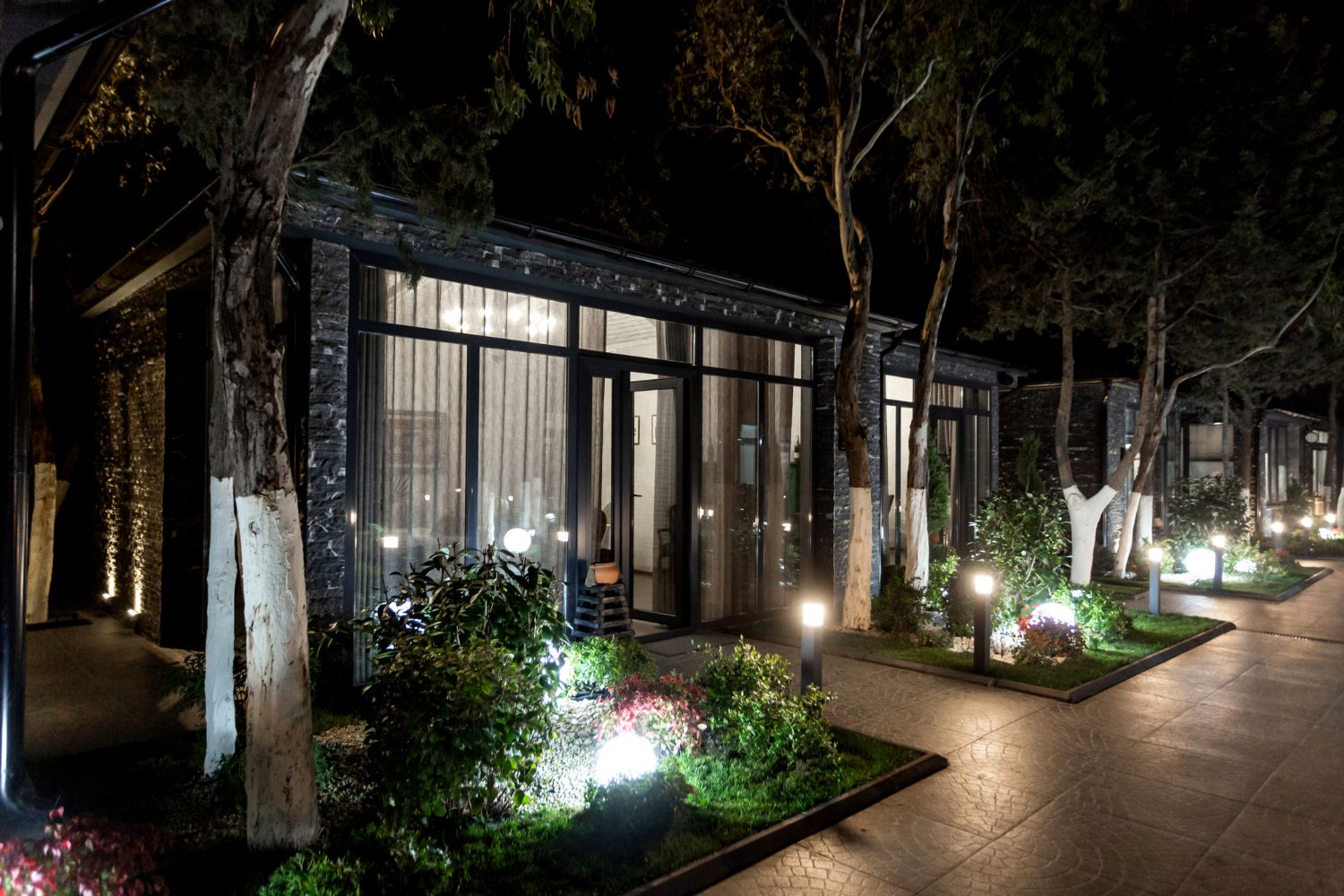
Often overlooked in security planning, landscape lighting plays a strategic role in eliminating vulnerable areas in the complex's gardens. A well-designed outdoor lighting scheme for the garden not only enhances the development's aesthetics and residents' wellbeing, but also eliminates the "blind spots" where criminals could hide. By lighting trees, shrubs and corners, the complex creates a visual barrier that discourages intrusions and makes it easier for security cameras and the front-desk team to monitor the area.
For landscaping, using different lighting angles can create impressive and functional visual effects. The uplighting technique, in which LED floodlights are installed at ground level and pointed upwards, highlights the textures of trees and canopies, brightening areas that would normally be in shadow beneath the foliage. Bollards embedded in the ground or set into small columns are ideal for marking out footpaths and ramps, ensuring that night-time movement is safe and free of accidents. Choosing warm colour temperatures (yellowish) for these areas is recommended, as it creates a more welcoming atmosphere and does not interfere with residents' circadian rhythm.
Below are the most common types of lighting for green areas and pathways:
Projectors and Floodlights: Used for general lighting of large trees and facades.
Bollards and Decorative Posts: Ideal for marking out paths, stairs and walkways.
Garden Spikes: Versatile fixtures that can be moved as plants grow.
Wall Sconces: Provide indirect light on walls and side circulation areas.
In-ground Fixtures: Offer technical, elegant lighting without obstructing the physical path.
Strategies against blind spots and front-desk protection
Safety in residential complexes is an integrated system in which electronic technology and physical infrastructure must work in complete harmony. A common mistake in many complexes is investing heavily in high-resolution cameras while neglecting the outdoor lighting of monitored areas. Without adequate light, cameras lose sharpness, produce noisy images and often fail to capture crucial details such as faces or vehicle number plates in motion. Therefore, eliminating blind spots through strategic lighting is one of the most important steps towards an effective front desk.
The concept of CPTED (Crime Prevention Through Environmental Design) suggests that well-lit environments with clear visibility increase the perceived risk to a criminal of being identified and caught, acting as a powerful psychological deterrent. At the front desk, external floodlights should be positioned to flood the access area with clear light, without dazzling the doorman inside the lodge. The use of motion sensors integrated with silent alarms can alert security staff to unexpected presences on the perimeter even before an intruder attempts a break-in.
In addition to perimeter outdoor lighting, it is vital that the security airlock and the parcel delivery areas are perfectly lit. In these locations, the light must be constant and even, allowing the doorman to quickly identify service providers and residents through the bulletproof glass or the monitoring screens. Maintenance of these lights should be a priority, as a single burnt-out bulb in a strategic spot can create a vulnerability that criminals trained to spot security gaps in residential complexes can exploit.
NewSun clean energy subscription: savings and management

For the building manager seeking to modernise the lighting infrastructure while also reducing the complex's fixed costs, the NewSun Energy Group clean energy subscription emerges as the definitive solution. This service model allows the complex to consume renewable energy from NewSun's own solar plants, without needing to install photovoltaic panels on the roof, carry out construction works or bear high upfront investments. Enrolment is entirely digital, turning the common areas' electricity bill into a source of progressive, predictable savings.
The NewSun clean energy subscription offers strategic protection against fluctuations in tariff bands, which frequently make electricity more expensive due to water shortages. With more competitive tariffs and discounts applied directly to the local distributor's bill, the complex is able to stabilise its cash flow and accurately forecast monthly expenses. Beyond the financial benefit, NewSun stands out for its genuinely human, specialised support, understanding the particularities of managing residential complexes and offering assistance at every stage of the energy transition.
The major technological advantage for the building manager is access to the NewSun Energy Club, an exclusive platform designed for detailed monitoring of energy expenditure. Through this portal, the manager can monitor common-area consumption, check the energy credits generated and view the actual savings accumulated over time. This transparency is a powerful tool for reporting back to residents, demonstrating that the management team is using cutting-edge technology to optimise the complex's resources and promote environmental sustainability.
Find out more about our Solutions for Residential Complexes.
Preventive maintenance checklist for lighting systems
The longevity and reliability of outdoor and emergency lighting systems depend on a rigorous preventive maintenance routine. The building manager should not wait for a lamp to burn out or a battery to fail during a power cut before taking action. Regular maintenance identifies problems at an early stage, such as cable corrosion in garden areas, water ingress in fittings or reduced capacity in emergency batteries, ensuring that safety in residential complexes is never compromised.
A good maintenance plan should include monthly inspections carried out by qualified electricians or specialist companies. It is essential to keep a detailed record of all inspections and repairs, which serves as proof of due diligence in the event of Fire Department inspections or for building insurance purposes. Cleaning the fittings is also part of this process; the build-up of dust and cobwebs on floodlight lenses can reduce lighting efficiency by up to 30%, wasting energy paid for by the complex.
Below are the essential routines for the complex's maintenance checklist:
Monthly Autonomy Test: Switch off the emergency lighting circuit breakers to check that all units stay lit for the minimum time required by the standard.
Cleaning and Seal Inspection: Clean the lenses of outdoor fittings and check that the IP65/IP68 seals are intact, preventing failures caused by water ingress.
Sensor and Timer Check: Test the sensitivity of presence sensors and adjust timer schedules according to the variation in natural light across the different seasons of the year.
Voltage and Battery Measurement: Check the voltage of the emergency unit batteries and apply protective grease to the terminals to prevent corrosion.
Structure and Pole Repair: Inspect the base of outdoor lighting poles for rust or physical instability that could cause falls and accidents.
The impact of lighting on property value

Beyond the practical issues of safety in residential complexes and financial savings, outdoor lighting is one of the factors that most contributes to a property's commercial value. A building with a well-lit facade, gardens with scenic lighting, and bright, safe common areas conveys an image of modernity, care and sophistication. For potential buyers or new tenants, the perception of safety and comfort when visiting the complex at night can be the deciding factor in closing a deal.
Quality lighting also influences social life and mental health among residents. Leisure areas, such as walking tracks and sports courts, that have adequate lighting encourage night-time physical activity, increasing the use of common areas and strengthening the sense of community among neighbours. A dark, gloomy environment, on the other hand, generates isolation and a constant sense of fear, which lowers the value of the units and increases resident turnover.
Therefore, the building manager should view upgrading lighting systems and taking out a clean energy subscription not merely as an expense, but as a strategic investment in infrastructure. Complexes that adopt efficient, sustainable technologies position themselves ahead in the property market, attracting a more conscious and demanding resident profile. In the long run, the combination of safety in residential complexes, energy efficiency and refined aesthetics results in a more solid, secure property that is desired by all.
Modern management and strategic lighting
At the end of this thorough analysis, it becomes clear that outdoor lighting and emergency lighting are elements that go beyond simple technical functionality, being vital to harmony and safety in residential complexes. The modern building manager, armed with the right information on NBR 10898 and best practices in automation, has the power to transform the reality of the building, raising the standard of protection offered to residents. Choosing high-performance LED equipment and implementing preventive maintenance routines are the foundations of management that prioritises life and collective wellbeing.
Integrating these physical improvements with financial and sustainable solutions, such as the NewSun Energy Group clean energy subscription, represents the pinnacle of efficient condominium management. Cutting the electricity bill, shielding the complex against tariff crises and having management tools such as the NewSun Energy Club allow the building manager to run things with greater clarity and transparency. In today's landscape, where efficiency and sustainability are pillars of competitiveness, investing in smart outdoor lighting and renewable energy sources is, without doubt, the safest and most rewarding path for the future of any residential complex.
You may also like
- Casos de Sucesso
 20/10/2026
 5m
5m - Dicas para Síndicos e PMES16/10/20265m
- Dicas para Síndicos e PMES13/10/20265m




Stop paying more for your energy bill
Find out in less than 1 minute how much you could save with clean energy every month — no works and no bureaucracy.
Join the energy revolution
Subscribe to our newsletter and receive exclusive content