
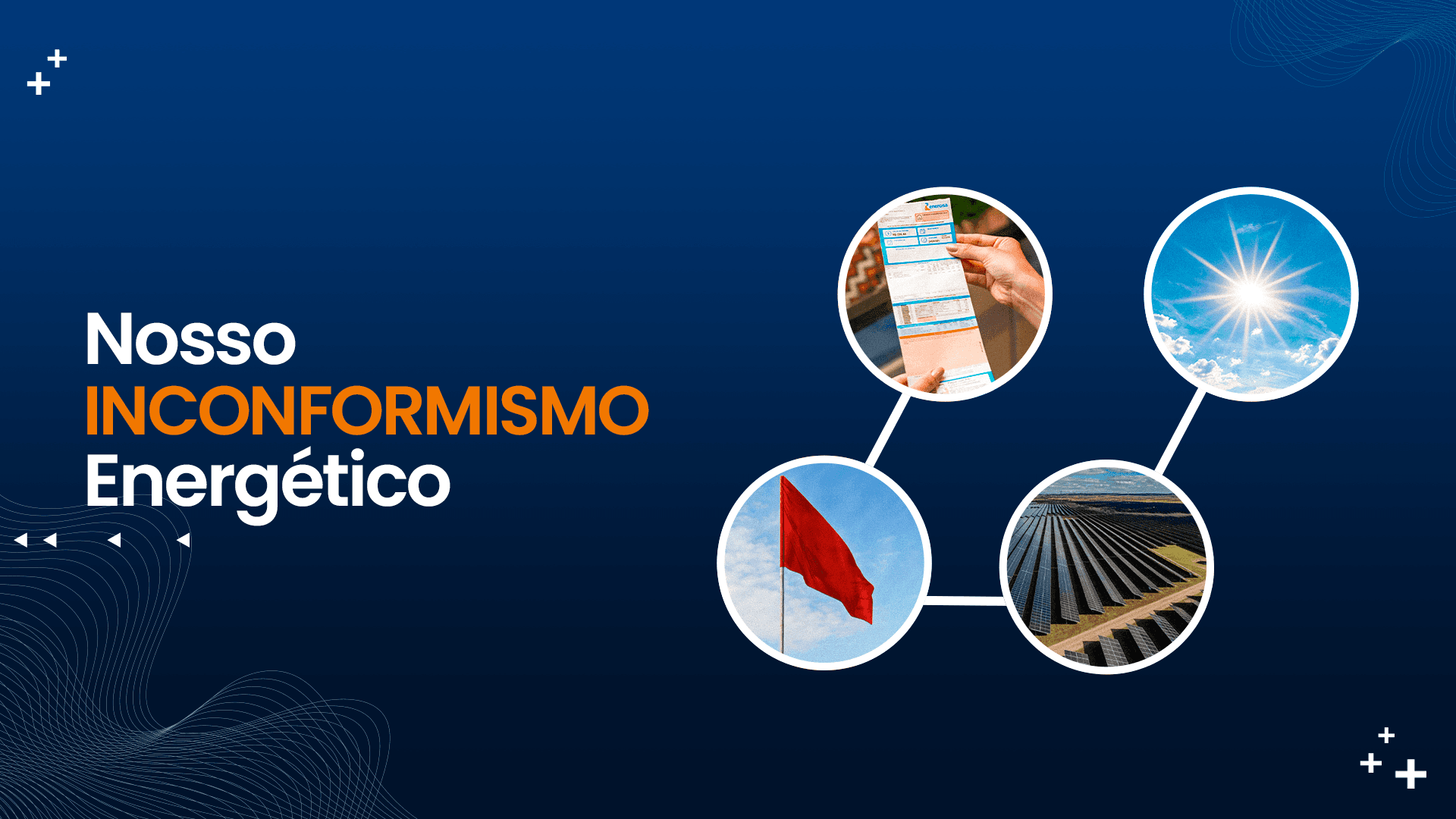
Our Energy Discontent: Why Doesn't the Bill Add Up in Brazil's "Clean" Energy Mix?
Our Energy Discontent: Why Doesn't the Bill Add Up in Brazil's "Clean" Energy Mix?
Sustentabilidade e Meio Ambiente
 24/09/2025
 5 min
5 min
Our Energy Discontent: Why Doesn't the Bill Add Up in Brazil's "Clean" Energy Mix?
Whenever a conversation about energy comes up on the world stage, Brazil puffs out its chest.
We present our figures with pride: one of the cleanest electricity mixes on the planet, dominated by hydroelectric power, with a growing and promising share of wind and solar sources. On paper, we are the example, the green vanguard that other nations, still mired in coal and gas, should follow. And each of us, as citizens, consumers and "bill payers", should feel immense pride in this. And, in part, we do. This pride, however, is often overshadowed by a persistent sense of discontent, an itch at the back of the neck that grows stronger with every electricity bill that arrives...
Our discontent, the same felt by millions of Brazilians, does not stem from a lack of potential. Quite the opposite. It stems precisely from the dissonance between the monumental potential we have and the fragile, expensive and, at times, illogical reality we experience day to day. It is the frustration of sitting on an energy goldmine and, even so, living with the constant fear of blackouts and the weight of one of the highest electricity tariffs in the world. The question that won't go away is: if we are so blessed with resources, why doesn't the bill add up? Why do we pay so much for something that, in theory, should be our great competitive advantage and a relief for citizens' pockets?
NewSun set out to rationalise this feeling, to give a voice to the consumer who, without being an expert in the field, looks at the country's complex energy machinery and feels, at the very least, misled.
The Hydroelectric Paradox: The Blessing That Became Our Crutch
The backbone of our electricity mix is, without doubt, water. Our colossal rivers were dammed to build concrete giants that, for decades, supplied us with abundant and relatively cheap energy. It was a strategic choice that shaped the country's development. The problem is that we fell too much in love with this solution. We became so dependent on hydroelectric plants that we turned a strategic advantage into our Achilles' heel.
For consumers, this dependency manifests itself in a cruel and direct way through "tariff flags". We have learned to fear a lack of rain not just because of agriculture or water supply, but because we know that low reservoir levels mean a yellow, or worse, a red flag on the electricity bill. It's a perverse logic: the weather, a factor over which we have no control, dictates the price of an essential service.
When the rain doesn't cooperate, the government activates "plan B": thermal power plants. And this is where the house of cards of our "clean" mix begins to collapse. To make up for the lack of water, we burn gas, oil and even coal. In other words, in times of crisis, our mix becomes dirtier, more expensive and more polluting. And who pays for this emergency decision? We do, the consumers. The tariff flag is nothing more than the direct pass-through of the cost of activating these "backup" plants, which are terribly inefficient and expensive to operate.
And our discontent here is twofold. First, with the lack of planning. Knowing our climate vulnerability, which worsens every year with global change, why have we taken so long to genuinely diversify and reduce this almost unhealthy dependence on water? Why is the solution to a lack of rain still burning fossil fuels, as if we were back in the 1970s?
Second, there is the socio-environmental cost that never appears on the bill, but which all of us pay. The construction of mega-dams like Belo Monte left deep scars on the environment and on entire communities, displacing people and irreversibly altering ecosystems. We sell the world the image of clean energy, but rarely discuss the exceedingly high price paid to generate it. It is a clean-up that, seen up close, has many stains.
And that's without mentioning the case of Mariana, in Minas Gerais, which need not repeat itself to leave all of us, at the very least, thoroughly ashamed.
The Sun and the Wind: The Bright Future That's Slow to Arrive
If our hydro dependency is our troubled past, solar and wind energy are our bright future. And what a future it is! Brazil is a continent bathed in sunshine all year round, with constant winds across vast areas of the coastline and the backlands. The potential is so obvious it borders on absurd that we are not the undisputed world leaders in these areas. And, indeed, we have been making progress. We see more and more wind farms in the Northeast and solar farms spreading across the country.
But the pace of this progress is frustrating. The discontent, here, comes from the slowness and the barriers. Why, in a country with so much sun, is installing solar panels on a home's roof still a bureaucratic and financially challenging process for most of the population? We hear endless debates about the "sun tax", a term that, to the layperson, sounds like a bad joke. "They want to charge me for using sunlight to generate my own energy?" The technical explanation behind it (the use of distribution infrastructure) may even make some sense to engineers, but for consumers, the message that comes across is: "the system doesn't want you to be independent".
We feel there is resistance to democratising access to energy. The current model is centralised: large plants generate, large lines transmit, and we, at the end of the chain, simply consume and pay. Distributed solar energy – organised groups generating their own energy, cleanly, in an orderly and efficient way – breaks this logic. It empowers us, eases the pressure on the system and reduces the need to build more mega-projects. But instead of a massive national incentive programme, with easy financing and zero red tape, what we see are timid advances and constant legal uncertainty.
The same applies to wind energy. We celebrate generation records, but we know we could go much further. offshore wind farm projects (at sea), which have enormous potential, are still crawling through the licensing process. The feeling is that we are using only a tiny fraction of our true power.
An Inefficient System and an Unaffordable Bill
In the end, we are discontented with the bill itself! That piece of paper (or digital file) that arrives every month is the embodiment of all our discontent. Looking at it is an exercise in frustration. A significant part of the amount is not the energy we consumed. It is a tangle of taxes (ICMS, PIS, COFINS), fees, tariff flags and sector charges. We pay for the energy, we pay taxes on the energy, we pay for "insurance" against a lack of rain, and we pay for a series of subsidies and programmes we barely understand. Transparency is non-existent.
Worse still is knowing that part of the energy we pay for doesn't even reach our socket. Transmission and distribution losses in Brazil are notorious. The image that comes to mind is that of an irrigation system full of holes. We fill the system with water (energy) at one end, but a significant part leaks along the way before reaching the crops (our homes). And who covers the cost of this wasted water? Once again, the end consumer. We pay for infrastructure that urgently needs modernising, but which seems to progress at a snail's pace.
This complexity and inefficiency create a lack of competition. In practice, we are captive customers of a single distributor in our region. Unlike our phone or internet bill, we cannot shop around for a cheaper energy supplier or a better service. This absence of a free market for the vast majority of end consumers leaves us at the mercy of a regulated monopoly, with no bargaining power and no alternatives.
The Full Energy Mix: The Elephant in the Room
So far, we have discussed our discontent based on the electricity mix, which is where our "clean" reputation lies. But if we look at the total energy mix – which includes everything that generates energy in the country, especially transport – the picture changes drastically. There, we are dominated by fossil fuels. Our cities run on petrol and diesel. Our logistics depend on trucks burning diesel on poor-quality roads.
The discontent grows. What's the point of having a relatively clean electricity mix if our daily life and our economy are addicted to oil? The electrification of the vehicle fleet, for example, is an agenda that is progressing at a slow pace here. Electric cars are still luxury items and charging infrastructure is almost non-existent outside the major centres. Once again, the potential is there: we could charge our cars with "clean" energy from the sun, the wind and the water. But the transition is not happening at the speed it should.
There seems to be a lack of integrated vision. We discuss electricity in isolation, without connecting it to the challenges of transport, industry and agribusiness. The result is a schizophrenic energy policy: green in electrical rhetoric, grey in day-to-day practice.
Conclusion: Discontent as the Engine of Change
What NewSun invites you to do is to turn our discontent, ultimately, into a call for coherence. To use our frustration, as citizens who see extraordinary potential being underused due to a lack of planning, excessive bureaucracy, entrenched interests and short-term thinking.
NewSun invites you to embrace the idea that, in a sunny country with strong winds, there's no need to pray for rain to keep the electricity bill from exploding. That's why NewSun refuses to accept that generating our own clean energy should be a challenge rather than an encouraged right. And NewSun is outraged at having to pay for an expensive, complex and inefficient system that loses energy along the way and leaves all of us without options.
We want an energy mix that is clean not just in the marketing, but in practice. That is resilient and doesn't leave us hostage to the weather. That is democratic and allows every citizen to also become an energy generator. That is smart and efficient, without wasting the resources that nature handed us on a plate. And, above all, that is affordable, with a fair price that reflects our wealth of resources rather than an assumed scarcity.
Brazil has the treasure map. What we lack, and what our discontent demands, is the courage and the competence to truly dig it up, bringing its benefits into the light of day and into the pockets of all Brazilians. Until then, we will keep looking at our electricity bills and asking ourselves: why?
NewSun invites you to learn a little more about the generation and use of electricity in Brazil.
You may also like
- Casos de Sucesso
 20/10/2026
 5m
5m - Dicas para Síndicos e PMES16/10/20265m
- Dicas para Síndicos e PMES13/10/20265m





Stop paying more for your energy bill
Find out in less than 1 minute how much you could save with clean energy every month — no works and no bureaucracy.
Join the energy revolution
Subscribe to our newsletter and receive exclusive content