
Old wiring, distribution boards and electrical safety in older residential buildings
Old wiring, distribution boards and electrical safety in older residential buildings
Dicas para Síndicos e PMES
 25/02/2026
 5 min
5 minIn many older residential buildings, the electrical infrastructure was designed for a consumption pattern that no longer exists. Modern equipment, from air conditioning to electric vehicle chargers, is continuously driving up energy demand. When this demand meets old wiring and an outdated distribution board, the system can start to show signs of stress that go far beyond simple everyday inconveniences.
The silent danger of old wiring
The electrical wiring in older buildings often has insulation that degrades over time, becoming fragile or even brittle. This deterioration is not merely a technical nuisance; it is a factor that compromises building safety. When the insulation breaks down, cables can develop silent short circuits inside the walls, heating the surrounding material and increasing the risk of fire without any immediate visible warning.
Residents of older buildings may not notice when the wiring is at its limit, but signs such as a burning smell, hot sockets, or circuit breakers that trip repeatedly are warnings that the electrical infrastructure requires urgent technical attention. Professional inspections can reveal that the wiring can no longer handle the current electrical load, as shown by recurring faults or abnormal cable heating — all indications that a critical failure point is approaching.
The distribution board: the heart of electrical distribution
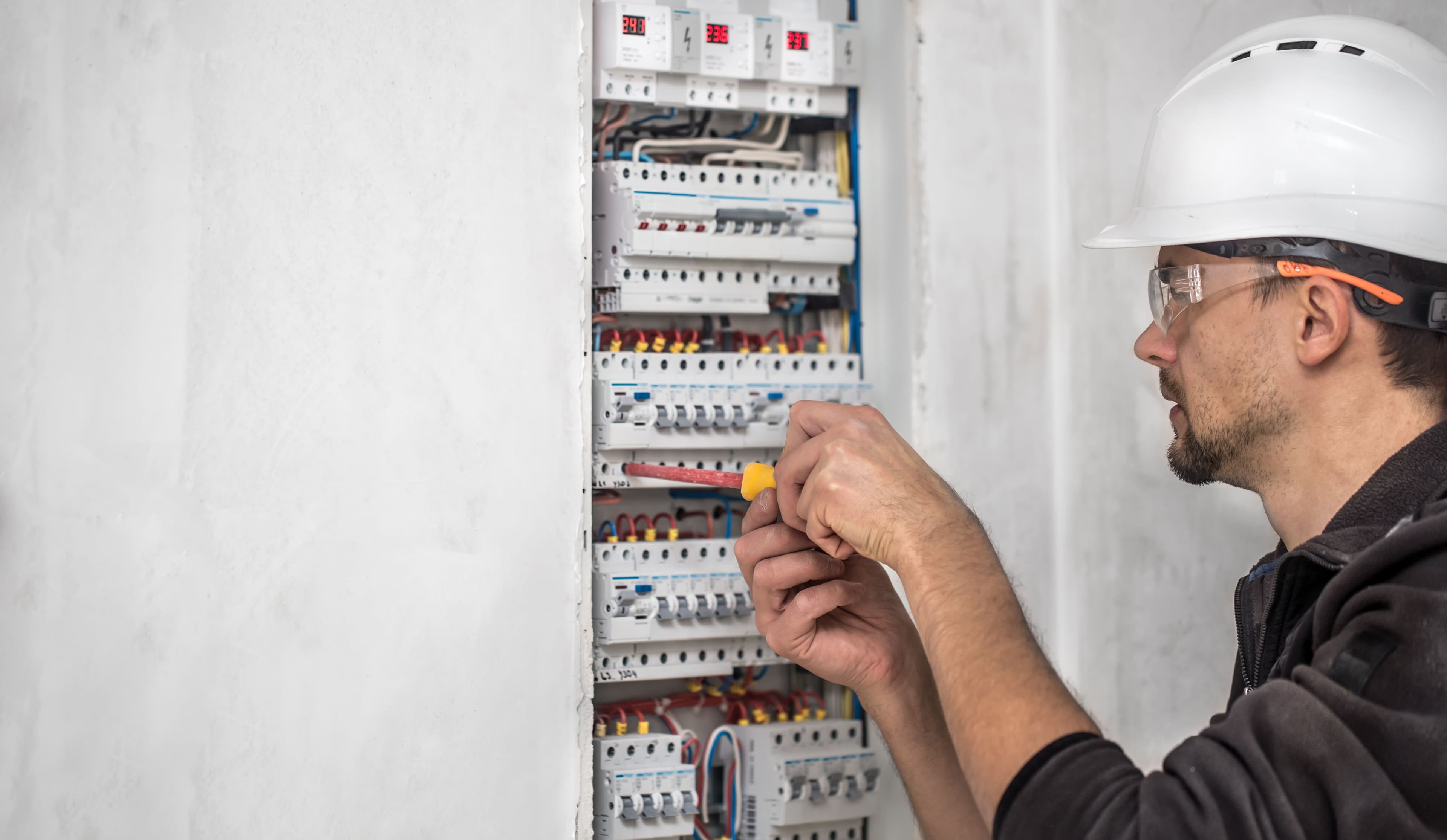
Another element frequently overlooked in older buildings is the distribution board. This central panel — responsible for distributing power to every circuit in the building — has often not evolved in capacity or technical organisation since the building was constructed. Older panels were designed for lighter loads and, as the number of electrical devices connected at the same time increases, they start to show their limitations.
Boards that overheat, panels that look disorganised, or devices that constantly trip are not just an annoyance: they are symptoms that the installation is operating beyond its original design. This not only undermines the reliability of the system but also increases the risk of fire and disruption to essential services.
DIN circuit breakers: a necessary upgrade
Upgrading distribution boards includes migrating to circuit breakers mounted on standardised rails (DIN circuit breakers). This setup not only organises and simplifies the identification of circuits, but also allows the installation of modern protection devices — such as residual current devices and surge protection — which were non-existent in older installations. (cipa.com.br)
Older circuit breakers can suffer internal wear and may not respond correctly to overloads or short circuits. DIN circuit breakers, on the other hand, offer greater precision in operation and greater compliance with current regulatory requirements, reducing the risk of faults and improving the overall performance of the distribution board.
What the building manager needs to know before modernising
Before proposing the replacement of old wiring or the upgrade of the distribution board, it is essential that the building manager has a clear understanding not only of the real condition of the installation, but also of how to communicate this need to residents. A sound technical approach begins with:
Hiring an electrical engineer or specialist firm for the assessment;
Requesting a detailed technical report;
A clear cost estimate for the works;
Assessing whether approval at a general meeting is required, in accordance with the building's bylaws;
Financial planning to include the works in the budget or reserve fund.
Combining technical data with a presentation that residents can understand is an essential step, as the complexity of the subject can create resistance if it is explained only superficially.
Why modernising is an investment, not an expense
Modernising the old wiring and distribution board in older buildings is often seen as a costly undertaking, but this view ignores the real cost of maintaining an outdated installation. In many cases, insurers require electrical upgrades as a condition for fire cover, precisely because of how frequently claims are linked to degraded installations. Replacing old wiring, reorganising the distribution board and adopting DIN circuit breakers is not just an immediate cost: it is an investment that reduces long-term risk, avoids emergency shutdowns and protects the community's shared assets.
Preparing the presentation for general meetings
When presenting a proposal for an electrical refurbishment, the building manager should put the information in context: this is not simply about replacing cables or devices, but about reducing real risks of fire, service failures and even civil liability in the event of an incident. The modernisation of old wiring and the distribution board with modern circuit breakers should be communicated with technical clarity, highlighting:
The safety of residents as a priority;
The link between old installations and an increase in electrical incidents;
The role of current electrical safety standards;
The increase in property value that results from a safe installation;
Transparency in the process, including costs, timeline and impact on the budget.
Presenting these points with technical backing, such as a report or expert opinion, helps to reduce objections and makes the discussion more objective.
Beyond the technical grounding, communication should also be transparent and financial. Presenting a detailed budget, an execution timeline, ways of splitting costs and the impact on monthly charges reduces resistance and avoids misunderstandings. The building manager can demonstrate that upgrading the distribution board and electrical infrastructure not only reduces fire risk but also protects property value and can avoid much larger emergency costs in the future. By aligning safety, financial planning and property value, the proposal stops being seen as an extraordinary expense and comes to be understood as a strategic investment in the building's long-term sustainability.
While many residents regard the wiring and distribution board as an “invisible part” of their homes, these elements form the backbone that sustains the electrical life of a residential building. In older buildings, where the wiring may be unable to cope with current electrical demand and the distribution board is not adapted to modern standards, replacing these components is an essential safety measure. Upgrading the electrical installation, including migrating to DIN circuit breakers, not only brings the building in line with contemporary technical requirements but also delivers greater safety, reliability and property value.
One less headache
There is still no solution that can upgrade the electrical structure of residential buildings without breaking down so much as a single wall, but NewSun offers a way to save on your electricity bill without any building work at all.
Find out more about our clean energy subscription for residential buildings.
You may also like
- Casos de Sucesso
 20/10/2026
 5m
5m - Dicas para Síndicos e PMES16/10/20265m
- Dicas para Síndicos e PMES13/10/20265m





Stop paying more for your energy bill
Find out in less than 1 minute how much you could save with clean energy every month — no works and no bureaucracy.
Join the energy revolution
Subscribe to our newsletter and receive exclusive content