
Measures to make your company more sustainable
Measures to make your company more sustainable
Dicas para Síndicos e PMES
 06/10/2026
 5 min
5 minFor a long time, sustainability was seen as a subject restricted to large corporations or companies with a strong environmental focus. Today, that scenario has changed. Small and medium-sized enterprises have come to understand that sustainable practices are not only a way to reduce environmental impacts, but also a strategy to increase efficiency, strengthen brand reputation and improve financial results.
This movement is no coincidence. Research conducted by Sebrae shows that most small business owners already recognise the importance of sustainable practices and understand that they are not exclusive to large organisations. Among the most valued actions are reducing waste, saving water and energy, and improving waste management.
In addition, consumers, suppliers, financial institutions and commercial partners are increasingly attentive to how companies deal with environmental, social and governance issues. In other words: being sustainable is no longer merely a matter of responsibility; it has become a competitive advantage.
The good news is that making a company more sustainable does not necessarily require major investments or radical changes to operations. Often, small actions generate significant results both for the business and for the environment.
What does it mean to be a sustainable company?
Before talking about practical measures, it is important to clarify a point that often raises questions.
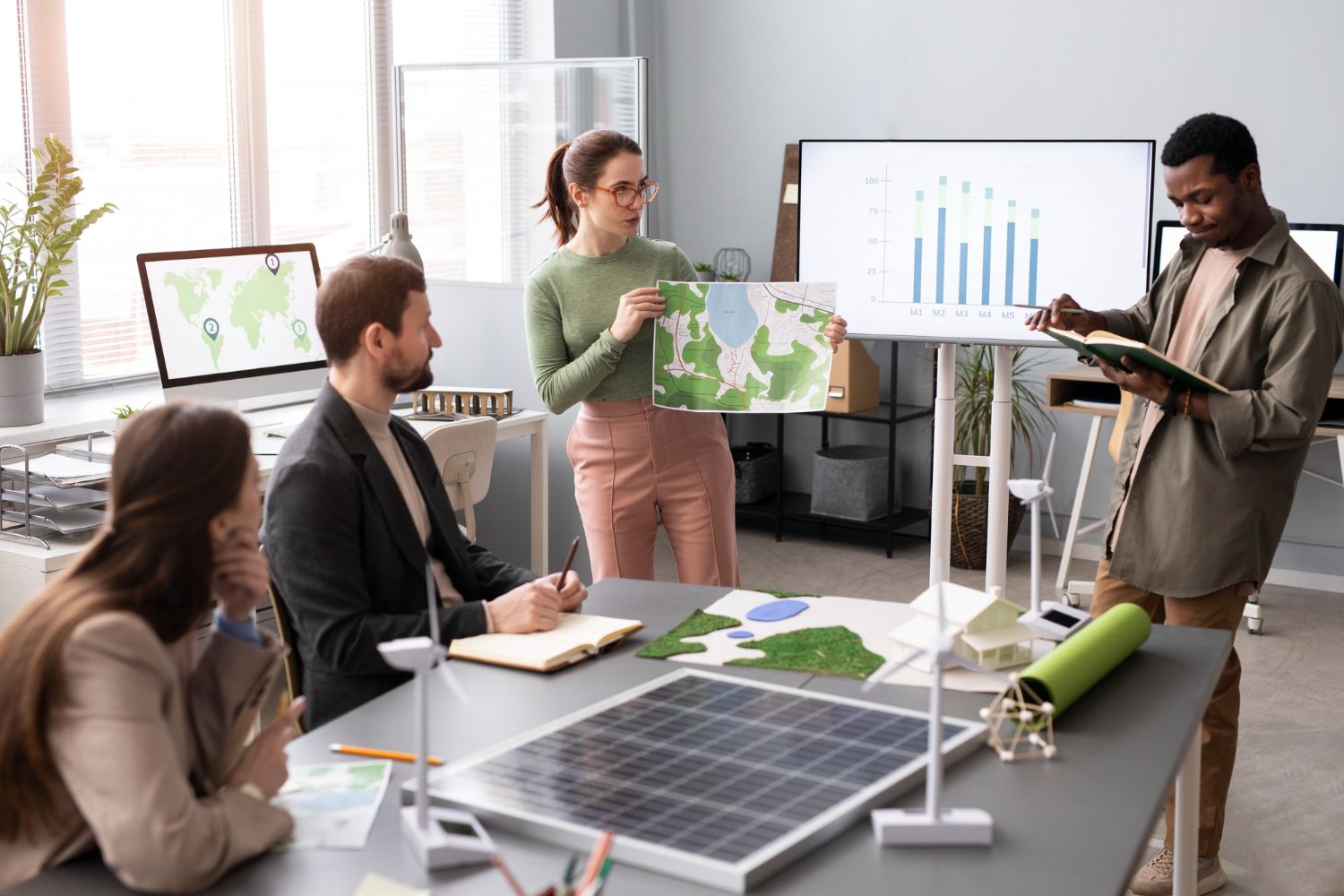
A sustainable company is not only one that recycles materials or reduces paper use. Corporate sustainability involves the ability to grow economically while using resources more efficiently, reducing environmental impacts and maintaining responsible relationships with employees, customers and the community.
In practice, this means seeking a balance between three fundamental dimensions:
Economic performance;
Environmental responsibility;
Social development.
The result is an organisation that is better prepared to face future challenges, respond to market changes and meet the expectations of increasingly conscious consumers.
Start by reducing waste
If there is one measure capable of generating quick results with virtually no investment, it is waste reduction. Many companies live with invisible losses every day that end up affecting operating costs, productivity and the consumption of natural resources. Wasted paper, equipment left switched on unnecessarily, excessive purchasing and process failures are very common examples.
Sustainability begins precisely with eliminating these inefficiencies. When a company uses fewer resources to produce the same results, it benefits both the environment and its cash flow. Sebrae itself highlights waste reduction as one of the main entry points for more sustainable management, especially among small businesses.
Digitise documents and processes
Digital transformation is directly linked to sustainability.
Whenever a process no longer depends exclusively on paper, printouts and physical files, the company reduces its consumption of resources and improves its operational efficiency.
Digital documents offer several additional advantages:
Less need for physical storage;
Easier access to information;
Lower risk of documents being misplaced;
Reduced administrative costs;
Greater team productivity.
In addition to reducing environmental impacts, digitisation contributes to more modern and organised management.
Invest in the intelligent use of energy

Energy consumption represents one of the main expenses for many small and medium-sized enterprises. For this reason, any improvement related to energy efficiency usually produces environmental and financial results at the same time.
The National Confederation of Industry (CNI) highlights optimising energy consumption as one of the sustainable practices most widely adopted by Brazilian companies.
Among the simplest actions are:
Replacing old light bulbs with LEDs;
Installing motion sensors;
Periodically servicing equipment;
Switching off devices outside operating hours;
Properly adjusting air-conditioning systems.
Small changes in habits can make a significant difference over the course of the year.
Monitor consumption indicators
Many companies do not know exactly where their greatest energy waste occurs.
Tracking consumption indicators makes it possible to identify abnormal behaviour, inefficient equipment and opportunities for improvement.
When management starts monitoring concrete data, decisions are no longer based solely on perception and become much more strategic. This practice also makes it easier to define consumption reduction targets.
Manage waste properly
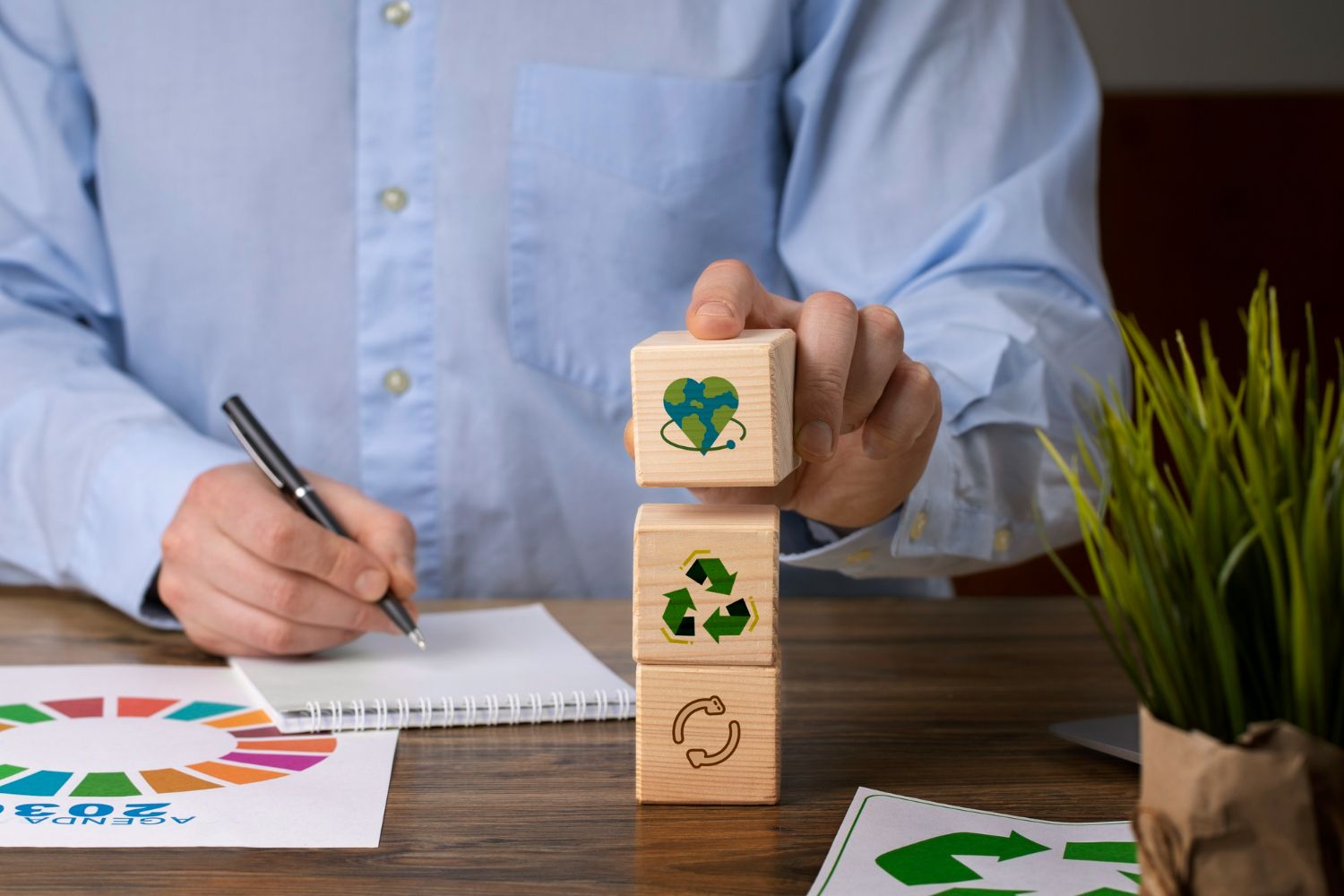
Waste management is one of the most visible ways to demonstrate a commitment to sustainability. However, it goes far beyond simply installing bins for selective collection. A sustainable company seeks to understand which waste it produces, how it is disposed of and how it can be reduced or reused.
Reducing waste generation is among the sustainable initiatives most widely adopted by Brazilian companies, according to surveys connected to the national productive sector.
Depending on the company’s activity, this may include:
Recycling paper and cardboard;
Correct disposal of electronics;
Reducing the use of disposables;
Reusing materials;
Partnerships with recycling cooperatives.
Reduce water consumption
Although many companies mainly associate sustainability with energy, water management also deserves attention.
Hidden leaks, unsuitable taps and inefficient processes can generate significant waste.
Simple measures include:
Installing aerators on taps;
Preventive maintenance of plumbing installations;
Conscious use in cleaning areas;
Periodic monitoring of water bills.
In addition to financial savings, these actions help preserve an increasingly valuable natural resource.
Strengthen a sustainable culture among employees
No sustainable strategy works in the long term without people’s involvement.
For this reason, one of the most effective measures is to create an organisational culture that encourages good environmental practices.
This does not require complex campaigns or sophisticated programmes.
Small actions already generate a positive impact:
Sharing sustainability targets;
Publishing consumption indicators;
Promoting internal challenges;
Recognising good initiatives;
Encouraging suggestions for improvement.
When employees take part in the changes, the results are usually much more consistent.
Review your suppliers and partners

A company can significantly reduce its impacts when it looks not only at its own operations, but also at its supply chain.
Suppliers that adopt sustainable practices help strengthen the company’s entire business strategy.
Before hiring partners, it is worth analysing aspects such as:
Waste disposal;
Legal compliance;
Environmental certifications;
Operational transparency;
Social responsibility.
This assessment helps build a business network that is more aligned with the company’s values.
Sustainability also improves competitiveness
A common misconception is to believe that sustainability generates only environmental benefits.
In reality, it has a direct impact on business competitiveness.
Several studies and business support organisations highlight that sustainable practices can contribute to:
Reducing operating costs;
Increasing production efficiency;
Strengthening reputation;
Market differentiation;
Attracting customers;
Easier access to new contracts;
Greater interest from investors and financial institutions.
In many cases, the economic benefits are noticed well before the broader environmental results.
NewSun’s clean energy subscription: one of the simplest measures for reducing environmental impacts
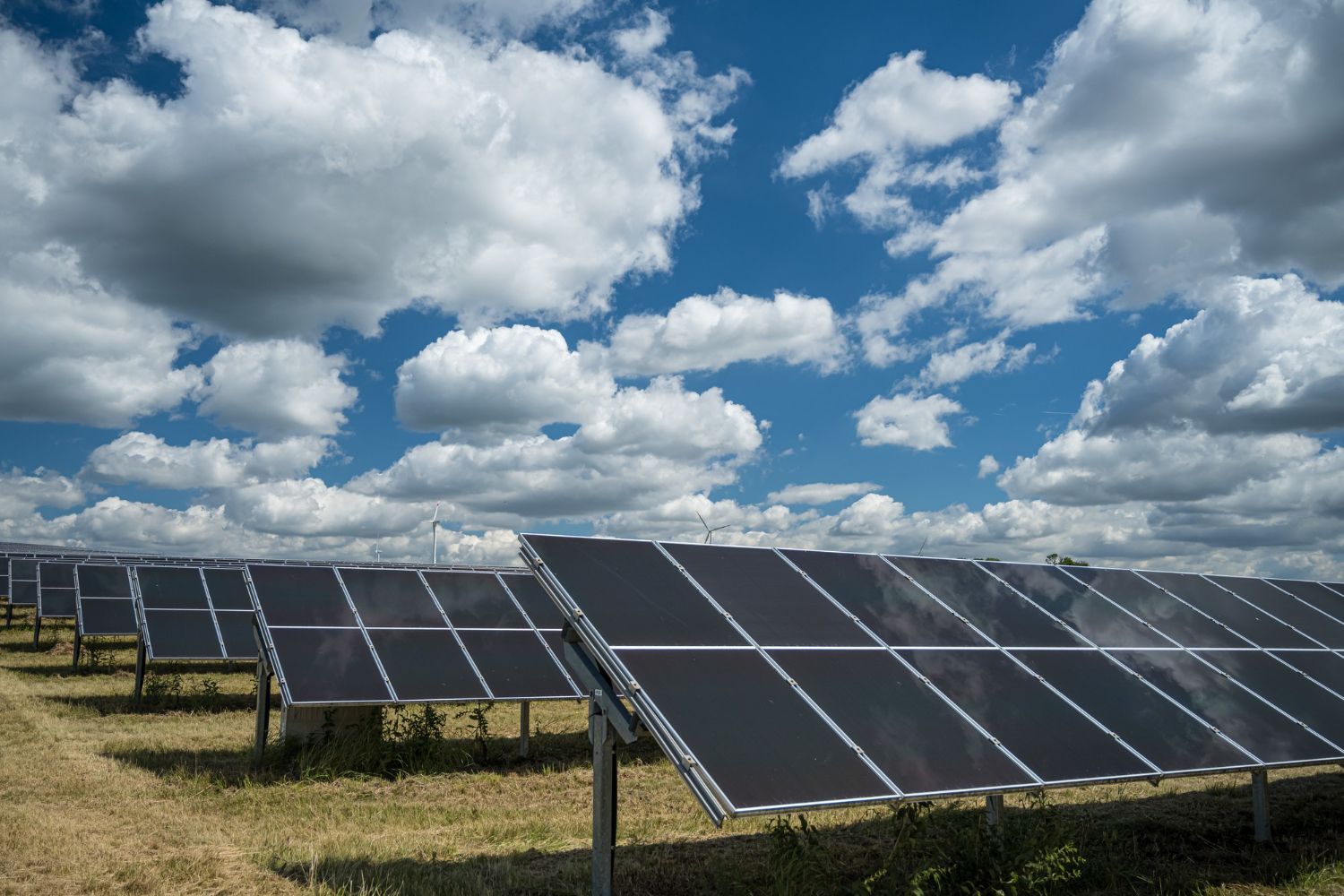
Among all the sustainable initiatives a company can adopt, few have such a favourable relationship between ease of implementation and positive impact as a clean energy subscription.
The proposal from NewSun was developed precisely to simplify access to renewable energy. Unlike models that require the purchase of equipment, installation of proprietary systems, approval of building works or high initial investment, the subscription allows companies to participate in a model based on clean energy without needing to make changes to the property’s infrastructure.
In practice, there is no need to buy solar panels, alter electrical installations or carry out building works. The supply from the distributor continues to operate normally, while the company starts to benefit from the mechanisms permitted under the legislation applicable to distributed generation.
In addition to operational simplicity, the solution contributes to more predictable management of electricity-related costs and significantly reduces the bureaucracy normally associated with proprietary generation projects. This allows small and medium-sized enterprises to make progress towards their sustainability goals without compromising focus, time or investment capital.
Another relevant aspect is that, depending on the rules established by the municipality, initiatives related to the use of renewable energy and sustainable practices may contribute to processes for obtaining the so-called Green IPTU.
Green IPTU is a programme adopted by several Brazilian cities that grants tax incentives for properties that implement specific sustainable measures. The rules vary according to municipal legislation and may include criteria related to energy efficiency, rainwater harvesting, environmental management and the use of renewable sources.
For this reason, companies interested in strengthening their environmental strategy should always consult the regulations in force in their municipality to verify the applicable requirements.
Want to understand how the subscription could fit your company’s reality?
Run a free simulation using NewSun’s online calculator and discover how clean energy can become part of your sustainability strategy.
Small actions can generate major results
One of the biggest obstacles to corporate sustainability is the belief that it requires high levels of investment. In practice, the most successful companies usually begin their journey with simple, low-cost measures.
Reducing waste, improving processes, monitoring consumption, involving employees and adopting clean energy are examples of initiatives that can be implemented gradually and consistently. The secret lies in continuity. Sustainability is not an isolated project. It is an ongoing evolution in the way the business uses resources and makes decisions.
The future belongs to more efficient companies
The market is changing. Consumers are paying closer attention, investors are assessing environmental criteria more frequently and suppliers are beginning to demand higher standards of responsibility.
In this context, sustainability ceases to be merely a matter of institutional image and becomes part of business strategy.
Organisations that learn to use energy, water, materials and processes more efficiently tend to build more resilient operations that are better prepared for the future.
What is most interesting is that this transformation does not need to begin with major investments. It can begin with something as simple as switching off an unnecessary light, eliminating waste, digitising a process or adopting a solution capable of connecting the company to a cleaner energy matrix.
Ultimately, sustainability is precisely this: doing more with less, generating lasting value and building a business prepared to grow responsibly.
You may also like
- Dicas para Síndicos e PMES
 06/10/2026
 5m
5m - Dicas para Síndicos e PMES05/10/20265m
- Energia por Assinatura02/10/20265m



Stop paying more for your energy bill
Find out in less than 1 minute how much you could save with clean energy every month — no works and no bureaucracy.
Join the energy revolution
Subscribe to our newsletter and receive exclusive content