
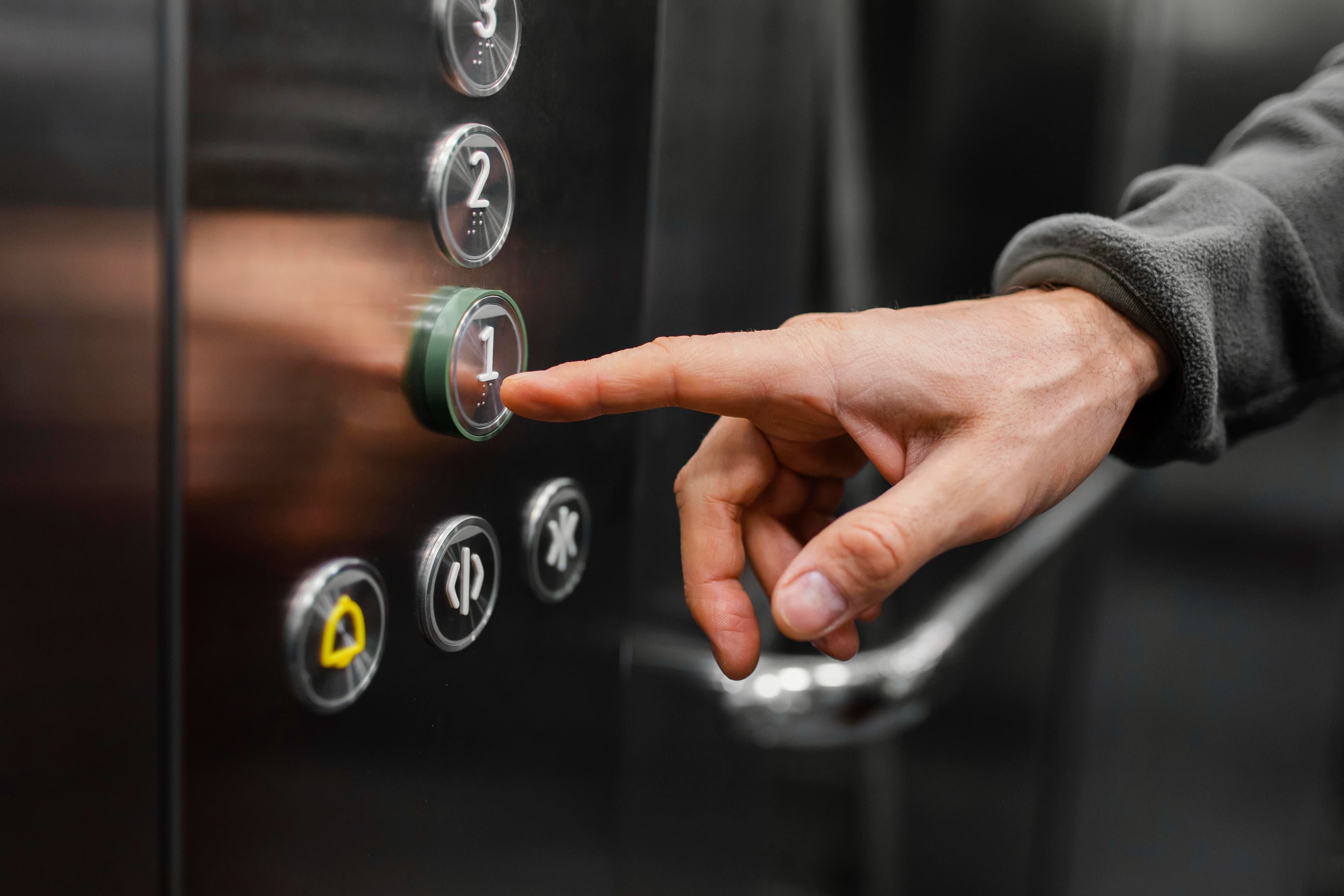
Lift Use and Wear in Condominiums: Tips to Reduce Risks
Lift Use and Wear in Condominiums: Tips to Reduce Risks
Dicas para Síndicos e PMES
 03/02/2026
 5 min
5 minLifts are essential equipment in residential and commercial condominiums. However, intensive and often improper use, combined with a lack of preventive maintenance, can result not only in operational failures but also in safety risks and high repair costs.
Lifts operate with numerous mechanical and electrical components that suffer natural wear from use. The continuous work of cables, pulleys, motors, sensors and control systems exposes these devices to constant stress conditions, accelerating their deterioration.
But misuse can be the biggest culprit. A 2022 survey by ABNT (the Brazilian Association of Technical Standards) points out that at least 20% of lift accidents are associated with improper use and a lack of systematic maintenance. This results in irregular movements, unusual noises, unexpected stoppages and levelling failures between the cabin and the floor, which increase the risk of trips and falls.
Consequences of neglected maintenance
When maintenance is neglected, small problems can develop into critical failures. This includes failures in door systems, which may close unsafely or jam; wear on cables and bearings, which can cause abrupt or slow movements; and electrical problems, which result in unexpected stoppages or control panel failures. All of these points can compromise user safety, especially for the elderly and people with reduced mobility.
In addition to safety risks, the absence of preventive maintenance can result in higher operating costs. Emergency repairs — often needed when failures are not anticipated — tend to be more expensive than regular inspections and scheduled replacements. A lack of maintenance can also affect the equipment's energy efficiency, increasing consumption and shortening its service life.
Practices to avoid
To reduce the risks arising from use, property managers and residents should avoid:
Exceeding the cabin's maximum load capacity;
Forcing doors or inserting objects between the panels;
Simulating closures or improperly interfering with the internal and external buttons;
Ignoring warning signs, such as strange noises, abrupt stops or unusual vibrations;
Delegating maintenance to unqualified people or carrying out “do-it-yourself” repairs;
Failing to hire specialist technical services in compliance with ABNT standards.
Implementing preventive maintenance contracts with certified companies, combined with clear guidance to users on proper use, is an indispensable condominium management practice. As well as reducing the risk of accidents, it protects shared assets, improves the residents' experience and contributes to the safe and efficient operation of lifts over time.
You may also like
- Casos de Sucesso
 20/10/2026
 5m
5m - Dicas para Síndicos e PMES16/10/20265m
- Dicas para Síndicos e PMES13/10/20265m



Stop paying more for your energy bill
Find out in less than 1 minute how much you could save with clean energy every month — no works and no bureaucracy.
Join the energy revolution
Subscribe to our newsletter and receive exclusive content