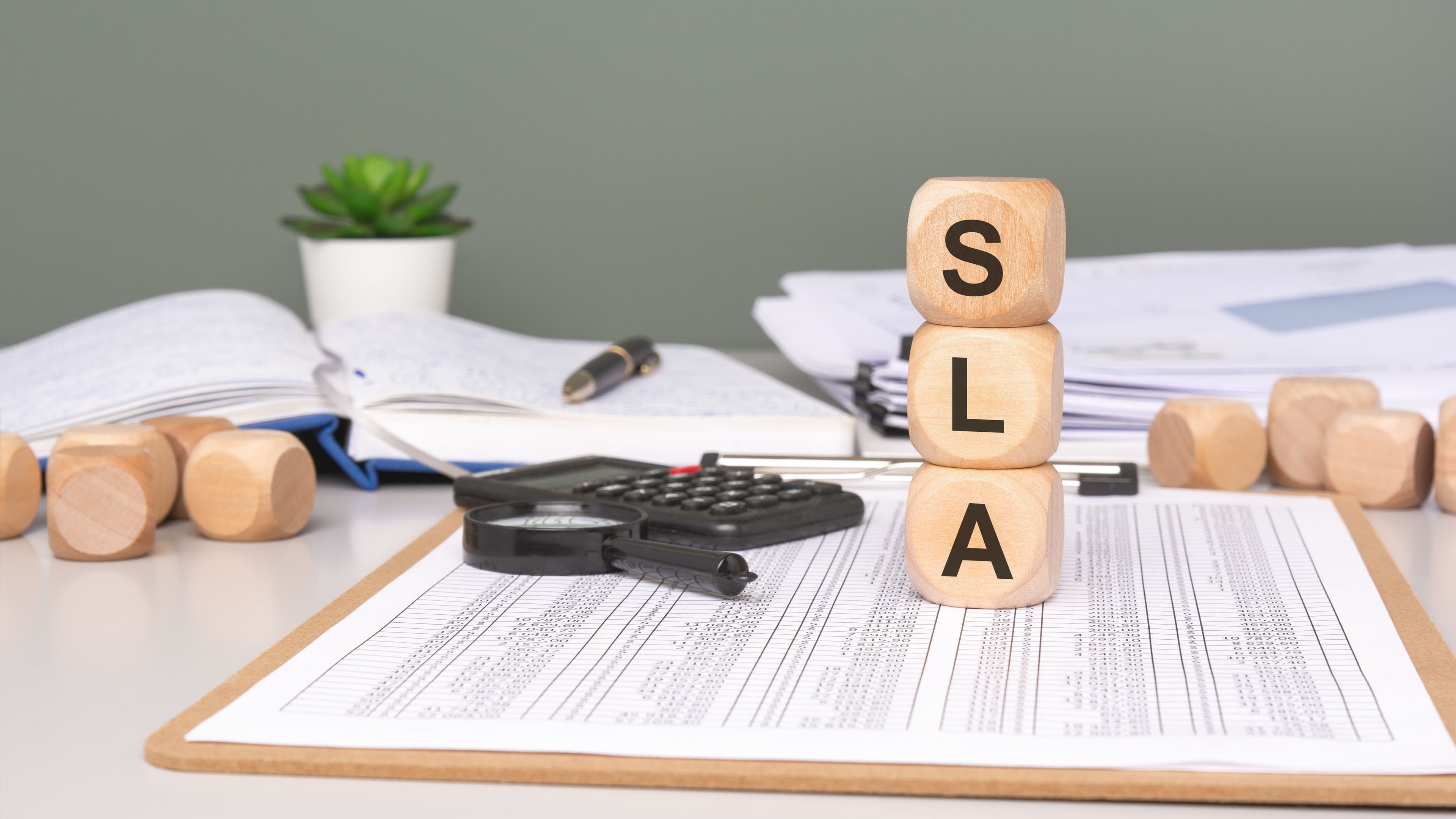
Is it worth implementing an SLA in condominiums? Understand the advantages
Is it worth implementing an SLA in condominiums? Understand the advantages
Dicas para Síndicos e PMES
 19/03/2026
 5 min
5 minThe management of buildings and residential complexes is undergoing an unprecedented transformation, shifting from a reactive management model to a corporate governance model applied to the home. At the centre of this evolution, a tool of technological origin has taken on absolute prominence: the SLA (Service Level Agreement).
For any professional working in condominium management, the question "is it worth implementing an SLA in condominiums?" is not merely rhetorical, but a provocation about the administrative maturity of the development.The SLA acts as the foundation underpinning operational efficiency, ensuring that response times for incidents and maintenance are not left to chance, but rather a contractual commitment rigorously monitored.
The complexity of modern condominium management requires that the building manager and the management company deal with a wide range of suppliers, from security and cleaning companies to sophisticated clean-energy subscription services. Without clear performance parameters, the relationship between the condominium and its service providers becomes vulnerable to guesswork and chronic resident dissatisfaction. Implementing a robust SLA turns promises of quality into measurable indicators, allowing condominium management to reach a level of predictability and transparency that enhances property value and promotes social harmony among neighbours.
The revolution in condominium management and the role of the SLA
Historically, condominium management was seen as an extended domestic task, often carried out by volunteer residents with no specific technical training. However, the increase in the technological infrastructure of modern buildings — which include smart lifts, biometric security systems and solar power plants — has required a more professional approach.
In this new scenario, the SLA emerges as the mechanism that translates technical needs into practical results. The Service Level Agreement is, in essence, a contract or contractual annex that defines quality standards, system availability and, above all, the expected response time for each type of occurrence.
By adopting the SLA in condominium management, the building manager establishes a pact of trust with residents. The absence of clear processes creates what experts call a "deep void" in communication: the resident lodges a complaint and has no idea when it will be addressed. This information vacuum is the greatest fuel for conflict at meetings. With a well-defined SLA, response time stops being a random variable and becomes an institutional target, allowing condominium management to be assessed on hard data rather than subjective impressions.
Applying the SLA goes beyond simply demanding speed; it organises the building's entire supply chain. When a management company or professional building manager implements SLA metrics, they are, in practice, filtering the market and selecting only partners with the operational capacity to honour commitments. This rigour in condominium management is what sets apart condominiums that age gracefully from those that suffer early deterioration and loss of property value.
What is an SLA and how does it apply to the condominium environment?

The concept of the SLA originated in the technology and telecommunications industries to ensure that servers and networks were always available. In the context of condominium management, the SLA is adapted to measure the effectiveness of essential services such as lift maintenance, cleaning of common areas, concierge services and administrative support. It works by defining what constitutes an acceptable service. For example, instead of simply contracting "daily cleaning", the SLA specifies that corridors must be sanitised by 9am and that any liquid spill must have a response time for removal of no more than 20 minutes.
In condominium management, the SLA is the guardian of the customer experience — in this case, the resident. It sets out responsibilities, deadlines and penalties in the event of non-compliance. Without this document, the main contract is often too generic, which makes it difficult to apply fines or terminate the agreement for poor service. The SLA provides the clarity needed for response times to be respected, turning condominium management into a high-performance operation.
There are different levels of SLA that can be applied to condominium management. A service-based SLA is a standard that the company offers to all its clients, whereas a customer-based SLA is tailored to the specific needs of that particular condominium. A luxury condominium with high footfall may require a far more aggressive response time for automatic gate maintenance than a small residential building, and the SLA allows this differentiation to be formalised and priced fairly.
Advantages of a well-structured agreement for the condominium
The main advantage of implementing an SLA in condominium management is risk mitigation. When deadlines are set out in the contract, the service provider is compelled to maintain a staffing and equipment structure consistent with what was promised. This dramatically reduces the likelihood of critical failures that could compromise residents' safety or comfort. Legal certainty is another fundamental point: with a signed SLA, the condominium has robust documentary evidence to challenge invoices or demand improvements, based on the track record of response times and quality of delivery.
Beyond legal protection, the SLA promotes unprecedented transparency in condominium management. Periodic performance reports allow the fiscal council and residents to track how condominium fee money is being converted into efficient services. This visibility increases the building manager's credibility, as they gain technical arguments to defend their decisions and choice of suppliers. When response time is low and quality indicators are high, the perceived value of condominium management grows exponentially.
Another tangible benefit is financial savings over the medium and long term. Although a contract with an SLA may seem more expensive at first, it avoids waste from poorly executed services and the exorbitant cost of emergency repairs resulting from negligence. By optimising response time, the SLA ensures small problems are resolved before they become costly crises, keeping the condominium management budget under control and avoiding the dreaded extra capital calls.
Challenges and possible drawbacks of implementing metrics
Despite the evident benefits, implementing SLAs in condominium management faces cultural and operational challenges. One of the main obstacles is resistance from traditional suppliers that lack response-time monitoring systems. For these companies, being held to strict metrics represents an increase in cost or a risk of penalty they may not be willing to accept. This can narrow the building manager's range of options or raise contract prices, requiring skilful negotiation to balance cost and benefit in condominium management.
Another potential drawback occurs when the SLA is poorly defined or excessively bureaucratic. If the building manager sets unrealistic response-time targets — such as demanding a lift repair within 30 minutes in a city with chaotic traffic — the contract can become unworkable, causing frustration on both sides. Furthermore, managing an SLA requires dedication; if the condominium does not have condominium management software to automate the tracking of tickets and deadlines, the building manager will spend hours on spreadsheets, losing focus on strategy and residents' wellbeing.
A lack of customisation is also a risk. Using a standard SLA template for all services without considering the building's particularities can lead to critical gaps in condominium management. It is necessary to understand which services are fungible and which are non-fungible in order to apply the correct penalties. Without this discernment, the SLA can become an ineffective punitive tool rather than an instrument of continuous improvement, harming the relationship between the management and the condominium's strategic partners.
Step by step to implementing a high-performance SLA

Successfully implementing an SLA in condominium management begins with a thorough diagnosis of the condominium's pain points. The building manager must identify which services generate the most complaints and where response time is currently unsatisfactory. With this mapping in hand, the next step is defining the scope: which services will be covered by the agreement and what the central objectives are (safety, availability, agility or cost savings). It is essential that these definitions be discussed with the council to ensure alignment of expectations before formal contracting.
After planning, the building manager should build SLA clauses into the quotation process. When requesting quotes, it should already be clear that performance will be measured through key performance indicators (KPIs) and that response time will be a decisive factor for contract renewal. During negotiation, penalties for non-compliance should be set out, ranging from warnings to percentage discounts on the monthly invoice or even immediate termination in critical cases.
The final, ongoing step is monitoring. For the SLA to be effective in condominium management, it is essential to use technological tools that record the exact moment a request is opened and the service is completed. Monthly reports should be analysed to identify failure patterns and operational bottlenecks. This proactive approach to condominium management allows for quick adjustments to the SLA, ensuring the document evolves alongside the building's needs and that response time remains within the excellence levels residents expect.
SLA for critical contracts: lift and pump maintenance
In any condominium, lifts and water pumps are considered vital systems. A prolonged failure in this equipment can bring residents' lives to a standstill and create serious safety risks. For this reason, condominium management must demand extremely specific SLAs for these contracts. Response time for emergency calls (people trapped in a lift) must be measured in minutes, while for simple corrective maintenance the timeframe may be a few hours.
A well-structured lift maintenance SLA should include not only speed of response but also the effectiveness of the solution. There is little point in having a one-hour response time if the technician does not have the parts needed for immediate repair. Therefore, the agreement should require minimum stocks of critical components or maximum timeframes for replacing parts. In condominium management, measuring lift "uptime" is a far more powerful KPI than simply counting the number of technical visits carried out.
For booster pumps and fire-fighting systems, the logic is similar. The SLA should prioritise preventive maintenance, with rigorous checklists proving that periodic tests were carried out in accordance with technical standards. When condominium management focuses on SLA-driven prevention, operating costs fall and asset lifespan increases significantly. Transparency in these critical contracts is essential so that the building manager has peace of mind and residents have the assurance that shared property is in professional hands.
Organising caretaking and internal maintenance with clear targets
Although the SLA is commonly associated with outsourced companies, its principles can also be applied to the condominium's in-house team. Organising the work of the caretaker and assistants through response-time targets for small internal maintenance tasks — such as replacing light bulbs, repairing gates or cleaning leisure areas — professionalises the routine and prevents important tasks from being forgotten in the day-to-day running of condominium management. Using daily, weekly and monthly checklists allows for objective monitoring of work quality.
Internal maintenance becomes more efficient when the building manager sets clear priorities. Requests related to safety and hygiene should have the shortest possible response time. For example, cleaning a party room after an event should follow a quality standard and a strict deadline so that the space is available for the next user. By implementing this service mindset in condominium management, the building manager reduces the volume of complaints and creates a culture of operational excellence that spreads throughout the entire staff.
In addition, applying SLAs to caretaking helps identify the need for training or the replacement of inefficient cleaning equipment. If the team cannot meet the deadlines set out in condominium management, it falls to the building manager to investigate whether the problem is a lack of manpower or outdated tools. This data-driven monitoring protects staff from unfair criticism and gives managers solid arguments for investing in technology or automation.
Savings and predictability with a NewSun energy subscription

Within the modern vision of condominium management, the pursuit of efficiency is not limited to maintenance but extends to the consumption of vital resources such as electricity. NewSun Energy Group emerges as a strategic partner for condominiums seeking to professionalise their energy spending through an innovative model: clean energy by subscription. This solution stabilises the electricity bill for common areas, eliminating the volatility that usually haunts the condominium management budget. Unlike traditional photovoltaic installations, the NewSun model requires no construction work, upfront investment or maintenance of panels on the condominium's roof, as the energy is generated at NewSun's own solar farms and injected into the grid as credits.
One of the greatest benefits for condominium management is that NewSun shields the electricity bill against the dreaded red and yellow tariff flags. The rate applied is always tied to the green flag — the lowest in the country — guaranteeing progressive savings and financial predictability for the monthly split. This stability is essential so that the building manager can plan other improvements to the building without fear of surprises in energy costs. The condominium takes on a sustainable stance, boosting its market value through ESG (Environmental, Social and Governance) practices.
NewSun also stands out for the technological and human support it offers to condominium management. Through the exclusive NewSun Energy Club platform, building managers and council members can track energy spending and generated savings in detail, in real time. This level of digital transparency aligns perfectly with the SLA philosophy, as it provides accurate data for accountability. Combined with genuinely human, personalised support, NewSun turns energy from an "unavoidable cost" into a service managed with high performance and a focus on resident satisfaction.
Discover our Solutions for Condominiums.
The impact of response time on property valuation
The contemporary condominium market values operational efficiency almost as much as a property's location. A condominium where management is guided by SLAs and low response times becomes highly desirable to buyers and tenants. The perception that the building is well cared for, that lifts are rarely out of service and that problems are resolved quickly justifies a higher market value. For residents, this represents not only comfort, but the assurance that their investment is being preserved by competent professionals.
Studies indicate that buildings adopting good preventive maintenance and contract management practices show significantly greater appreciation over the years than those that neglect these processes. Response time for security incidents, for example, is one of the items that adds the most value in the view of 80% of consumers. When condominium management uses the SLA to ensure that cameras, gates and alarms are always operational, it is, in effect, building a brand of trust for the development.
In addition, the integration of modern services, such as NewSun's solar energy subscription, reinforces the image of an innovative, efficient condominium. Reducing fixed costs through smart energy management allows the condominium to maintain a competitive monthly fee, which increases the liquidity of the units. Ultimately, the SLA and energy efficiency are the tools that enable condominium management to deliver what residents want most: safety, savings and quality of life without surprises.
Conclusion: administrative maturity through the SLA
Throughout this analysis, it has become clear that implementing an SLA in condominium management is not merely an option, but a necessity for anyone striving for top-level administration. The SLA acts as the thread connecting the building manager's strategy to supplier execution, ensuring that response time and service quality are kept at professional standards. Although there are challenges in its implementation, the gains in transparency, legal certainty and property valuation far outweigh the initial effort of organisation and negotiation.
For condominium management to be truly efficient, it must embrace both the contractual discipline of SLAs and the technological innovations that reduce costs sustainably, such as NewSun's clean energy subscription. By stabilising the electricity bill and professionalising maintenance, the condominium stops being a source of headaches and becomes an example of modern governance. The building manager who masters these concepts stops being a mere task executor and becomes an asset manager, delivering real value to all residents and ensuring the long-term success of the development in the property market.
You may also like
- Casos de Sucesso
 20/10/2026
 5m
5m - Dicas para Síndicos e PMES16/10/20265m
- Dicas para Síndicos e PMES13/10/20265m


Stop paying more for your energy bill
Find out in less than 1 minute how much you could save with clean energy every month — no works and no bureaucracy.
Join the energy revolution
Subscribe to our newsletter and receive exclusive content