
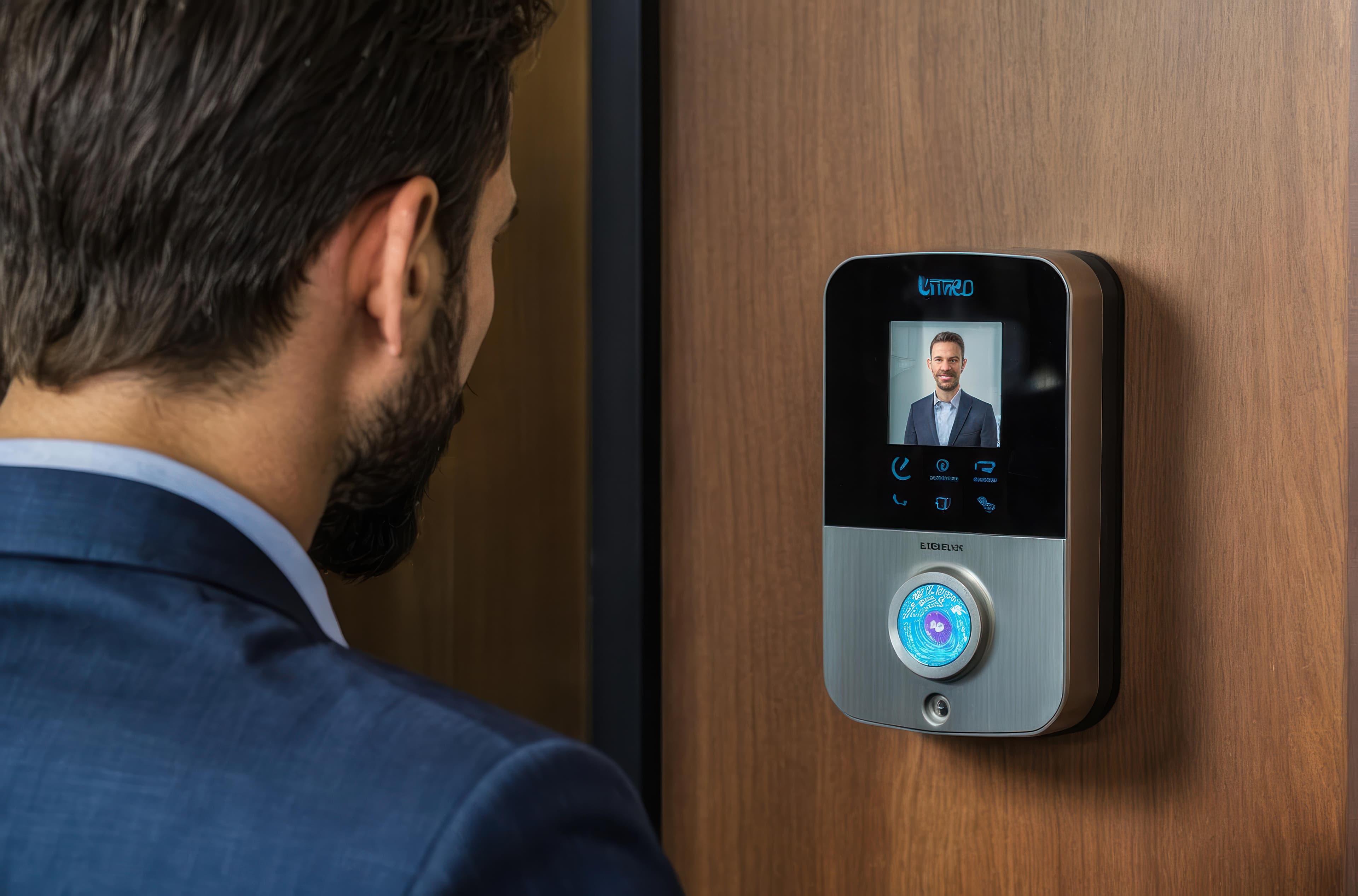
Is It Worth Adopting Facial Recognition at the Building Entrance?
Is It Worth Adopting Facial Recognition at the Building Entrance?
Dicas para Síndicos e PMES
 02/09/2026
 5 min
5 minThe pursuit of greater property security and faster access control has radically transformed the routine of residential and commercial buildings in recent years. Physical keys, proximity cards and numerical passwords are gradually being replaced by automated identification systems. In this context, facial recognition at the entrance has emerged as one of the technologies most sought after by building managers, council members and property management companies.
The promise of queue-free entry, an end to the risk of cloned tags and precise traceability of everyone who enters the building appeals to residents and managers alike. However, implementing this technology brings a series of legal, operational and privacy complexities that cannot be ignored.
A human facial image is not ordinary data: it is sensitive personal data, rigorously protected by Brazil’s General Data Protection Law (LGPD — Law No. 13,709/2018). A leak from a biometric database or implementation without proper governance may expose the management to serious penalties from the National Data Protection Authority (ANPD), as well as legal proceedings brought by unit owners.
Is it worth adopting facial recognition at your building’s entrance? What are the genuine advantages and disadvantages for residential and commercial buildings? How can photographs be kept cyber-secure and transparent rules established for visitors and family members?
In this comprehensive guide, we analyse every aspect of this technology to help you make an informed, secure and legally sound decision.
How Facial Recognition Works in Access Control
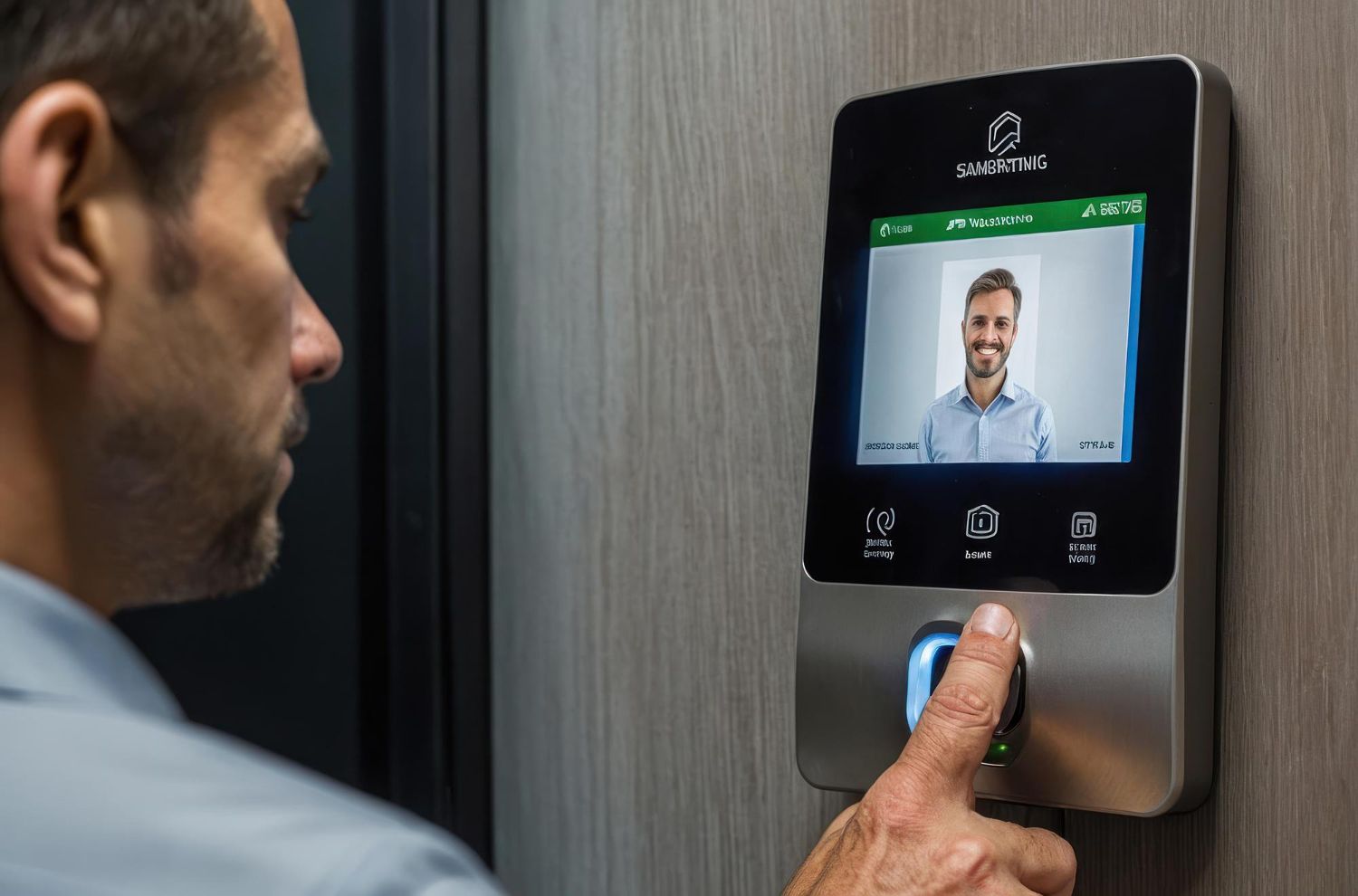
To assess the technology’s risks and benefits, it is essential to understand how it works. The facial biometric validation process takes place in four fundamental stages:
Image Capture: High-resolution cameras installed at turnstiles, security vestibules or gates capture the face of the person approaching the access point.
Analysis and Mapping of Nodal Points: Artificial intelligence software analyses facial geometry, measuring distances between fixed, unchanging points such as the distance between the eyes, the width of the nose, the jawline and the depth of the eye sockets.
Generation of a Mathematical Vector (Biometric Template): The captured image is converted into an encrypted numerical code (an algorithm or mathematical hash). Modern high-security systems do not store the photograph in a conventional image format (JPEG or PNG) for daily validation; instead, they store this mathematical vector corresponding to the face.
Comparison and Decision: The system compares the code generated at the moment of scanning with the codes stored in the building’s database. If there is a match within the configured accuracy threshold, access is granted in a fraction of a second; otherwise, passage remains blocked.
Despite the advanced technology involved, the system is not infallible. Poor ambient lighting, unsuitable camera angles, sunglasses, caps, natural ageing or marked physical changes may cause scanning failures (false negatives), requiring intervention by reception or security staff.
Advantages and Disadvantages in Residential Buildings
The dynamics of a residential building centre on wellbeing, privacy and families’ daily routines. Adopting facial biometrics in this setting offers clear advantages, but also significant points of friction.
Advantages for Residential Buildings
Exceptional Convenience and Practicality: It removes the need to carry physical keys, remote controls or tags that may be forgotten, lost or stolen. Residents arriving with shopping bags, carrying children or in rainy weather gain contactless (hands-free) access.
Fewer Unauthorised Entries through Cloning: Proximity tags and garage controls can be cloned or lent to unauthorised third parties. Facial biometrics are personal and non-transferable, increasing control over who actually enters the building.
Auditability and Event History: The system precisely records the exact entry and exit time of each registered user, making incidents easier to identify and increasing internal traceability.
Disadvantages and Challenges in Residential Buildings
Resident Resistance and Fear of Data Leaks: Many unit owners feel uncomfortable providing their facial images to databases run by third-party companies, fearing misuse for surveillance or cyber leaks.
Obligation to Maintain Alternative Methods: Under Brazilian law, a condominium cannot require a resident to register their biometric data in order to enter their own home. The building must offer and fund alternative access methods (tags, cards or passwords), which may duplicate infrastructure costs.
Scanning Vulnerability with Children: Children’s bone structure and facial features change rapidly as they grow, requiring frequent re-enrolment to prevent recurring entrance failures.
Advantages and Disadvantages in Commercial Buildings

In office towers, clinics and corporate complexes, the daily flow of people is incomparably greater and more dynamic than in residential buildings.
Advantages for Commercial Buildings
Throughput and Speed at Peak Times: Facial biometrics integrated with electronic turnstiles process access for hundreds of employees within minutes at the start of the working day and during lunch periods, eliminating bottlenecks and reception queues.
Integration with Corporate Management Systems: This enables access to corporate floors and rooms to be synchronised with each employee’s authorised working hours.
An Image of Modernity and Prestige: It conveys a perception of advanced technology, sophistication and security to clients, investors and business partners visiting the development.
Disadvantages and Challenges in Commercial Buildings
Large-Scale Visitor Data Management: Commercial buildings receive thousands of visitors and temporary service providers each month. Collecting biometric data from people who will remain on the premises for only a few hours creates an enormous and unnecessarily risky database from an LGPD perspective.
Bottleneck in Initial Collection and Consent: If a visitor’s first registration requires a time-consuming facial capture at reception, the physical queue intended to be eliminated at the turnstile is simply transferred to the service desk.
The Legal Dimension: LGPD and the Protection of Sensitive Biometric Data
The most critical aspect of adopting facial recognition is not the investment in cameras, but data governance. Article 5, item II, of Brazil’s General Data Protection Law (LGPD) classifies biometric data as sensitive personal data.
This means that processing facial data is subject to far stricter protection rules than simply collecting a name, identity document number or flat number.
Why Is a Biometric Data Leak So Dangerous?
If an alphanumeric password, credit card number or proximity tag is leaked or hacked, the solution is simple: cancel the previous record and issue a new code within minutes.
With facial biometrics, this is impossible. The human face is unchangeable and permanent. If a database containing residents’ biometric vectors or facial images is breached or traded illegally, victims face perpetual risks of digital identity forgery, fraudulent bank-account openings, scams and fraud involving digital proof-of-life checks.
Legal Bases for Processing in a Condominium
To process sensitive data lawfully, the condominium (acting as the Data Controller) must bring the operation within the grounds set out in Article 11 of the LGPD:
Data Subject Consent (Art. 11, I): The resident signs or digitally confirms an explicit, specific and prominent consent form authorising collection of their facial data exclusively for access control. The resident may withdraw consent at any time.
Fraud Prevention and Data Subject Security (Art. 11, II, ‘g’): It may be argued that biometrics are necessary to protect residents’ physical safety and the collective property.
Regardless of the legal basis used, the National Data Protection Authority (ANPD) and the case law of Brazil’s Superior Court of Justice reinforce that the condominium is required to offer a viable access alternative to anyone who refuses facial enrolment. Preventing a resident from entering the building or embarrassing them at the entrance because they lack biometric registration constitutes a serious breach of the LGPD and property rights.
Rules for Registering Family Members, Visitors and Service Providers

One of the biggest mistakes made by property management teams is applying the same biometric registration procedure to permanent residents, occasional service providers and temporary visitors. The LGPD is governed by the Principle of Data Minimisation and Necessity (Art. 6, III): an organisation must collect only the minimum data strictly necessary to achieve its purpose.
1. Occasional Visitors and Delivery Workers
Collecting facial biometrics from an app-based delivery worker or a visitor who will remain in the building for only two hours breaches the principle of proportionality.
Recommended solution: For one-off visitors, adopt non-biometric or temporary control methods. Invitations using a dynamic QR code sent by the resident via WhatsApp, remote release through an app, or simple registration of a photo identification document at reception fully meet security requirements without inflating the building’s biometric database.
2. Non-Resident Family Members and Regular Service Providers
For relatives who visit the property weekly, long-term service providers (such as nannies, carers and contractors) or short-term tenants (short-stay), biometric registration may be carried out provided that three essential rules are observed:
The consent form is signed and the individual acknowledges the condominium’s privacy policy.
A strict expiry date is assigned in the system (for example, access permitted only during the building work or employment contract).
Automatic Purging and Deletion: The system must include a scheduled routine to delete the biometric template permanently and verifiably as soon as the authorisation expires or the tenancy agreement ends.
3. Children and Adolescents
Processing minors’ data requires additional care. Under Article 14 of the LGPD, children’s data must be collected in their best interests and with specific and prominent consent given by at least one parent or legal guardian.
Step by Step: How a Building Manager Can Implement Biometrics without Risk
If the condominium decides to implement the system, the building manager should conduct the process with legal, technical and administrative planning:
Transparent Resolution at a General Meeting: Present the project to residents, detailing not only the costs but also the selected supplier, the privacy policy, where data will be stored and the alternatives that will be offered to those who choose not to participate.
Preparation of the DPIA and Privacy Policy: With the assistance of specialist legal advisers, prepare the Data Protection Impact Assessment (DPIA) and publish the condominium’s Privacy Policy in a visible location and in the app.
Rigorous Supplier Audit and Contract: The technology or remote concierge provider acts as the Data Processor. Require contractual clauses demonstrating end-to-end encryption, prohibiting use of the database to train third-party algorithms, establishing a secure disposal protocol and setting out a formal incident and data-breach response plan.
Training the Reception and Security Team: Instruct reception staff and security guards to assist courteously any residents who choose alternative access methods or experience temporary failures with the facial scanner, avoiding embarrassment.
From Cutting-Edge Entrance Technology to Energy Intelligence: How a NewSun Subscription Optimises Management and Brings Predictability to the Condominium

Adopting cutting-edge solutions — such as facial recognition at the entrance — demonstrates management’s commitment to modernising the development, streamlining routines and offering unit owners the most advanced security and convenience available. However, true innovation in condominium management is not limited to access control: it extends to how the building manages its most important operational and financial resources.
While facial biometrics simplify the entry and exit of people at the entrance, NewSun’s clean energy subscription applies exactly the same concept of advanced technology and intelligence to simplify management of the common areas’ electricity budget.
Just as modern entrance systems save the building manager from spending time managing physical keys and access badges, NewSun’s subscription solution removes all the technical and bureaucratic complexity traditionally associated with the electricity sector.
Signing up to NewSun’s service is a seamless, fully digital and frictionless application of cutting-edge technology:
No Investment and No Building Work (Zero CAPEX): The condominium does not need to spend reserve-fund resources or approve capital calls to purchase solar panels and inverters or carry out electrical alterations on the roof.
No Operational Burden for the Building Team: Caretaking and management staff do not need to worry about equipment maintenance, working-at-height cleaning or power-plant inspections. NewSun manages all generation through highly efficient partner plants.
Reduced Administrative Burden for the Manager: The building manager and property management company avoid the strain of complex quotations, lengthy reports and unpredictable adjustments, freeing valuable time to focus on strategic tasks — such as training reception staff, LGPD governance and direct support for residents.
Complete Predictability and Budget Savings: The subscription acts as protection against sudden increases caused by tariff flags and electricity-market fluctuations. The condominium achieves progressive savings on the common areas’ electricity bill, ensuring stability and complete ease in monthly financial reporting.
By combining modern entrance access control with NewSun’s energy intelligence, management eliminates inefficiencies across the board, turning the condominium into a model of security, operational convenience and financial balance.
Conclusion
Facial recognition at the entrance can be a valuable tool for raising a condominium’s standard of security and convenience, provided that implementation is guided by respect for privacy, transparency and rigorous compliance with the LGPD. Assessing the building’s genuine needs, guaranteeing access alternatives for everyone and appointing highly secure technology partners are the essential steps for gaining the benefits of modernisation without taking on unnecessary legal risks.
Likewise, extending this pursuit of innovation and convenience to the management of the building’s fixed costs — by subscribing to NewSun’s clean energy subscription to secure progressive savings and predictability in the common areas’ budget — confirms a forward-looking administration prepared to simplify routines, enhance property value and ensure peace of mind for the entire community.
You may also like
- Dicas para Síndicos e PMES
 16/10/2026
 5m
5m - Dicas para Síndicos e PMES13/10/20265m
- Dicas para Síndicos e PMES09/10/20265m



Stop paying more for your energy bill
Find out in less than 1 minute how much you could save with clean energy every month — no works and no bureaucracy.
Join the energy revolution
Subscribe to our newsletter and receive exclusive content