

How to save on swimming pool heating in winter
How to save on swimming pool heating in winter
Dicas para Síndicos e PMES
 15/07/2026
 5 min
5 minAs the coldest months of the year arrive, the use of communal and residential leisure areas often becomes a recurring topic for residents and property managers. Keeping a swimming pool pleasant, healthy and usable even when the ambient temperature drops requires intelligent heating strategies and close control of fixed costs.
However, cold seasonal winds and low air humidity continually draw heat from the water, causing the pool temperature to fall quickly if no protective barrier is used. In condominiums, leaving the heating on without a plan to reduce heat loss can lead to excessive electricity or gas bills, creating budget pressure and potential disagreements at residents’ meetings.
Temperature control is therefore no longer simply a matter of comfort; it becomes a question of financial management and the preservation of shared assets. Understanding the physics behind heat loss, as well as the solutions that make pool heating more efficient, is the first step towards keeping leisure facilities available without unpleasant surprises in the monthly bills. A well-planned heating system is essential for predictable, safe use, while protecting the pool from the weather helps maintain the ideal water temperature with full budgetary responsibility.
What is a thermal cover and how does this technology work?
To reduce heat transfer from the water to the cold air, a thermal cover is one of the most efficient and widely recommended accessories available. Made from durable insulating materials, such as low-density polyethylene, this physical barrier is designed to float directly on the pool surface. But how exactly does it help with heating and temperature control?
The answer lies in the air bubbles distributed throughout the material. Each bubble acts as a small insulating chamber, helping to prevent heat from passing directly from the warm water into the colder air. This structure reduces heat loss and works rather like a greenhouse, helping to keep the pool temperature stable while reducing the constant demand on the heating system. Unlike ordinary plastic tarpaulins, a good-quality thermal cover contains additives that protect the material against ultraviolet radiation and pool treatment chemicals, helping to protect the water temperature throughout the cold season. By limiting temperature fluctuations, the cover also reduces the time needed for the initial heating process. In this way, the cover plays a central role in the correct sizing and cost efficiency of any pool heating system.
Essential pool care in winter: heated versus unheated pools
Winter calls for different maintenance routines, depending on whether the pool has a heating system. For heated pools, the main operational challenge is to retain heat and control the temperature while avoiding unnecessary electricity or gas consumption. Heating should therefore be programmed to work alongside the thermal cover, preventing the heat exchanger from operating under continuous strain. Without the cover, heat loss to the cold air accelerates wear on circulation pumps and heaters, shortening the service life of the pool heating system.
For pools that remain unheated during winter, care should focus on preventive cleaning and basic chemical water treatment, even when daily use decreases. Leaving the water untreated or uncovered encourages dirt build-up and algae growth, which can lead to costly corrective maintenance in summer. Monitoring water quality and temperature in an unheated pool is therefore just as important as regulating the heating in a heated pool. Preventive care and temperature control are essential for preserving any pool and keeping conditions stable.
How a thermal cover helps retain heat and control temperature
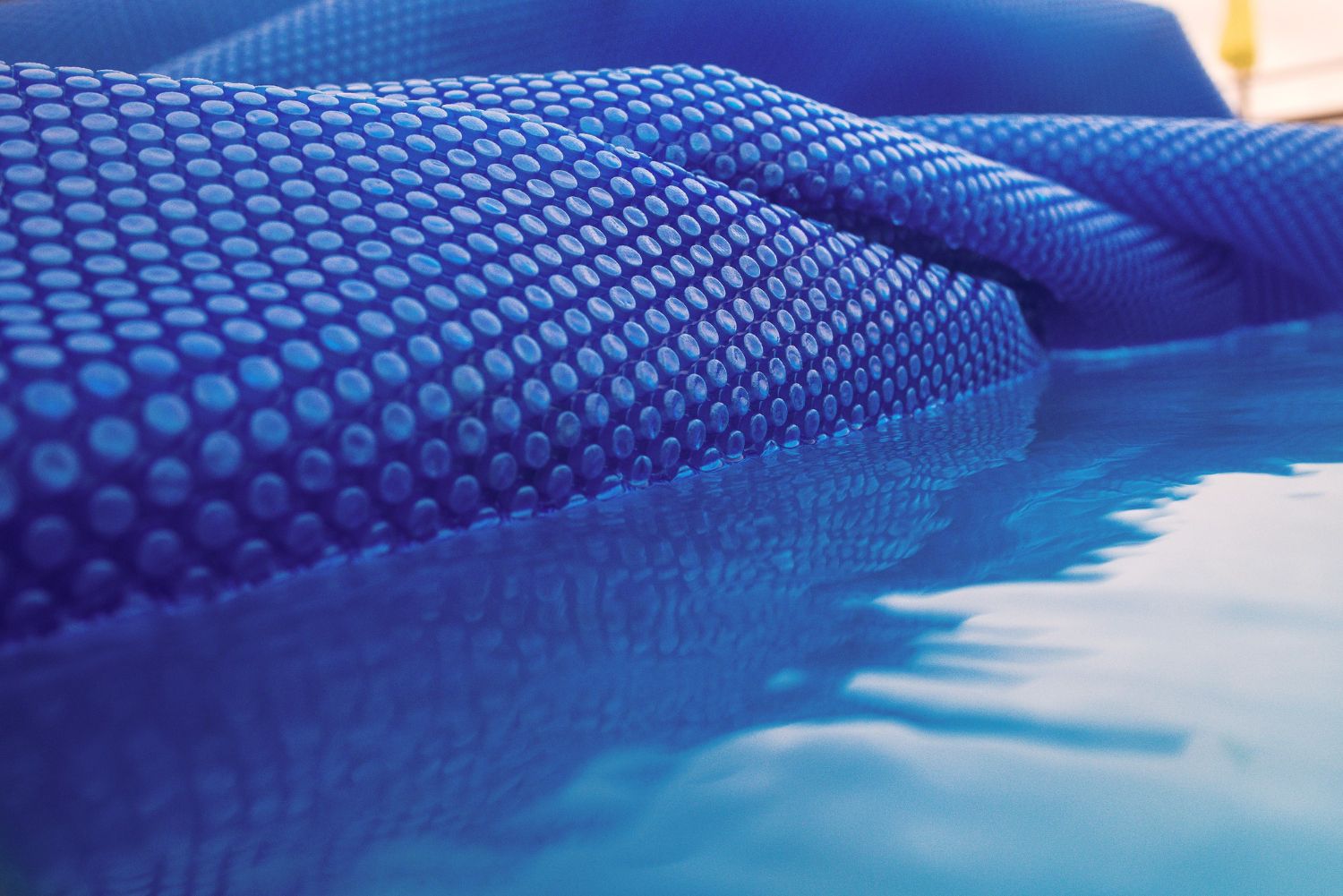
Most heat loss in a swimming pool occurs through water evaporation, which can account for up to 75% of the temperature drop. This process can be explained by the basic principles of thermodynamics, as heat is transferred from the pool surface to the surrounding environment.
When a high-buoyancy thermal cover is placed over the pool, it physically limits the movement of water vapour into the air, reducing evaporation by up to 97%. By retaining both water and heat, the cover stabilises the pool temperature and can deliver substantial savings on heating.
By shielding the surface, the cover prevents cold wind from dispersing the heat that has already been generated. It acts as an effective thermal insulator, keeping the temperature more consistent and improving overall heating efficiency. As a result, the performance of the entire pool heating process depends heavily on this physical barrier, making it financially unsustainable for most condominiums to invest in heating without also using a thermal cover.
The impact of evaporation on water cooling and energy bills
Water evaporation is the main enemy of thermal comfort in any swimming pool because the change from liquid to vapour consumes a large amount of thermal energy. Every litre of water that evaporates takes latent heat with it, quietly and continuously lowering the pool temperature. In colder climates, or on winter nights, this evaporative cooling becomes even more intense, forcing the heating system to run for longer periods to restore the ideal temperature. As a direct result, electricity or gas consumption rises significantly, leading to high energy bills for condominiums.
Without an effective physical barrier, a significant amount of pool water can evaporate naturally, often requiring frequent top-ups with cold water. This further lowers the temperature and increases heating costs. By installing a suitable thermal cover, the property manager can reduce this loss of water and heat, stabilise the pool temperature, minimise wasted heating and cut energy costs related to heating by up to 70%. In this way, temperature control and physical barriers are essential to making water heating more efficient.
Practical differences between bubble covers, safety covers and liquid covers
For efficient pool management, administrators need to understand the technical differences between the cover options available. Each solution has a specific purpose, whether it is heat retention, accident prevention or temperature control. The best accessory for a pool depends on these goals and on the physical conditions of the site:
Bubble thermal cover: A lightweight polyethylene cover designed to float on the pool surface, with a clear focus on heat retention and temperature control. It greatly reduces evaporation, helping to limit temperature variation and improve heating efficiency.
Safety cover: Made from heavier, more resistant materials, it is secured with hooks and ropes to support weight and help prevent falls. It is not designed to provide thermal insulation.
Liquid thermal cover: A biodegradable chemical compound that forms a microscopic barrier on the water surface and reduces evaporation. However, its thermal performance is lower in strong winds.
Although a liquid cover is invisible, it does not replace the physical insulation provided by a floating cover, which is essential for protecting pool facilities. To get the best performance from a pool heating system, a floating physical barrier remains the most reliable option for stabilising temperature and ensuring heating efficiency.
Efficient ways to reduce pool heating costs in winter
During the coldest months of the year, optimising pool heating becomes a priority for avoiding waste and keeping bills under control. A comfortable water temperature should not mean unusually high electricity or fuel costs. To manage facilities sustainably and maintain efficient temperature control, property managers can adopt a set of practical measures. Good operational planning is the key to reducing energy consumption and improving user comfort.
The main practical tips for conserving heat and saving energy include:
Use Full Inverter heat pumps: Modern equipment adjusts its output according to heat demand, providing energy savings of up to 80% while keeping the pool heated.
Adjust the temperature sensibly: Keeping the water between 26 °C and 28 °C, instead of at higher levels, provides suitable thermal comfort while preserving heating efficiency.
Schedule the system strategically: Avoid running pumps during peak tariff periods, and prioritise times with greater solar exposure to support collective heating.
Combine solar collectors with electric heaters: Using solar heat as the primary source greatly reduces the need to activate conventional electric heating.
Always use a thermal cover: Leaving the pool uncovered at night cancels out much of the saving achieved, as cold air quickly removes the accumulated heat.
With this kind of intelligent planning, it is entirely possible to enjoy the pool at the ideal temperature while significantly reducing heating costs.
Specific challenges and tips for temperature control in indoor pools
An indoor heated pool offers undeniable thermal comfort, but it also brings specific challenges related to heating and temperature retention. Heated water increases the rate of evaporation, raising air humidity and potentially damaging the physical structure of the space if ventilation is inadequate. Air and water temperature should therefore be managed together. Moisture build-up on walls and glass affects the user experience and places additional demand on the heating system, which has to work harder to replace lost energy.
To manage these challenges and keep indoor pool heating efficient and safe, follow these practical guidelines:
Monitor pH and chlorine more frequently: Heat encourages microorganism activity, requiring careful testing to protect swimmers.
Use air dehumidifiers: These devices keep humidity under control, protecting masonry and helping maintain a comfortable indoor environment.
Set the water temperature appropriately: In indoor environments, keeping the water at around 28 °C to 30 °C is generally ideal for users.
Do not dispense with the floating thermal cover: Even in a pool protected by a roof, a floating cover is vital for slowing evaporation and retaining water temperature.
Maintain heat exchangers properly: Clean filters and unobstructed pipes help prevent increased energy consumption for heating.
Applying these practices helps create a pleasant space with stable temperatures and controlled heating costs.
Maintenance, cleaning and storage practices to extend the life of a thermal cover
To ensure that the floating cover continues to support heating efficiency and temperature retention, it needs regular care. Continuous exposure to chlorine and sunlight can degrade the material, reducing its insulating capacity and forcing the heating system to work harder. Without proper maintenance, the system will need to compensate for greater temperature loss, causing premature wear on components.
To extend the life of the cover and keep pool heating efficient, follow these simple rules:
Wash only with mild detergent: Abrasive chemical soaps or hard sponges can damage the air bubbles and shorten the product’s service life.
Store away from direct sunlight: When the cover is removed from the pool, fold or roll it up and keep it in a shaded, protected place.
Observe the post-chemical treatment period: Wait at least 12 hours after applying chlorine or water correctors before placing the thermal cover back on the pool.
Control acidity and chlorine levels: Free chlorine in the water should not exceed 1.3 ppm, helping to prevent corrosion of the cover’s plastic material.
Never burst the air bubbles: The air inside the bubbles is responsible for buoyancy and temperature retention.
These precautions help avoid early replacement costs and ensure that pool temperature control continues to work efficiently alongside the heating system.
NewSun clean energy subscription: reducing pool heating costs digitally

Even with heat-retention measures and bubble covers in place, keeping the heating on for a large communal pool can still have a significant impact on the monthly electricity bill, especially in winter. For condominiums and companies that want to maintain the ideal temperature without compromising budget stability, NewSun Energy Group offers an effective solution: the NewSun clean energy subscription. This innovative model helps reduce electricity costs associated with heating in a 100% digital way, without building work, roof drilling or solar panel installation on the condominium premises. NewSun generates clean, renewable energy in its own plants across the country and injects that energy directly into the local distributor’s grid, generating credits that automatically reduce the consumption charge. This brings predictability and helps protect the condominium’s cash flow from seasonal energy inflation and high utility tariffs. Moving to this digital subscription model also removes maintenance costs and repairs associated with solar panels. With NewSun, the cost of heating pool water becomes less of a burden and more of a smart solution, balancing pool comfort with the financial health of the shared budget.
Take the opportunity to modernise your condominium’s energy consumption. Simulate your savings potential with our calculator in less than a minute and join NewSun’s energy revolution.
Conclusion: the ideal balance between thermal comfort, savings and asset preservation
Managing a swimming pool intelligently during the coldest months of the year means combining active heating with thermal protection measures. Ignoring the physical factors that accelerate cooling leads to significant energy losses, makes it harder to maintain the ideal temperature and increases equipment wear.
By investing in a high-performance thermal cover, a condominium can stabilise the pool temperature and significantly reduce the need to run the heating system continuously before use. This preventive approach protects the structure and helps maintain ideal conditions for leisure throughout the year. Combining these measures with sustainable innovations, such as NewSun’s energy subscription, is an effective way to optimise heating, make pool heating more affordable, reduce system costs and keep the temperature stable for the benefit of the entire community.
You may also like
- Dicas para Síndicos e PMES
 13/10/2026
 5m
5m - Dicas para Síndicos e PMES09/10/20265m
- Dicas para Síndicos e PMES08/10/20265m





Stop paying more for your energy bill
Find out in less than 1 minute how much you could save with clean energy every month — no works and no bureaucracy.
Join the energy revolution
Subscribe to our newsletter and receive exclusive content