
How to organise selective waste collection and recycling in condominiums
How to organise selective waste collection and recycling in condominiums
Dicas para Síndicos e PMES
 24/04/2026
 5 min
5 minImplementing a recycling programme in condominiums is not just an ethical choice; it is a legal and operational necessity. With the maturing of the National Solid Waste Policy (Law No. 12,305/2010), condominiums have become responsible for properly separating, storing and disposing of what is produced within their walls. For the property manager, mastering the nuances of selective waste collection — from the types of contracts with cooperatives to the technical maintenance of compactors and containers — is the key to high-performance management. In this article, we explore how to turn the liability of waste into an asset for property valuation and sustainability.
Legal Foundations and the Property Manager's Responsibility in Selective Waste Collection
The legal framework governing recycling in condominiums is based on Law No. 12,305/2010, which established the National Solid Waste Policy (PNRS). This law establishes that responsibility for the waste generated is shared, but it assigns to the generator, in this case the condominium, the duty to properly separate, store and dispose of its waste. According to the PNRS, the household generator's responsibility only ceases once the waste has been properly made available for public or private collection in accordance with local rules. In cities such as São Paulo, specific legislation such as Law No. 12,528/2007 requires residential condominiums with more than 50 units to maintain active selective collection systems, under penalty of administrative sanctions.
The civil and criminal liability of the property manager is one of the most critical points of recycling management in condominiums. Under the Environmental Crimes Law (Law No. 9,605/1998), administrators and directors can be held liable for damage caused by poor waste management, particularly where there is soil contamination or improper disposal of special waste such as oils and electronics. Therefore, selective waste collection should not be seen merely as a sustainability project, but as a mechanism of legal protection for building management. Active oversight of final disposal is essential to ensure that recycling materials from condominiums do not end up in illegal dumps, which is still the reality for 92% of waste in some Brazilian regions.
Beyond these obligations, there are incentives the property manager should be aware of to optimise the costs of selective collection. The Recycling Incentive Law (Law No. 14,260/2021) and Planares (the National Solid Waste Plan) aim to stimulate the circular economy through tax credits and financing for projects that expand recycling in condominiums. In some municipalities, participation in selective collection and waste-reduction programmes can result in reductions to the Solid Waste Fee (TRSS), using the so-called "K Factor" to adjust the individual fee amount in light of reduced operating costs for the local authority. Thus, efficient recycling management in condominiums becomes a tool for easing the ordinary budget.
Contract Models for Waste Management and Selective Collection
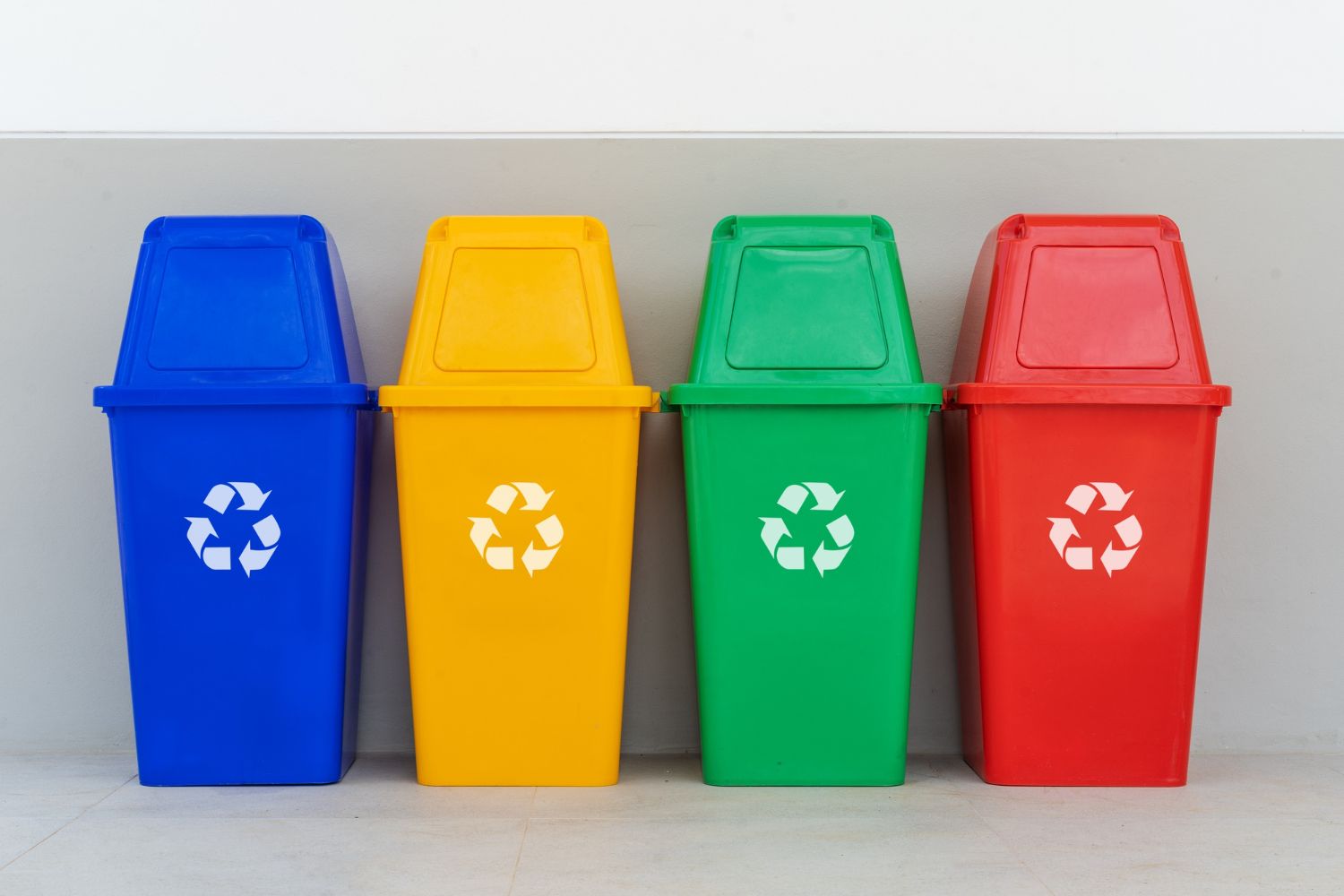
Operationalising recycling in condominiums requires a careful choice between different types of service contracts. Essentially, condominiums can opt for partnerships with waste pickers' cooperatives or hire private companies specialising in environmental management. The choice depends on the condominium's profile, the volume of waste generated and local logistical capacity. For selective collection to work, the contract must cover not only the removal of materials but also the provision of disposal reports and, often, the loan of equipment such as containers and presses.
Waste pickers' cooperatives are the preferred partners from the standpoint of the National Solid Waste Policy, as they promote the socio-productive inclusion of low-income individuals. However, partnerships with cooperatives can be complex, requiring the property manager to check whether the entity has minimum sorting infrastructure and is properly registered to issue recycling certificates for condominiums. Condominiums often need to provide technical assistance or infrastructure so that selective collection can be carried out professionally by these groups, which helps extend the lifespan of landfills and supports the circular economy.
On the other hand, private waste-management companies offer contracts that prioritise logistical agility and sorting technology. These companies tend to have a more robust organisational structure for handling large volumes of recycling in condominiums, guaranteeing a rigorous selective collection schedule that prevents materials from piling up in common areas. Regardless of the model chosen, it is vital for the property manager to understand that the direct sale of recyclables rarely generates significant profit for condominiums, given the low market value of materials such as plastics and glass; the real gain lies in reduced operating costs and an enhanced image for the building.
Waste Compactors: Technology for Optimising Space
In medium and large condominiums, physical space is one of the biggest constraints on expanding recycling. Since selective collection materials — especially plastics and paper — take up far more volume than weight, weekly accumulation can quickly overwhelm storage areas. To solve this problem, using waste compactors has become an essential solution, drastically reducing waste volume, which lowers the need for large storage areas and the frequency of collection truck visits.
Using compactors for recycling in condominiums brings significant benefits for hygiene and workplace safety. By compacting waste, the property manager can reduce exposure to unpleasant odours and curb the proliferation of pests such as rats and insects, which are attracted to scattered rubbish. However, installing this equipment requires strict attention to Regulatory Standard 12 (NR-12), which sets out safety guidelines for operating machinery. It is essential that compactors have safety features such as visible emergency stop buttons and interlock systems that prevent the press from operating with the door open, protecting cleaning staff during selective collection.
Maintaining these machines is a pillar of infrastructure management in recycling for condominiums. A compactor without regular maintenance can become an operational risk and an expensive liability in the event of sudden breakdowns. The property manager should establish an inspection schedule that includes lubricating moving parts, checking for hydraulic leaks and frequent cleaning to prevent corrosion caused by leachate. The average lifespan of a high-quality compactor ranges from 5 to 10 years, depending on how frequently it is used for selective collection and how well it is cared for. Investing in modern equipment that complies with NR-12 is not just a technical choice, but a commitment to the physical safety of staff and the efficiency of recycling in condominiums.
Container Sanitisation and Maintenance of Collection Areas
The visible face of recycling in condominiums is often the state of upkeep and cleanliness of bins and containers. Selective collection inevitably generates liquid waste and odours that, if left untreated, can turn the waste storage area into an unsanitary spot for nearby residents. Therefore, establishing strict sanitisation protocols is essential to maintaining the community's wellbeing. The standard recommendation for residential condominiums is professional washing of containers at least once a month, while areas with a high volume of organic waste may require weekly cleaning.
The professional container-sanitisation process for recycling in condominiums uses washing trucks equipped with hydraulic arms and high-pressure water jets. In these operations, biodegradable detergents with anti-odour properties are applied to eliminate odour-causing bacteria without harming the environment. Besides the containers themselves, the selective collection storage area must have adequate drainage for liquid run-off and finishes that facilitate disinfection. Keeping bins clean extends the service life of materials such as High-Density Polyethylene (HDPE), which can degrade more quickly when exposed to the aggressive chemical substances found in accumulated waste.
Preventive maintenance also extends to the mechanical components of the bins used for recycling in condominiums. Swivel castors, brakes and hinged lids must be checked periodically to prevent accidents while moving bins along ramps or tipping them into collection trucks. Broken bins or those missing lids lose their sealing function, allowing rainwater in — which generates leachate — and giving pests access to the selective collection area. For the property manager, managing hygiene and maintenance is an exercise in stewardship of the property that directly impacts perceived value in condominiums.
Necessary Steps to Implement Recycling in Condominiums
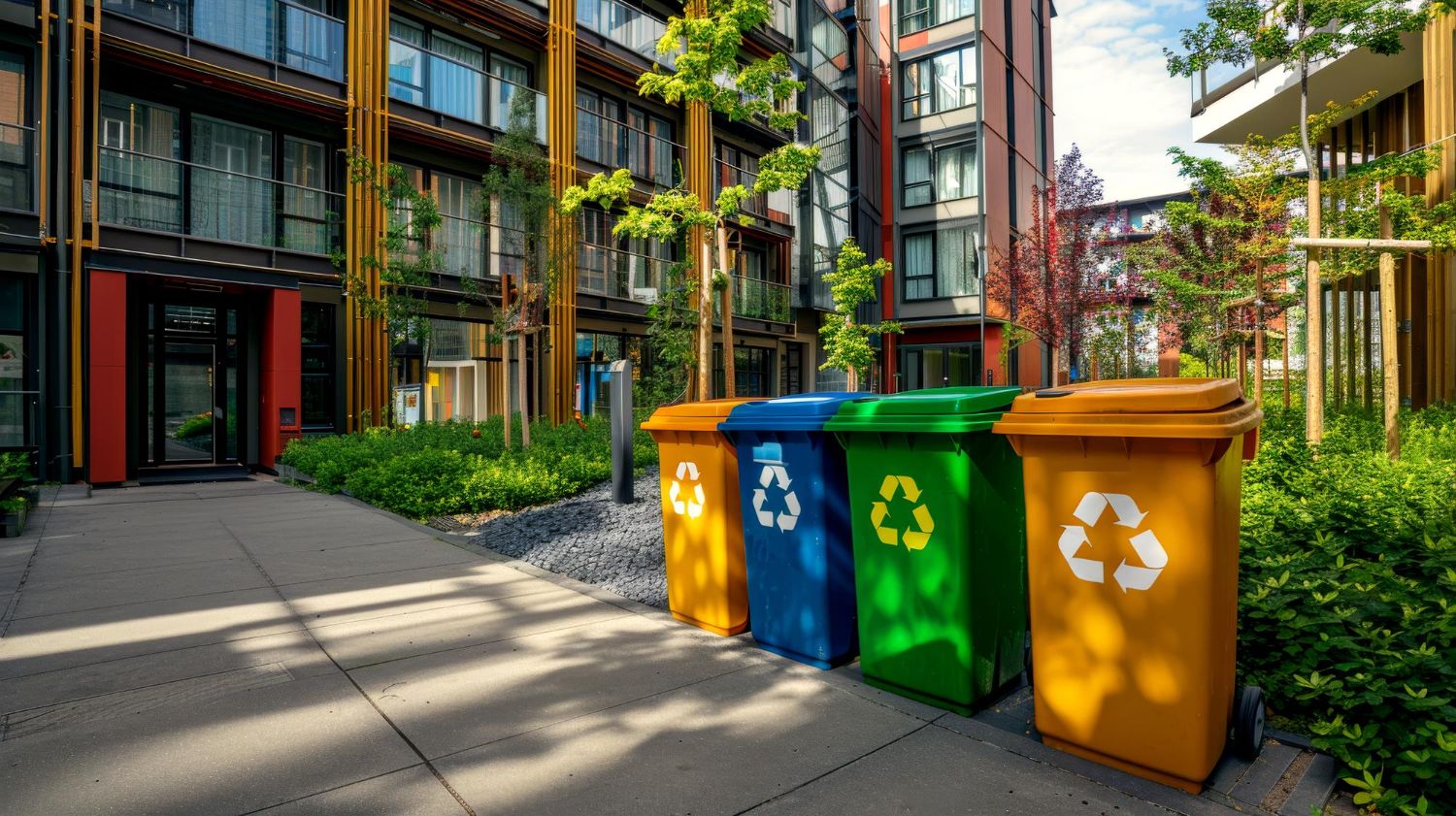
The transition to a sustainable model requires a structured approach to prevent residents from abandoning the project within the first few months. Successful recycling in condominiums begins with an accurate assessment of local conditions, followed by logistical planning that fits the building's routine. It is not enough to simply buy colour-coded bins; the flow must be organised from disposal in the flat right through to collection by the selective collection truck.
Below are the fundamental steps for implementation:
Assessment and Sizing: Calculate the weekly volume of waste generated. A household of four can produce up to 200 litres of recyclables per week; multiply this by the number of units to determine how many 1,000-litre containers will be needed for recycling in condominiums.
Infrastructure Preparation: Choose a suitable location, such as technical rooms or underused parking spaces, ensuring the area is well ventilated and easily accessible for external selective collection.
Partner Selection: Decide whether collection will be handled by the local authority, a cooperative or a private company, formalising contracts that specify days, times and responsibilities regarding recycling in condominiums.
Education and Communication: Hold in-person training sessions for residents in the evenings and for staff in the mornings, focusing on the correct separation of dry recyclables and rejects to make selective collection easier.
Launch and Monitoring: Organise a launch event to mark the start of recycling in condominiums and track results over the first few months, adjusting logistics and reinforcing guidance as needed.
Raising Residents' Awareness and the Psychology of Selective Collection
The biggest obstacle to recycling in condominiums is not technical, but behavioural. Convincing hundreds of residents to change their disposal habits requires a constant and empathetic communication strategy. The property manager must act as a transformative leader, showing that selective collection is not an added burden, but a civic duty and a way of protecting the property's value. Resistance often stems from myths such as the idea that "it all goes to the same place" or that "recycling is too much hassle", which must be countered with transparency and measurable results.
Internal communication strategies, such as posters in lifts, WhatsApp group messages and informational emails, should be maintained for at least three months after implementation of recycling in condominiums so that the habit takes hold. It is vital to involve the building's children, who are often the biggest enthusiasts of selective collection and who influence their parents at home. Another key group is domestic staff and cleaners, who handle waste at the source; training them properly ensures that separation starts correctly from within the units themselves.
Sharing results is one of the most powerful tools for maintaining engagement with recycling in condominiums. Showing residents how much waste by weight was diverted from landfills, or how much was saved in municipal fees, creates a sense of collective achievement. When selective collection is handled professionally by management, residents tend to feel part of something bigger, reducing cross-contamination in the containers and raising the sustainability standard of condominiums.
Advantages and Disadvantages of Sustainable Waste Management
Realistically assessing recycling in condominiums allows the property manager to manage the expectations of the board and residents. While the environmental benefits are clear, there are operational and financial challenges that must be weighed. Selective collection is a long-term investment that requires administrative discipline to generate tangible returns in terms of image and operational efficiency.
Key points for analysis:
Property Valuation: Properties in condominiums that adopt ESG practices (Environmental, Social and Governance), such as recycling, are more attractive to modern buyers and tenants who prioritise sustainability.
Hygiene and Public Health: Correct separation and the use of clean containers dramatically reduce the presence of pests and odours, improving quality of life across all condominiums.
Operating Cost: Implementation requires an initial investment in equipment and training, but this can be offset by future savings in collection fees and a reduction in environmental fines for recycling in condominiums.
Behavioural Resistance: The main drawback is the ongoing management effort required to ensure residents do not mix their waste, which demands active oversight of selective collection by the property manager.
Logistical Complexity: Depending on external selective collection schedules can lead to a build-up of materials if there are failures in the public service or the cooperatives, requiring backup plans for recycling in condominiums.
NewSun Energy Group: Bill Stabilisation and Clean Energy

For property managers seeking to modernise management and reduce ordinary expenses, the clean energy subscription from NewSun Energy Group emerges as the perfect ally for recycling in condominiums. NewSun offers a smart solution that stabilises the electricity bill for common areas, shielding the condominium from fluctuations in tariff bands and providing progressive savings that positively impact cash flow. Unlike traditional systems that require heavy investment in solar panels and complex refurbishments, NewSun's subscription model is 100% digital, with no construction work and no maintenance costs for the building.
What sets NewSun Energy Group apart is its combination of cutting-edge technology with genuinely human service, recognising that the property manager acts as a "mayor" of a mini-city that demands agile, efficient support. Through the exclusive NewSun Energy Club platform, the manager can track energy consumption, solar energy credits fed into the grid and savings generated in real time, ensuring full transparency for residents' meetings. This digitalised approach to energy management complements the logistics of recycling in condominiums, creating a technological and environmentally responsible living environment.
Integrating selective collection with NewSun's solar energy subscription positions condominiums at the forefront of urban sustainability. While waste management reduces the physical environmental footprint, NewSun focuses on energy decarbonisation, generating real value for the property and budgetary predictability for management. For the modern property manager, this synergy between recycling in condominiums and energy efficiency represents the delivery of a legacy of efficient, human and sustainable management for all residents.
Find out more about our Solutions for Condominiums.
Technical Specifications and Longevity of Disposal Equipment
To ensure recycling in condominiums is not interrupted by infrastructure failures, it is essential to invest in equipment that can withstand high daily turnover. The choice of the 1,000-litre container, for example, must follow strict material and manufacturing specifications. High-Density Polyethylene (HDPE) is the industry standard due to its resistance to impact and traction, as well as its UV protection, which prevents the plastic from drying out and cracking when exposed to the sun in condominium common areas.
Other important technical details for selective collection include the container's wall thickness — a minimum of 4 mm for residential use — and the presence of swivel castors with brakes to make moving them easier for staff. Peripheral lid sealing with silicone or EPDM is essential to prevent odours escaping and external liquids entering, which accelerate organic decomposition within recycling areas in condominiums. For presses, compliance with NR-12 is not just a formality, but a safeguard against serious accidents and labour liabilities that could ruin building management.
The longevity of these assets depends directly on preventive maintenance and correct use. The property manager should instruct the cleaning team not to exceed the load capacity of the containers (generally between 400kg and 450kg) and to lubricate the castors monthly to prevent them from seizing up. Well-maintained equipment for selective collection conveys an image of organisation and care, encouraging residents to respect the recycling area in condominiums. Ultimately, technical infrastructure is the foundation on which a lasting and efficient culture of sustainability is built.
The Future of Recycling in Condominiums and Management 4.0
As we move through the second half of the 2020s, recycling in condominiums will undergo even deeper digitalisation. The trend is towards integrating volume sensors into containers, allowing property managers and selective collection companies to know exactly when a bin is full, optimising routes and reducing transport costs. Furthermore, growing demand for ESG data will make monitoring the weight of recycled waste a common indicator in condominiums' monthly financial reporting, on a par with the financial statement.
The property manager of the future will be an environmental data manager, capable of cross-referencing selective collection data with energy performance monitored through platforms such as the NewSun Energy Club. This holistic view of sustainability makes it possible to identify points of waste and implement continuous improvements that directly benefit residents' pockets. Recycling in condominiums will cease to be seen as an isolated operating cost and become part of an integrated strategy for urban efficiency, where each building acts as a vital link in Brazil's circular economy.
In conclusion, implementing recycling in condominiums and professional selective collection is a medium-term journey that requires patience, technical skill and leadership. The property manager who masters the laws, the types of contracts and the technologies for compaction and sanitisation is better prepared to face the challenges of an increasingly demanding and regulated society. By combining these efforts with innovative clean energy solutions such as those from NewSun Energy Group, condominium management reaches a new level of excellence, turning the building into a model of modernity and environmental respect for future generations.
You may also like
- Casos de Sucesso
 20/10/2026
 5m
5m - Dicas para Síndicos e PMES16/10/20265m
- Dicas para Síndicos e PMES13/10/20265m




Stop paying more for your energy bill
Find out in less than 1 minute how much you could save with clean energy every month — no works and no bureaucracy.
Join the energy revolution
Subscribe to our newsletter and receive exclusive content