

Fire Alarms and Smoke Detectors in Residential Complexes
Fire Alarms and Smoke Detectors in Residential Complexes
Dicas para Síndicos e PMES
 26/06/2026
 5 min
5 minThe management of safety in residential and commercial buildings has changed dramatically in recent years, requiring administrators to take a much more proactive stance in line with technological innovations for life protection. In shared-housing environments, where hundreds of people use corridors, lifts and leisure areas every day, a fire incident can escalate to catastrophic proportions within minutes. It is precisely for this reason that investing in efficient infrastructure, such as fire alarms and smoke detectors, has stopped being seen as a mere bureaucratic expense and become an essential pillar for safeguarding both property and human life within the complex. Modern engineering focuses on containing threats before they become uncontrollable.
The implementation of these protective devices must be guided by close adherence to the state and national legislation in force. When the building manager decides to modernise the perimeter fire-fighting system, they need to be aware that the installation of fire alarms and the positioning of smoke detectors must strictly follow the technical standards set out by regulatory bodies and the Fire Department. Ignoring these legal guidelines exposes the community to severe risks and lands the administration with heavy legal liabilities. An effective culture of prevention rests on three pillars: legal compliance, cutting-edge technology and ongoing training for on-site staff.
Understanding how these tools work in practice is the first step for the manager to be able to demand efficiency from outsourced engineering firms. Fire alarms operate by issuing coordinated audible and visual warnings that guide the rapid evacuation of the building, while smoke detectors act as the system's electronic eyes, picking up the first traces of combustion in the air. The seamless joint functioning of this equipment, backed by compliance with current standards, drastically cuts response time when a heat source is detected. This guide has been designed precisely to translate complex technical terms into accessible guidance, equipping the building manager to lead fire safety efforts with full authority and civil responsibility.
What Brazilian technical standards say about prevention systems
Within the Brazilian legislative landscape, the standardisation of fire-fighting systems is governed authoritatively by guidelines issued by the Brazilian Association of Technical Standards (ABNT), with particular emphasis on NBR 17240. This specific regulation sets out all the rules for the design, installation, commissioning and maintenance of fire detection and alarm systems in private and commercial properties. For the residential complex, strict compliance with these standards is the only guarantee that fire alarms and smoke detectors will operate with full technical reliability when the community most needs biological or structural protection.
Technical standards set rigid geometric parameters for positioning each electronic component of the system. The legislation specifies, for example, the maximum coverage radius smoke detectors can achieve on a flat ceiling, as well as the maximum linear distance a resident should have to walk before reaching a manual call point for the fire alarms in corridors. Failing to observe these regulated spacings creates unprotected areas known as smoke blind spots, undermining the effectiveness of the contingency plan and resulting in heavy fines during official inspections carried out by the Fire Department.
Beyond the physical positioning criteria, national standards require that all electrical and electronic components supporting the fire alarms and smoke detectors hold compliance certifications issued by laboratories accredited by Inmetro. Using ordinary electrical wiring, without flame protection or without proper thermal insulation, voids the legality of the project and exposes the residential complex to short-circuit failures at critical moments during a fire. To guide administrators on the main requirements set out in the safety legislation currently in force in the country, the system must mandatorily comply with the following basic regulatory parameters:
Installation of monitoring panels fitted with backup batteries capable of keeping the fire alarms active for at least twenty-four hours in the event of a power cut;
Exclusive use of shielded, flame-retardant electrical cables for interconnecting all the building's smoke detectors;
Positioning of manual alarm call points in visible, unobstructed locations at a standardised height of between 1.20 and 1.60 metres from the floor;
Emission of continuous audible alerts at an acoustic intensity regulated by the standards, sufficient to overcome ambient noise and wake residents at night;
Formal recording of all commissioning reports and technical inspections in an official occurrence log kept in the administration's custody.
Types of fire alarms and monitoring panels available
The choice of technology to run the residential complex's fire safety system must be made carefully, based on the size of the residential towers and the complexity of the building's architectural layout. The property market offers different categories of panels that control fire alarms and process the signals emitted by smoke detectors, divided primarily into conventional systems and addressable systems. Understanding the practical differences between these models helps the building manager select the best cost-benefit alternative, always in keeping with current engineering standards.
Conventional systems are recommended by technical standards for small residential complexes or those with few horizontal floors. In this technological model, smoke detectors and fire alarm call points are grouped by broad geographic zones or loops. When a heat trigger occurs, the panel only informs the doorman of the general zone where the problem was detected, such as the third floor of Block A. This analogue model has a lower acquisition cost, but requires the caretaking team to spend precious minutes searching for the exact flat where the incident began, which can delay the fire response.
On the other hand, addressable systems represent the pinnacle of modernisation and intelligent building protection in medium and large buildings. In this advanced electronic engineering, each smoke detector and each fire alarm manual call point is assigned a unique numerical identification code, known as a digital address. When a source of smoke reaches the ceiling, the monitoring panel immediately displays on the security desk screen the precise location of the problem, pinpointing the block, floor and exact room of the complex. This precision speeds up decision-making at the front desk, ensures strict compliance with safety standards and enhances the organised evacuation of the building.
Classification of the main smoke detectors and heat detectors
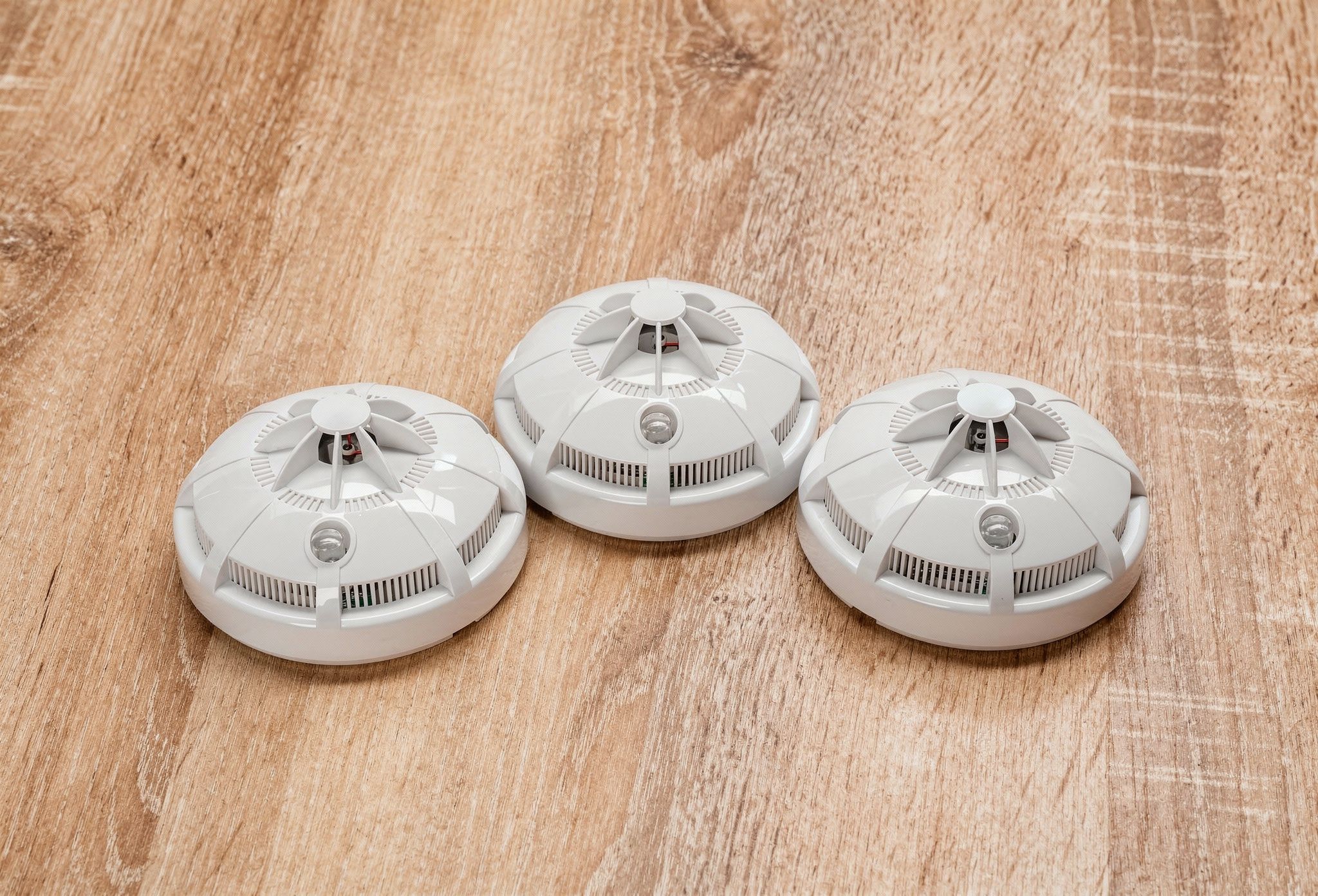
The smoke detectors act within fire-fighting infrastructure as highly sensitive analytical devices, designed to detect the first floating particles released by burning materials long before visible flames appear. The building manager focused on identifying faults and ensuring the protective efficiency of common areas must understand that there are different types of detection technologies on the market, each designed to respond to specific burning profiles and in compliance with ABNT's national standards. Choosing the wrong detector can render the residential complex's fire alarms ineffective.
The most widely used and popular category for corridors and communal halls is the optical or photoelectric detector. These smoke detectors work by directing an internal infrared light beam into a dark chamber. When smoke enters the device, the particles reflect the light towards an electronic receiver, which closes the circuit and sends the emergency signal to trigger the building's fire alarms. They are highly effective at detecting slow-developing fires and smouldering embers, such as burning carpets, upholstery or electrical wiring, making them the most recommended by the standards for the complex's internal escape routes.
In addition to optical models, there are ionisation detectors and pure temperature sensors, known as heat detectors and rate-of-rise detectors. Ionisation sensors use harmless radioactive microparticles to monitor air conductivity, reacting extremely quickly to fast-spreading fires with open flames, such as burning flammable liquids or paper. Pure heat sensors, meanwhile, only trigger the fire alarms when the environment reaches a fixed temperature (generally above 57 degrees) or when the heat rises abruptly within a few seconds. Adopting these mixed technologies in compliance with technical standards provides the following practical advantages for the residential complex:
Early, ultra-fast detection of invisible smoke sources, reducing the spread time of fire in common areas;
Native integration with addressable fire alarms, allowing electronic isolation of specific rooms in the event of an incident;
Drastic reduction in the risk of severe structural damage to the building's masonry thanks to immediate warning from the panel;
Full compatibility with state fire and panic safety standards required by the Fire Department;
Long service life of the electronic components when subjected to strict technical calibration and periodic cleaning plans.
Strategic locations for installation in the common areas of the residential complex
Defining the exact geographic points within the building to house fire protection devices is a technical factor that determines the community's real level of safety and the speed at which the civil brigade can respond. The building manager cannot install fire alarms or position smoke detectors randomly, or based solely on aesthetic finishing criteria. The equipment must be installed following a strict engineering plan, mapping the highest-risk areas and the collective escape routes in strict compliance with ABNT standards.
The circulation corridors on every floor, the lift lobbies and the fire-rated emergency staircases are the first locations that must receive mandatory smoke detector installation. In these traffic areas, the flat ceiling makes it easier for hot gases to rise naturally, allowing the devices to pick up danger within the first few seconds and trigger the general fire alarms to begin evacuating residents. Since fire stairs are the only safe route down, whether in winter or summer, they must remain completely free of smoke, making inspection of these detectors a caretaking priority within the residential complex.
Beyond pedestrian routes, there are enclosed technical rooms that concentrate a high electrical or fuel load and require continuous monitoring by specific sensors, as required by current standards. Locations such as lift machine rooms, transformer substations, generator rooms, tool storerooms and underground car park basements are silent hotspots for short-circuit risks. In these demanding environments, using suitable heat sensors or smoke detectors, connected directly to the central fire alarms, shields physical assets and ensures that any anomaly in electric motors is contained at the source before it spreads throughout the residential complex.
The building manager's role in preventive maintenance routines and system testing
Serving as building manager in a large shared-housing complex carries a heavy load of legal obligations, civil liabilities and criminal duties towards society and the state's regulatory bodies. As far as the fire-fighting system is concerned, the manager's role does not end on the day the technical firm delivers the installed equipment. Regular preventive maintenance is the ongoing mechanism that ensures fire alarms sound loudly and smoke detectors operate without chronic faults, in line with all the residential complex's safety standards.
Neglecting the upkeep of fire monitoring panels constitutes a very serious administrative offence and exposes the administrator to lawsuits for negligent omission should an incident occur involving bodily injury where the equipment fails due to lack of care. The building manager must instruct the caretaking team to carry out periodic visual and operational tests on the manual call points and warning sirens of the fire alarms. Keeping devices clean and free of dust prevents the build-up of dirt that clogs the optical chambers of smoke detectors, ensuring the technical compliance required by national engineering standards within the residential complex.
To organise the schedule of technical inspections professionally and ensure that the entire electronic fire-protection infrastructure remains in a state of absolute readiness, the building administration must establish a strict periodic maintenance calendar. Daily or weekly completion of reports gives the management transparency towards the supervisory board. To structure this preventive monitoring with full practical efficiency, the residential complex's caretaking staff must strictly follow this checklist of periodic technical inspections:
Carry out monthly tests of the acoustic and visual function of all sirens and integrated alerts of the fire alarms;
Perform technical cleaning of the screens and capture chambers of all smoke detectors to remove dust and cobwebs;
Check the charge level and autonomy of the sealed twelve-volt backup batteries installed in the monitoring panel;
Randomly trigger the emergency manual call points in the corridors to test the response time of the residential complex's system;
Issue compliance reports signed by a CREA-accredited engineer every six months, attesting to adherence with the standards.
NewSun Energy: Clean energy subscription and budget predictability

While the building management committee focuses its operational efforts on inspecting escape routes, organises technical cleaning drives in corridors and designs preventive strategies to ensure that fire alarms and smoke detectors work in strict compliance with fire safety standards, the property administration also needs to act with financial intelligence and look behind the scenes at its fixed running costs. The uninterrupted operation of a robust fire-protection structure — encompassing hundreds of electronic devices active twenty-four hours a day, addressable monitoring panels with continuous data processing, photoluminescent emergency lighting and mechanical smoke extractors in stairwells — permanently increases demand for, and consumption of, electricity across the building's main switchboard. To optimise these fixed electricity costs with full sustainability and predictability, NewSun Energy Group presents an innovative clean energy subscription model designed specifically for the property market and modern residential complexes.
The clean energy subscription provided by NewSun works as a modern, sustainable solution that immediately and permanently stabilises the electricity bill for the building's common areas, comfortably absorbing the weight of the electricity consumption generated by protection machinery, car park lighting, lifts and the panels that power the building's fire alarms and smoke detectors. By joining this renewable-source subscription system, the residential complex starts consuming clean electricity generated from sustainable sources, obtaining direct, guaranteed discounts on its traditional energy bill in a fully hassle-free way, with no need for major upfront financial investment in complex engineering works or the installation of expensive solar panels on the roofs of the residential towers. The major strategic advantage of this intelligent solution is that it fully shields the building's bill from the severe financial impact of fluctuations in yellow or red tariff flags during prolonged dry spells, delivering progressive savings throughout the entire contract.
In addition to the real, guaranteed financial savings achieved through the brand's renewable energy subscription, NewSun Energy Group stands out in the national market by offering genuinely human, approachable, agile service focused on simplifying the day-to-day work of the building manager and the property management company. The residential complex also gains exclusive access to the NewSun Energy Club digital platform, a modern data intelligence tool developed for detailed, transparent, real-time monitoring of the building's entire energy consumption and spending profile. Through NewSun Energy Club, the manager tracks electricity indicators at the palm of their hand, combining digital innovation with sustainability to boost the financial health of the residential complex's operating budget, freeing up valuable resources for ongoing investment in modernising emergency call points, technical calibration of sensors and strict compliance with all state life-protection standards.
Learn everything about NewSun's Clean Energy Subscription.
How to respond to accidental triggers and false alarms in the building
One of the most irritating, stressful and recurring problems in the day-to-day life of a large shared vertical housing complex is the occurrence of false alarms and accidental triggers of the fire warning system in the middle of the night. When sirens sound without a real fire, residents fall into needless panic, rush out of their flats and start criticising the management. The building manager must understand that chronic false alarms in the fire alarms undermine the credibility of the system, leading the community to ignore the audible warning during a real emergency, in breach of the residential complex's safety and protection standards.
In the vast majority of cases, accidental triggers of smoke detectors do not stem from manufacturing defects in the electronic components, but rather from a lack of simple environmental precautions during internal renovation work in flats or the sanding of wooden floors in corridors. Fine dust generated by plaster, masonry sanding or excessive use of aerosol chemical products enters the detector's optical chamber, blocking the internal infrared light beam and simulating the presence of burning smoke. To prevent these operational errors and comply with technical standards, the residential complex's administration must require residents to temporarily cover the detectors in their units with protective plastic covers while carrying out noisy building works.
In addition to renovation dust, dense steam from hot showers escaping into cold winter corridors, or insects attracted by the internal heat of electronic boards, can also trigger smoke detectors unintentionally. The residential complex should invest in modern panels fitted with preventive double-check algorithms, which confirm the fire signal for a few seconds before triggering the fire alarms' powerful sirens. To guide front-desk staff to act quickly and reset the integrated monitoring system when an unwanted trigger occurs, the management must establish the following standard electronic contingency routine at the security desk:
Immediately check the addressable digital panel to identify the extension number and exact location of the smoke trigger within the residential complex;
Send the caretaker or duty security guard to the indicated floor to carry out a visual human check and confirm whether there is a real fire;
Press the temporary silence button for the fire alarms on the security desk panel if a false alarm is confirmed;
Arrange forced ventilation by opening the corridor windows to disperse the dust or steam that activated the smoke detectors;
Record the detailed technical occurrence in the front-desk log and reset the overall electronic system in accordance with ABNT standards.
The Fire Department Inspection Certificate (AVCB) and the building's regulatory status
The Fire Department Inspection Certificate, popularly known by its Portuguese acronym AVCB, is the official document of greatest legal and administrative relevance to attest that a residential or commercial building meets all the legal fire-protection requirements in force in the state. Obtaining and periodically renewing this compliance certificate is a non-transferable duty of the building manager, and approval by the fire service engineers depends directly on the mechanical upkeep of the fire alarms and the correct analytical functioning of all smoke detectors installed in the residential complex's shared leisure areas.
The absence of a valid AVCB, or operating with an expired document, brings devastating financial and legal consequences for the residential complex's economic health and for the property manager's personal assets. In the event of a real fire that causes structural damage to the masonry or destroys flats, insurance companies are legally entitled to flatly refuse to pay out the financial compensation set out in the policy if it is proven that the residential complex was operating in breach of ABNT's technical standards, or with fire alarms and smoke detectors out of service due to lack of caretaking maintenance.
The official fire service inspection scrutinises every detail of the detection infrastructure installed in the building with technical rigour. Officers carry out practical hydraulic pressure tests on hydrants, check the validity of the charge on portable extinguishers, review the emergency lighting in stairwells and require the presentation of technical reports with an ART signed by civil engineers attesting to the full compliance of all smoke detectors and fire alarm panels. Keeping the residential complex fully aligned with current standards averts the risk of heavy administrative closures, protects the market value of the property for all owners and ensures the manager's civil peace of mind.
Awareness campaigns and evacuation training with residents
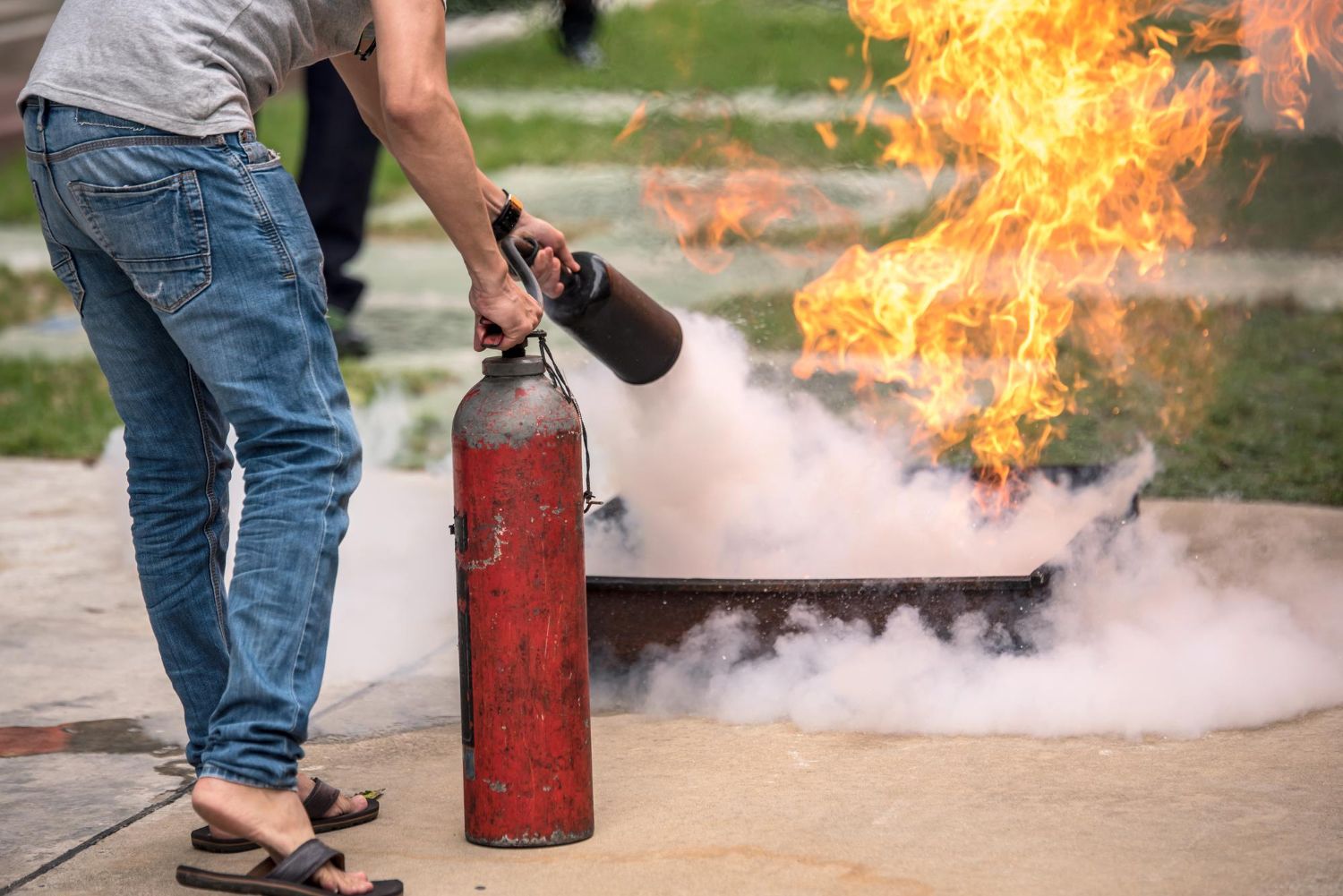
The massive financial investment in acquiring state-of-the-art addressable digital panels, flame-retardant shielded copper wiring and modern smoke detectors loses all its practical effectiveness if the human factor is ignored by the building's property administration. In a real fire emergency in the dead of night, widespread panic and residents' lack of knowledge about how to respond to the piercing sound of the fire alarm sirens can cause serious accidents on staircases, block escape routes and lead to accidental collisions, in breach of the residential complex's basic collective safety standards.
The building manager must take on the role of social educator and lead ongoing community awareness campaigns and practical training sessions for scheduled emergency evacuation, with the participation of all resident families and security-desk staff. Explaining clearly and informatively, through electronic circulars, that the continuous sound of the fire alarms requires immediate abandonment of the flat via the fire-rated stairs — with the use of lifts strictly forbidden during a fire — helps save lives and organises the flow of people leaving the residential complex. Teaching residents not to obstruct the smoke detectors on their private ceilings with decorative plaster or tall cupboards is another crucial preventive measure that meets technical standards.
Holding periodic fire evacuation drills, organised in partnership with companies specialising in occupational safety engineering or voluntary civil fire brigades, brings practical realism and prepares the resident community psychologically to act calmly and methodically in the face of danger. The training sessions teach children and the elderly to locate illuminated emergency exits and to correctly use the manual call points of the fire alarms when they notice smoke in the corridors. Collective engagement turns electronic safety into a living, shared cultural habit, proving that pairing smoke detector technology with human training builds a residential environment that is infinitely safer and better protected, in line with the residential complex's standards.
Aligning safety technology with financial sustainability
Successfully completing the implementation, modernisation and active oversight of a comprehensive fire detection system represents a milestone of civil responsibility, administrative maturity and strong governance led by today's building manager. Protecting the physical wellbeing of families, safeguarding the lives of staff working at reception desks and security posts, and shielding collective property against the devastating threat of urban fires, requires the management board to pay ongoing attention that combines the correct choice of fire alarm types, the strategic engineering positioning of smoke detectors and non-negotiable compliance with all Brazilian technical standards issued by ABNT and the Fire Department.
By pairing the operational rigour of perimeter physical security testing with an intelligent pursuit of innovative sustainability solutions and tariff-cost optimisation for the building's operating budget — such as the revolutionary clean and renewable energy subscription model provided by NewSun Energy Group and tracked in real time through the exclusive NewSun Energy Club digital platform — the residential complex manager creates a high-performance, economically efficient administrative ecosystem. Keeping the residential complex fully compliant with a valid AVCB and free from emergency spending on fines or hydraulic and thermal incidents boosts the market value per square metre of every flat, proving that social responsibility and financial intelligence go hand in hand throughout the year.
You may also like
- Casos de Sucesso
 20/10/2026
 5m
5m - Dicas para Síndicos e PMES16/10/20265m
- Dicas para Síndicos e PMES13/10/20265m





Stop paying more for your energy bill
Find out in less than 1 minute how much you could save with clean energy every month — no works and no bureaucracy.
Join the energy revolution
Subscribe to our newsletter and receive exclusive content