
Automatic Gates in Cold Weather: Complete Guide to Motor Adjustment, Maintenance and Prevention for Condominiums
Automatic Gates in Cold Weather: Complete Guide to Motor Adjustment, Maintenance and Prevention for Condominiums
Dicas para Síndicos e PMES
 29/07/2026
 5 min
5 minThe arrival of winter and the sharp drop in temperatures bring noticeable changes to the routine and operation of a residential or commercial condominium. While managers initially focus on boiler gas consumption and heating in communal areas, another critical building system suffers silently from the effects of severe cold: the automatic access gates for vehicles and pedestrians.
Activated hundreds of times a day in medium and large developments, gate motors operate under continuous mechanical and electrical strain. When temperatures fall, the physics and chemistry of the equipment change drastically. Lubricants dry out, metals contract, electronic components lose efficiency and the result is a recurring nightmare for condominium managers and property management companies: gates jamming halfway, extremely slow opening, burnt-out motors and queues of cars building up on the pavement at peak times.
For the condominium manager, who acts as a generalist specialist, a broken automatic gate is not merely a high emergency expense for corrective maintenance. Above all, it represents a serious breach in the physical security of the property, the imminent risk of robberies in the security enclosure and direct strain on the relationship with impatient residents.
In this complete and in-depth guide, you will understand why winter affects gate automation systems so severely, which subtle signs of wear appear before system collapse, the step-by-step process for ideal preventive maintenance, correct motor adjustment and how to protect the condominium budget through global efficiency management.
The Physics and Mechanics of Cold Weather: Why Do Gates Fail in Winter?
Many residents, and even caretakers, mistakenly believe that gate jamming on cold days is mere coincidence or a moment of bad luck. In reality, it is a purely mechanical, electrical and thermal phenomenon. Cold acts directly on every element that makes up the automation system — from the metal structure to the motor’s electronic control board.
Understanding these physical factors helps the condominium manager diagnose the root cause of the problem and demand the correct service from the contracted maintenance company.
1. Increased Viscosity and Drying of Lubricants
The most frequent cause of gate malfunction in winter is the change in the physical state of grease and lubricating oils. In mild temperatures, the lubricant forms a fluid film that reduces friction between gears, rails, racks and screw drives.
However, when temperatures fall below 15ºC, low-quality or unsuitable greases undergo a significant increase in viscosity, becoming a thick, hardened and sticky mass. Instead of facilitating movement, frozen grease starts acting as a mechanical brake. The motor is forced to exert substantially greater force to move the gate leaf, generating mechanical overload and excessive heating of the electrical windings.
2. Thermal Contraction of Metals
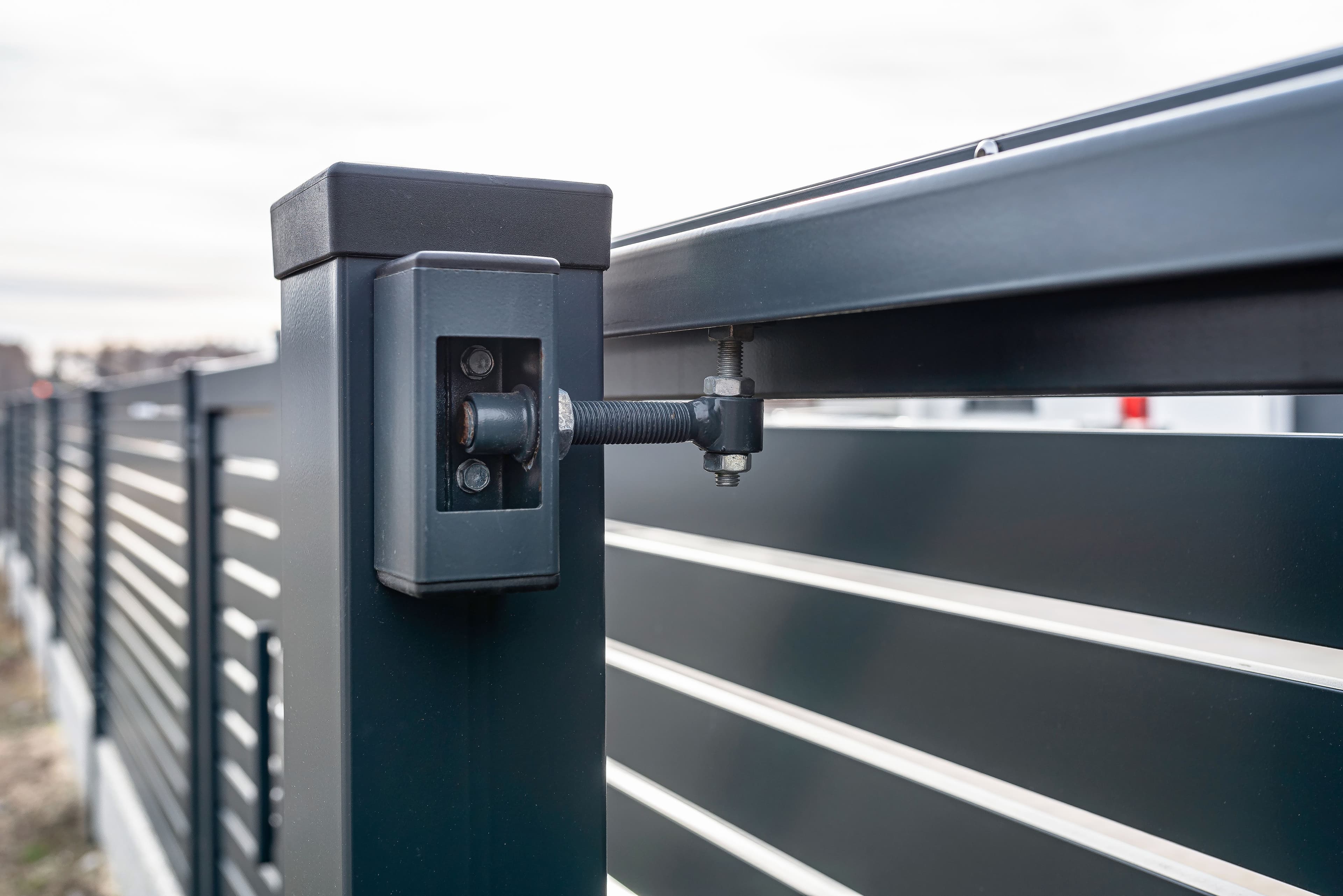
Temperature variation causes dimensional movement in materials. While summer heat expands metal structures, winter cold causes the thermal contraction of rails, guides, rollers, screw drives and racks.
Although this contraction is measured in fractions of millimetres, it is enough to alter the system’s operating clearances. In up-and-over and sliding gates that already have slight structural misalignment, material contraction reduces the tolerance for the rollers to pass through the side guides. Metal-on-metal friction multiplies, causing the gate to catch or require torque that an undersized motor cannot deliver.
3. Loss of Start Capacitor Efficiency
The start capacitor is a cylindrical electrical component connected to the motor control unit, whose function is to store energy and provide an initial high-intensity boost to overcome the inertia of a stationary gate.
Over the months and with continuous use, the capacitor gradually loses its ability to retain charge (capacitance). During summer, because the gate mechanics move more easily, a weak capacitor may still be able to start the motor. In winter, however, the combination of heavy mechanics (because of hardened grease) and a worn capacitor causes the motor merely to hum or buzz without moving, freezing the opening process.
4. Build-up of Moisture, Dew and Condensation
Winter nights are marked by high relative humidity and intense dew formation in the early hours. Condensed water settles on exposed metal components and seeps into the protective enclosure of the electronic control unit.
This ongoing moisture causes three severe types of damage:
Increased oxidation of rails and bearings: Rust creates a porous and rough surface on the rails, destroying the smooth rolling of the rollers.
Interference with limit sensors and photocells: Water droplets accumulated on the photocell safety lenses refract the infrared beam. The system interprets this distortion as the presence of an obstacle (a car or a person) and immediately interrupts or reverses the gate movement for safety.
Oxidation and short circuits on electronic boards: Moisture enters plastic protective boxes that lack adequate sealing, oxidising the copper tracks of the printed circuit board and burning out activation relays.
Field Diagnosis: The Main Symptoms of Gate Failure in Winter
The condominium caretaker team should be trained to recognise the first signs of fatigue in the access automation system. Early perception of these signs allows the manager to schedule preventive technical intervention before the gate stops completely at a critical moment, such as residents leaving for work in the morning.
Slow Gate or Stopping Halfway
This is the most classic symptom of the winter period. The gate begins opening normally, but loses strength halfway, hesitates for a few seconds and stops completely. In some cases, the resident needs to press the remote control two or three times in a row — or give the gate leaf a light manual push — for the cycle to be completed. This behaviour indicates high mechanical resistance combined with low motor torque or a weakened capacitor.
Motor Humming Loudly or Overheating Excessively
When the motor emits a deep, loud humming sound when activated, but the gate remains static or moves in jerks, the electrical part is trying to inject energy into the windings, but the mechanical system is jammed. Persisting with the remote control in this situation can burn out the stator’s internal wiring within minutes due to overheating.
Shrill Noises, Cracks and Abnormal Vibrations
Loud bangs at start-up, continuous metallic squeaking during travel and vibration in the aluminium or iron structure indicate a complete lack of suitable lubrication, wear in the roller bearings or severe misalignment caused by expansion and contraction of the guides.
Unbalanced or Sudden Closing
If the gate closes at a disproportionate speed, striking the stop or the security enclosure column violently, there is a critical fault in the electronic control unit’s deceleration ramp programming or in the electric brake regulator. In up-and-over gates, this effect may signal prior breakage of steel cables or serious imbalance in the counterweight boxes.
Excessive Wear on Drive Nuts and Gears
In screw-drive/up-and-over and sliding gates, motor force is transmitted to the physical structure through gears and drive nuts made of nylon or light metal alloys. When the system jams due to cold and the motor continues forcing rotation, the steel screw drive acts like a file on the nylon nut, stripping its internal teeth and rendering the traction mechanism unusable.
Step-by-Step Guide to Preventive Maintenance and Technical Adjustment
To ensure continuous operation and extend the useful life of automation systems during winter, the condominium manager should require the accredited maintenance company to apply a rigorous inspection and adjustment protocol. Below we detail the technical checklist that should be carried out in the condominium:
STEP 1: Deep Cleaning and Removal of Old Grease
↓
STEP 2: Application of the Correct Lubricant (White Lithium Grease)
↓
STEP 3: Inspection and Replacement of the Start Capacitor
↓
STEP 4: Precise Adjustment of Clutches (Mechanical and Electronic)
↓
STEP 5: Inspection of Sensors, Limit Switches and Photocells
↓
STEP 6: Structural Alignment and Counterweight Balancing
Step 1: Deep Cleaning and Prior Degreasing
New grease should never be applied over a layer of old, dirty grease. Throughout the year, grease exposed to the weather accumulates dust, exhaust soot and sand, becoming a highly corrosive abrasive paste that destroys the metal of the rails and the nylon gears.
The technical team should use clean cloths, kerosene or high-evaporation penetrating oil to completely remove all dark, compacted residue along screw drives, racks and side guides until the metal is clean and shiny.
Step 2: Choosing the Correct Lubricant (The Danger of Yellow Chassis Grease)
One of the most serious and common mistakes made by caretakers and uninformed technicians is applying yellow or dark automotive chassis grease to gates.
Why chassis grease should NEVER be used: This type of grease contains heavy petroleum derivatives that chemically attack rubber and synthetic rubber parts, as well as “melting” and drying out nylon drive nuts and gears. In addition, chassis grease is extremely viscous in cold weather, hardening quickly and jamming the motor. This also applies to the exclusive use of penetrating oils in spray form (such as WD-40): they are excellent for cleaning and rust removal, but evaporate within a few hours, leaving the system completely dry and unprotected.
The MANDATORY product: White Lithium Grease: White lithium-based grease is formulated specifically for light mechanisms exposed to weather conditions. Its advantages include:
Chemical neutrality: Does not damage plastics, nylons or rubber components in the gears.
Thermal stability: Maintains its soft viscosity and perfect lubrication in both intense cold and extreme heat.
Water-repellent property: Creates a protective film that prevents rainwater and dew from coming into direct contact with the metal, preventing oxidation.
White lithium grease should be applied in moderate quantity along the screw drive or rack, spreading the product by operating the gate through two or three complete cycles.
Step 3: Inspection and Preventive Replacement of the Start Capacitor
The start capacitor is a low-cost component, but it is vital for operation on cold days. It is recommended that the capacitor be tested with a professional capacitance meter at every inspection. If the component shows a capacitance loss of more than 10% of the nominal value indicated on its casing, it should be replaced immediately.
As a general rule for preventive maintenance in condominiums with high traffic flow, preventive capacitor replacement every 12 to 18 months eliminates more than 80% of gate jamming incidents during cold winter nights and mornings.
Step 4: Fine Adjustment of the Electronic and Mechanical Clutch
To prevent the motor from burning out when facing the natural mechanical resistance of winter, the automation system’s electronic control unit must be readjusted. Modern motors have two force control systems:
Electronic Clutch (Trimpot/Force Adjustment on the Control Unit): The control board has an adjustment that determines the percentage of force (torque) sent to the motor. In winter, it is advisable to slightly increase the electronic clutch force to compensate for the initial stiffness of the components, ensuring that the gate completes its travel without unnecessarily triggering the anti-crushing system.
Mechanical Clutch (Friction Disc): Located on the actuator screw drive, it consists of pressure nuts and springs adjustable with a mechanical key. Correct tightening of this assembly prevents the motor from spinning freely on start-up without transmitting traction to the gate structure.
Step 5: Testing Limit Sensors and Photocells
Limit sensors (magnetic reed switches or mechanical micro-switches) tell the electronic control unit the exact moment when the gate has completed opening or closing. If the magnets are displaced or the sensors contain internal moisture, the motor will continue forcing the metal structure even after the travel has ended, burning the board or breaking the gears.
The technical team should:
Completely clean and dry the bodies and lenses of magnetic sensors and photocells.
Check the sealing of plastic protective boxes with neutral silicone at cable entries.
Test the alignment of the photocells’ optical beam against false-positive activations caused by fog or condensation.
Step 6: Balancing the Counterweight Boxes and Aligning Rails
In up-and-over gates (which rise towards the ceiling), the weight of the metal leaf is neutralised by counterweight boxes connected by steel cables and upper pulleys.
To test whether the balance is correct, the motor should be unlocked in manual mode and the gate leaf positioned halfway through its travel (at a 45ºC angle):
If the gate drops down by itself, it is too heavy.
If it rises quickly by itself, the boxes contain too much weight.
The ideal point is static stability: the gate should remain stationary halfway through the travel and be movable manually with the force of just one finger.
If the gate leaf has recently been painted, the addition of successive coats of paint changes the total weight of the structure by as much as 10 kg or 15 kg, requiring a proportional adjustment of lead or concrete weight inside the counterweight boxes.
In sliding gates (side opening), the technician should inspect the lower rail. Small stones, construction debris or oxidation on the rails cause the roller to jump, jamming the guide and overloading the rack.
Inspection Routine and the Role of Caretaking: Daily Prevention and Maintenance Contracts
The condominium manager does not need — and should not — carry out the hands-on technical work, but does have a duty to establish operating protocols for the caretaking team and demand a standard of excellence from outsourced companies.
Caretaking Verification Checklist (Daily to Weekly)
Caretaking should act as the building’s first line of preventive observation:
Visual and auditory inspection during opening: Listen to the motors operating during the busiest periods. High-pitched squeaks indicate a lack of lubrication with white grease; dry knocks when stopping indicate limit switch misadjustment.
Physical cleaning of guides and rails: Sweep the channel and lower rail of the sliding gate daily to remove leaves, gravel and debris accumulated by winter winds.
Checking signal lamps and audible indicators: Ensure that visual and audible vehicle exit alerts are operating perfectly to prevent pedestrians being struck on rainy or foggy days.
The Manual Release Test (Monthly)
Once a month, the caretaker or maintenance officer should switch off power to the electronic control unit and unlock the motor using the manual release key. They should then open and close the gate leaf manually from start to finish.
This simple test instantly reveals whether there is any sticking point, seized roller, dented rail or unbalanced counterweight. If an adult man finds it difficult to pull the gate by hand in manual mode, the electric motor will operate under extreme overload and will break down within a short period of time.
Essential Clauses in the Gate Maintenance Contract
Hiring a company specialised in access automation should be supported by a complete and protective service contract. The condominium manager should require the following contractual guarantees:
Regular preventive visits: Requirement for at least one to two monthly visits dedicated exclusively to cleaning, lubrication, photocell testing and torque readjustment.
SLA (Response Time) for Emergency Calls: Clear definition of the maximum time for the technician to arrive at the condominium in the event of total jamming. For vehicle entrance and exit gates, emergency service response time should be no more than 2 hours on working days and up to 4 hours at weekends and on public holidays.
Inclusion of fast-wearing parts: Specification in the contract as to whether lower-value components (such as capacitors, fuses, magnetic sensors and rollers) are covered by the monthly fee or will require a separate quotation.
Spare equipment (back-up): Guarantee that a spare motor will be made available for temporary installation in cases where the main automation unit needs to be removed for repairs carried out in a technical workshop.
Safety Guidance for Residents and Good Practice in the Security Enclosure
In addition to physical maintenance of the motor and structure, the useful life of the gate system in winter depends directly on the usage pattern adopted by residents and pedestrians. Incorrect use of the system amplifies mechanical wear.
The condominium administration should issue regular notices through the management app advising the community on the following good practices:
Respecting the Full Opening and Closing Cycle
One of the most harmful habits among drivers in a hurry is repeatedly and disorderly pressing the remote control when the gate is still halfway through its closing path. Reversing the rotation of an induction motor at high speed creates a severe spike in electrical counter-current on the board and brutal mechanical jolts in the gearbox.
Residents should be instructed to wait for the gate leaf to close and stop completely before pressing the remote control again. In condominiums with intelligent security enclosure systems (a security cage with two sequential gates), passage should always occur one vehicle at a time, waiting for the first gate to close fully before the second opens.
Care When Pedestrians Pass Through Vehicle Gates
It is strictly forbidden to use the vehicle gate for pedestrians, children or pets to pass through. In addition to the very serious risk of crushing or accidents, this practice forces the system to perform unnecessary opening cycles, accelerating consumption of the motor’s useful life.
Loss of Remote Controls and Radio-Frequency Systems
If any resident loses a remote control or has one stolen, the administration must be notified immediately. In older control units without individual code management, the entire receiver memory needs to be recoded. In modern guardhouse/linear reception systems, the condominium removes only the ID of the lost remote directly through the digital panel, maintaining the security of the other residents at no additional cost.
How to Bypass Tariff Flags and Stabilise Electricity Bills with NewSun’s Energy Subscription

Although technical maintenance of gates preserves garage operation and security, the continuous operation of building infrastructure during winter comes at a high cost on the condominium’s monthly electricity bill. The combined operation of high-powered gate automation systems, garage lighting, hot-water recirculation pumps, technical room exhaust fans and lifts keeps the building’s electricity demand high throughout the year.
To complicate budget planning for the condominium manager, the coldest months of the year historically coincide with periods of severe drought in the country’s main river basins. This water shortage forces ANEEL to activate tariff flags — yellow, red level 1 or red level 2 — sharply increasing the value of the kilowatt-hour (kWh) charged by local distribution companies. For the manager, this instability creates a hole in the financial planning approved at the ordinary general meeting and exposes the administration to difficult questions from board members and residents.
A modern, practical and safe alternative for protecting the building’s cash flow against this volatility is contracting NewSun’s energy subscription. Through this innovative distributed generation ecosystem, the condominium begins receiving electricity credits generated by partner clean and renewable energy plants. The model’s major advantage is that it allows a reduction in electricity costs for communal areas without requiring any financial investment from the condominium, without installing solar panels on the roof and without any work on the building infrastructure.
Signing up to NewSun’s energy subscription service delivers direct benefits for condominium administration:
Real protection against tariff flags and market fluctuations: The subscription neutralises the impact of extra tariffs charged by local distribution companies during drought periods, bringing absolute stability and predictability to electricity bills.
Predictability and savings in the collective budget: The condominium secures progressive monthly savings on ordinary energy expenses for communal areas. The financial balance saved frees up cash flow for investment in modernising the gates themselves, painting, security systems or strengthening the reserve fund.
100% digital transition with no bureaucracy: The migration process is carried out administratively. There is no breaking of masonry, no change to the building’s electrical intake standard and zero risk of interruption to the condominium’s electricity supply. The initiative follows the brand’s 4D Matrix philosophy: debureaucratise, decentralise, digitalise and decarbonise.
Stand-out leadership: By integrating the condominium into a real sustainability ecosystem, the manager strengthens their position as a Visionary Green Condominium Manager. This is an admired form of leadership that not only solves everyday problems, but modernises the property and reduces the community’s carbon footprint.
By combining preventive technical management of equipment with NewSun’s clean energy subscription, the administration closes the door on budget unpredictability and offers all residents a modern efficiency experience.
Maintenance as a Differentiator
Preventive infrastructure management during winter is the differentiator that separates reactive and chaotic administrations from modern, safe administrations that are well rated by residents. Understanding the impact of cold weather on the mechanical and electrical components of automatic gates allows the condominium manager to anticipate failures, schedule adjustments and avoid excessive emergency spending on corrective maintenance.
Through a constant routine of deep cleaning, the use of white lithium grease, periodic replacement of start capacitors and fine adjustment of electronic clutches, the condominium ensures smooth traffic flow and protects the security of its access enclosures.
You may also like
- Sustentabilidade e Meio Ambiente
 27/10/2026
 5m
5m - Dicas para Síndicos e PMES22/10/20265m
- Casos de Sucesso20/10/20265m




Stop paying more for your energy bill
Find out in less than 1 minute how much you could save with clean energy every month — no works and no bureaucracy.
Join the energy revolution
Subscribe to our newsletter and receive exclusive content