
Communal Saunas: Heating Element Maintenance, Rules and Savings
Communal Saunas: Heating Element Maintenance, Rules and Savings
Dicas para Síndicos e PMES
 06/08/2026
 5 min
5 minA sauna in the leisure area is one of the most highly valued amenities in residential developments. In addition to increasing the market value of private units, it gives residents a routine of relaxation, relief from daily stress, improved blood circulation and bodily detoxification without having to leave home.
However, for the building manager and managing agent, keeping the sauna fully operational requires continuous technical care. Because it combines high-power electricity, water, steam and extreme heat, a lack of preventive maintenance or incorrectly adjusted equipment can turn a wellbeing amenity into a constant source of corrective maintenance costs, wasted energy and risks to users’ physical safety.
To help you manage this space efficiently and without complications, we have prepared a comprehensive guide covering equipment types, maintenance routines, correct temperature settings and essential rules of use.
Types of Sauna and How to Set the Ideal Temperature

The first step towards managing the environment effectively is understanding that each type of sauna has distinct operating dynamics and temperature ranges:
Steam Sauna (Wet Sauna): Operates using a steam generator powered by water and electricity. It maintains relative humidity close to 100%. Owing to the high density of the steam, the heat feels very intense on the body. The ideal temperature must be kept strictly between 40°C and 50°C. Operating a steam sauna above 55°C creates a genuine risk of burns to the airways and extreme heat discomfort.
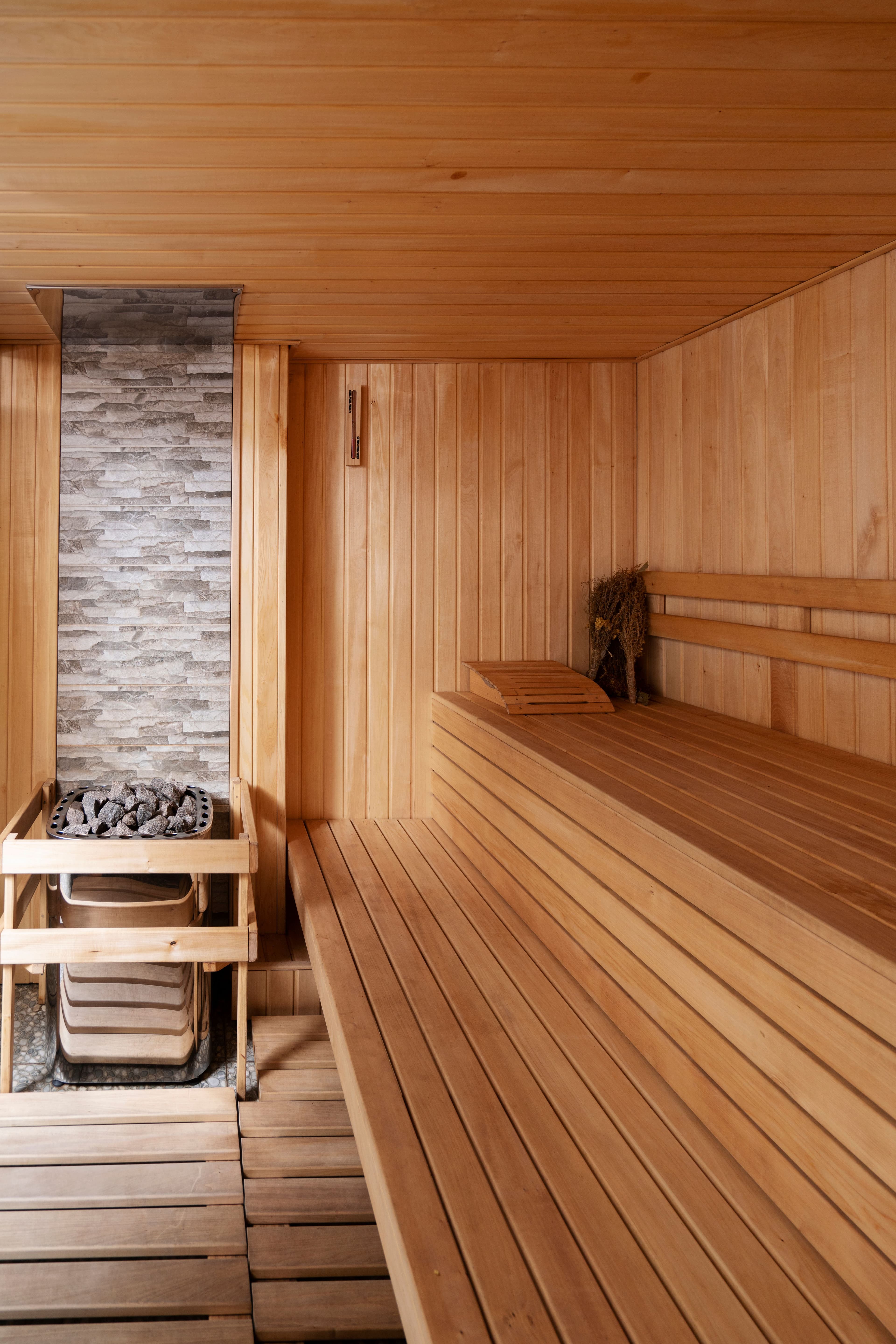
Dry Sauna: Uses heaters equipped with electric heating elements that warm thermal stones, usually volcanic rock or dolomite, while keeping air humidity very low. Because there is little moisture in the air, higher temperatures are needed to induce sweating and relaxation. The ideal range is 70°C to 80°C, although it may reach 90°C in specific configurations.
Thermostats: Types and the “Golden Rule” of Temperature Control
The thermostat is the component responsible for measuring the ambient temperature and sending the electrical signal that switches the generator’s heating elements on or off, keeping the heat at the desired level.
There are two main models on the market:
Analogue (Mechanical) Thermostats: Use fluid-expansion capillary bulbs. They are simple, robust devices, but offer less precise readings and a wider calibration margin of error.
Digital (Electronic) Thermostats: Use high-precision thermal sensors, such as NTC probes or thermocouples, connected to a digital panel. They allow exact programming of temperature ranges (setpoint) and operating time, ensuring greater efficiency and savings.
Should the Thermostat Be Left Inside the Sauna for Residents to Adjust?
The clear and categorical technical answer from all manufacturers and safety specialists is NO. The thermostat/controller panel must never be accessible inside the sauna room so that residents can alter the temperature freely.
The reasons for keeping the control panel outside, in the anteroom or plant room, are clear:
Protecting the equipment: Extreme humidity and direct heat quickly destroy the thermostat’s electronic circuits, boards and displays. Only the sensor, or reading probe, should be located inside the sauna, properly insulated and sealed.
Protecting the heating elements and saving energy: When residents can access the panel, they often set the temperature to the appliance’s maximum in the expectation that it will “heat up faster”. This forces the equipment to operate under continuous overload, burning out the electric heating elements, tripping circuit breakers and causing astronomical spikes in the development’s electricity bill.
User health and safety: Management should lock the temperature at a safe level, for example 45°C for a steam sauna. Allowing uncontrolled temperatures increases the risk of a sudden drop in blood pressure, severe dehydration and fainting among users.
Electric Heating Elements and the Preventive Maintenance Plan
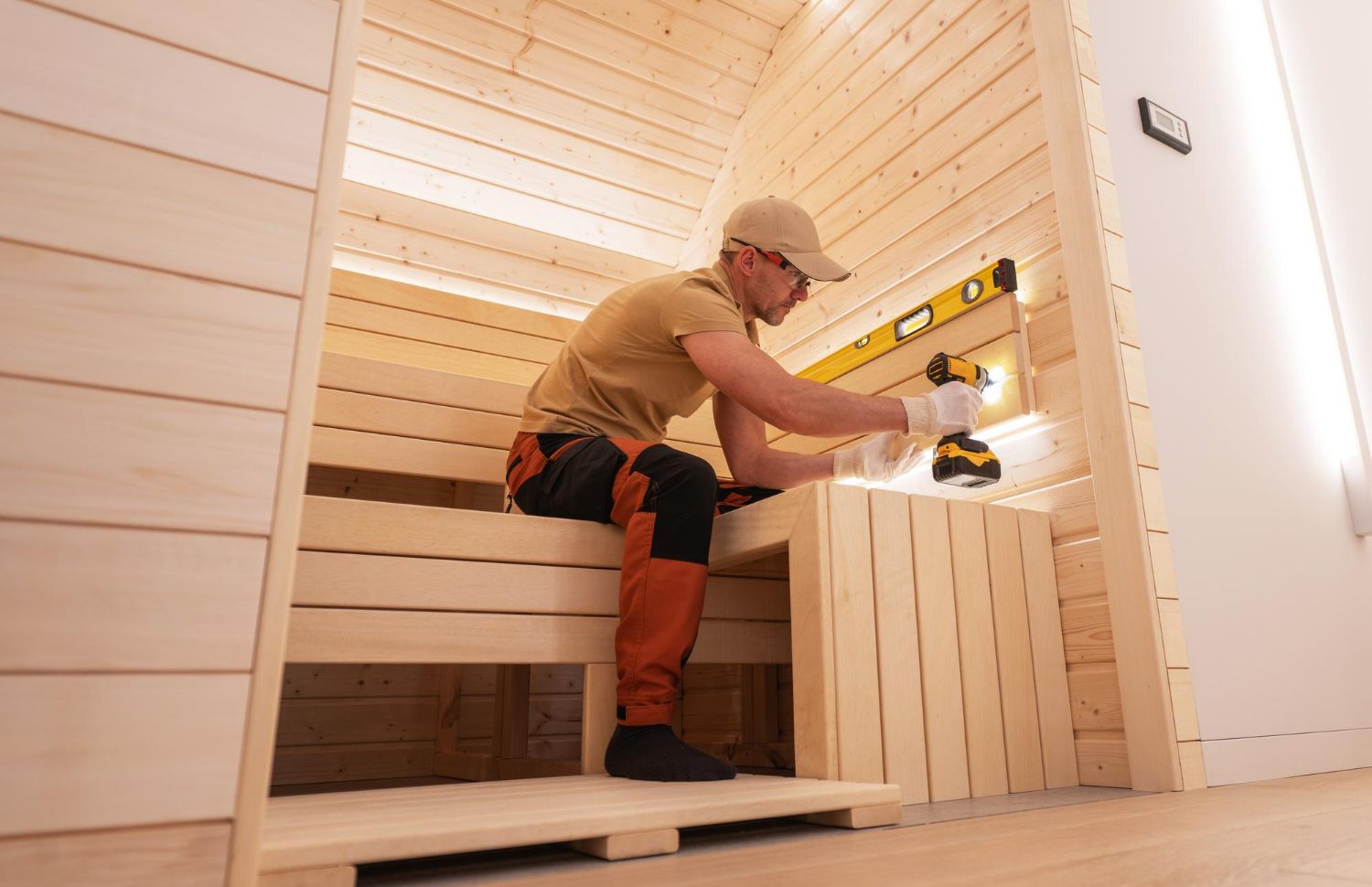
The electric heating element is the heart of the sauna. Made from special metal alloys, such as stainless steel or titanium, it converts electrical energy into direct heat for the water or stones.
Because it operates under high thermal stress, the heating element requires a strict preventive maintenance schedule:
Draining and descaling (Steam Sauna): Mains water contains minerals that precipitate when heated, forming limescale deposits on the heating element. This build-up insulates the heat, causing the element to overheat and burn out. The generator tank should be drained and cleaned periodically, weekly or monthly depending on use, to remove these residues.
Inspection of the electrical panel and wiring: Every six months, a qualified technician should inspect the terminals, contactors and circuit breakers dedicated to the sauna circuit, in accordance with ABNT NBR 5410 guidance. Loose or oxidised connections cause cables to overheat and create a risk of short circuit.
Cleaning and upkeep of the space: Benches and walls should be cleaned with a soft cloth and mild soap. Never use ammonia-, chlorine- or abrasive solvent-based products inside the sauna. When heated, these products release toxic vapours that residents may inhale.
Checking doors and emergency exits: The sauna door must open outwards and have a magnetic catch or gentle spring. Never use bolts, locks or manual keys that could trap a resident inside the room if they become unwell.
Safety Rules: Preventing Unaccompanied Children from Entering
Children using the sauna require constant supervision. Intense heat and rapid fluid loss through perspiration can cause dehydration and heat shock in children far more quickly than in adults.
To safeguard the development’s legal position and protect children:
Restricted access: In line with health regulations and internal rules, children under 12 or 14 should only use the sauna when accompanied by their parents or legal guardians.
Physical/digital access control: Keep the external door to the relaxation area or sauna space locked using tag, biometric or reception-controlled key access, preventing children from entering unaccompanied or switching on the equipment without authorisation.
Visible signage: Display an information sign at the entrance stating the room’s locked temperature, the recommended maximum stay of 15 to 20 minutes, and the express prohibition on unaccompanied minors, glass containers and chemical products.
The Warmth of Wellbeing without an Overheated Electricity Bill

Keeping a sauna available for residents’ leisure provides undeniable comfort, but running this equipment has a direct impact on the monthly electricity bill for communal areas. Because sauna generators use sets of high-power electric heating elements, often ranging from 6 kW to 12 kW or more, they are among the biggest contributors to a building’s electricity consumption.
For the building manager and managing agent, managing this fixed cost becomes even more challenging in the face of the Force of Unpredictability in electricity bills. The activation of tariff flags, yellow or red, during dry months raises the price per kilowatt-hour charged by distributors, creating unforeseen budget spikes and causing wearing disputes at financial-reporting meetings.
To protect the development’s finances against this volatility and secure financial stability with genuine sustainability, NewSun’s subscription energy offers a practical, safe and innovative solution.
Through this distributed generation ecosystem, the development receives clean, renewable energy credits generated by partner power plants. The model’s key strategic advantage is that it delivers progressive savings on communal-area electricity bills without requiring any financial investment from the development, without installing solar panels on the roof and without any building infrastructure works.
The benefits of NewSun’s subscription energy for managing your development include:
Protection against tariff-flag volatility: The subscription offsets unexpected increases from local distributors during dry periods, bringing stability, control and predictability to the budget approved at residents’ meetings.
Progressive savings to strengthen the reserve fund: It reduces the fixed cost of electricity for communal areas without the need for additional capital contributions, freeing up funds for maintaining other equipment or improving leisure facilities.
100% digital transition, with no building works or red tape: Registration is handled entirely through administrative and digital processes. There are no refurbishments, masonry demolition or changes to the building’s electrical installation, and there is zero risk of interrupting the energy supply. The process rigorously follows the pillars of the brand’s 4D Matrix: cut red tape, decentralise, digitalise and decarbonise.
Leadership and added value with the visionary green building manager: By connecting the development to a sustainable energy mix, the manager strengthens their position as a green building manager, promoting environmental responsibility within the community and adding capital value to the property.
Leisure and Safety
Providing residents with a safe and pleasant sauna environment is entirely achievable when management combines rigorous technical maintenance with clear rules of use. By keeping temperature controls outside, draining generators periodically, inspecting the electrical system and restricting access by unaccompanied children, management eliminates risks and preserves the equipment’s service life.
In addition, using intelligent solutions to manage fixed costs in communal areas — such as NewSun’s subscription energy — ensures that the development can provide premium leisure facilities with full budget predictability, technical safety and long-term sustainability for the whole community.
You may also like
- Dicas para Síndicos e PMES
 18/09/2026
 5m
5m - Casos de Sucesso17/09/20265m
- Sustentabilidade e Meio Ambiente16/09/20265m




Stop paying more for your energy bill
Find out in less than 1 minute how much you could save with clean energy every month — no works and no bureaucracy.
Join the energy revolution
Subscribe to our newsletter and receive exclusive content