

Luxury Mixed-Use Property Developments: Management Guide
Luxury Mixed-Use Property Developments: Management Guide
Dicas para Síndicos e PMES
 05/08/2026
 5 min
5 minThe property market in major cities is being transformed by demand for convenience, security and more efficient use of time. In this context, luxury mixed-use property developments have become the pinnacle of urban sophistication. These landmark schemes bring together high-end residences, corporate offices, hotels and serviced apartments, shopping centres, and leisure facilities of an international standard within a single complex or integrated tower.
For property managers and managing agents, overseeing a development of this kind is akin to running a small vertical city with round-the-clock operations. The manager’s central challenge, as a multidisciplinary specialist, is to reconcile the expectations and demands of groups with very different profiles, routines and interests. Permanent residents seek privacy, quiet and exclusivity; short-stay guests prioritise leisure and hospitality; office users expect swift access; and retailers depend on a steady flow of customers.
Reconciling these varied uses while maintaining premium service standards, property security and financial efficiency requires advanced governance, cutting-edge technology and intelligent infrastructure solutions.
The Specific Challenges of High-End Mixed-Use Developments
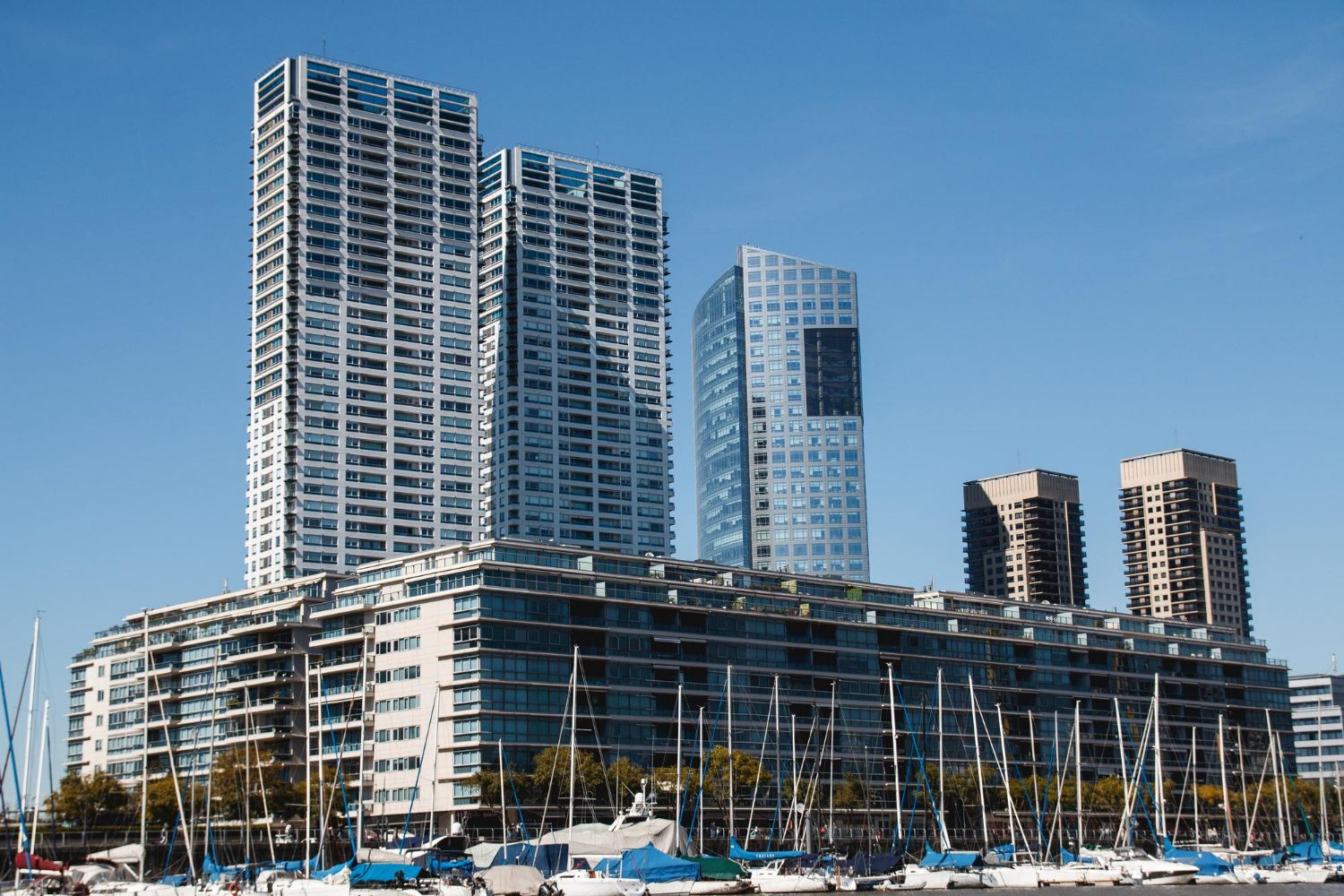
Bringing multiple uses under a single management structure creates complex operational tensions. Identifying the particular needs of each user group is the first step towards establishing a preventive and efficient management model:
1. Permanent Residents: The Search for Exclusivity and Tranquillity
Owners and long-term tenants of luxury homes invest heavily in quality of life, privacy and peace. For this group, the development is a family refuge. Dissatisfaction most often arises when residents perceive a loss of privacy, excessive noise during rest periods, overcrowding in shared leisure facilities or uncontrolled movement of strangers through corridors and private lifts.
2. Holiday Lets and Short-Stay Guests: High Turnover and a Focus on Leisure
With the growing popularity of digital letting platforms and professionally managed serviced apartments, the flow of short-stay guests is intense and continuous. These users have a temporary relationship with the property. Because they may be unfamiliar with the house rules, or simply be in holiday mode, guests can create late-night noise, dress inappropriately in shared social areas, or overcrowd pools, gyms and rooftop spaces, causing direct frustration for permanent residents.
3. Office Users and Visitors: Speed, Security and Movement
In towers or floors used for offices, medical practices and coworking spaces, operations are shaped by speed and volume. Hundreds of employees, clients and service providers pass through corporate reception areas each day, particularly during peak business hours in the early morning, at lunchtime and in the late afternoon. These users expect rapid registration, efficient lifts, and smooth parcel and food-delivery arrangements, without compromising the security of residential areas.
Practical Strategies for Harmonising Coexistence and Operations in Mixed-Use Developments

To manage the complexity of mixed-use developments and protect asset values, management should implement clear principles for zoning, communication and governance:
Physical Zoning and State-of-the-Art Access Control: The development’s design and access technology should create natural separation between uses. Separate entrances and lobbies are essential for residential and corporate areas. Smart destination-control lifts, facial recognition and biometric systems can ensure that office users and short-stay guests have access only to their destination floors and expressly authorised shared areas, preventing unauthorised movement through residential floors.
Specialised and Up-to-Date House Rules: The rules of a mixed-use development cannot be generic. They should include specific provisions for short-stay accommodation, such as full pre-registration of all guests before check-in, a maximum number of occupants per unit, restrictions on access by visitors of short-stay guests to residents-only leisure facilities, and wristbands or digital credentials for entry to shared spaces.
Fair Allocation and Separate Metering of Operating Costs: Financial transparency is essential to avoid disputes at meetings. Costs attributable solely to corporate areas, such as air conditioning in commercial lobbies and cleaning office façades, should not be borne by residential service charges, and vice versa. Management should use clear allocation criteria and sub-metering for water, gas, central air conditioning and electricity, so that each part of the development pays fairly for the costs it generates.
Hospitality-Led Concierge Service: Concierge, reception and security teams in a luxury development should be trained to high-end hospitality standards. Service should be courteous, decisive and supported by digital management tools, enabling staff to resolve conflicts quickly and discreetly while applying the rules firmly and professionally.
How NewSun’s Subscription Energy Can Mitigate Tariff-Flag Charges and Stabilise Electricity Bills

If managing the movement of people in a luxury mixed-use development requires precision, managing its energy infrastructure presents one of the greatest pressures on the service-charge budget. The continuous operation of central air conditioning in shared and corporate areas, high-speed lifts, architectural façade lighting, pool and spa heating, pumps and building-automation systems creates substantial electricity demand.
For property managers and managing agents, this level of consumption is particularly difficult to control because electricity bills are inherently unpredictable. ANEEL’s periodic activation of tariff flags during drought conditions can produce unforeseen increases in charges from local distributors. In a mixed-use development, where homeowners and corporate investors scrutinise every item of expenditure, these rises can lead to prolonged discussions at meetings and undermine approved financial plans.
To protect the development’s finances from this volatility and provide greater budget certainty alongside genuine sustainability, NewSun’s subscription energy offers a practical, modern and potentially advantageous alternative.
Through this distributed-generation model, the development receives clean, renewable energy credits produced by high-efficiency partner plants. A key benefit is the potential for progressive savings on electricity bills for shared areas, without requiring capital investment from the development, rooftop solar panels or alterations to the building’s electrical infrastructure.
The strategic advantages of NewSun’s energy subscription for mixed-use property management include:
Protection from tariff-flag volatility: The subscription can reduce exposure to price fluctuations and additional charges imposed by local distributors, supporting greater predictability and stability in the development’s budget planning.
Progressive savings without capital contributions: It can reduce electricity costs in shared areas without structural investment, freeing funds for maintaining the property’s luxury standards or strengthening the reserve fund.
Fully digital implementation, without building work or unnecessary bureaucracy: The transition is administrative and digital. No refurbishment, physical intervention at the incoming supply point or interruption to the building’s power supply is required. The process reflects the five pillars of the brand’s 5D Matrix: debureaucratisation, decentralisation, digitisation, decarbonisation and decommoditisation.
Meaningful sustainability and forward-looking green leadership: Connecting a high-end development to clean, renewable energy supports environmental performance and strengthens the manager’s reputation for forward-looking leadership. It can improve the environmental, social and governance credentials of businesses occupying the corporate towers while adding reputational and asset value to the residential units.
By integrating NewSun’s clean-energy subscription into the management of a mixed-use development, the managing agent can reduce financial uncertainty and provide a more modern, sustainable and high-quality energy experience for all owners and users.
Conclusion
Managing a luxury mixed-use property development combines corporate governance, hospitality management and community mediation. Success depends on the ability of property managers and managing agents to establish clear boundaries of use, invest in access-control technology and maintain transparency in the allocation of operating costs.
Likewise, adopting advanced solutions to control fixed costs, such as NewSun’s subscription energy, can support intelligent management, reduce exposure to tariff peaks and reinforce sustainability commitments. With sound technical planning, balanced rules and strategic infrastructure choices, the development can preserve its prestige, promote harmony among residents, guests and visitors, and sustain its value in the property market.
You may also like
- Dicas para Síndicos e PMES
 18/09/2026
 5m
5m - Casos de Sucesso17/09/20265m
- Sustentabilidade e Meio Ambiente16/09/20265m



Stop paying more for your energy bill
Find out in less than 1 minute how much you could save with clean energy every month — no works and no bureaucracy.
Join the energy revolution
Subscribe to our newsletter and receive exclusive content