
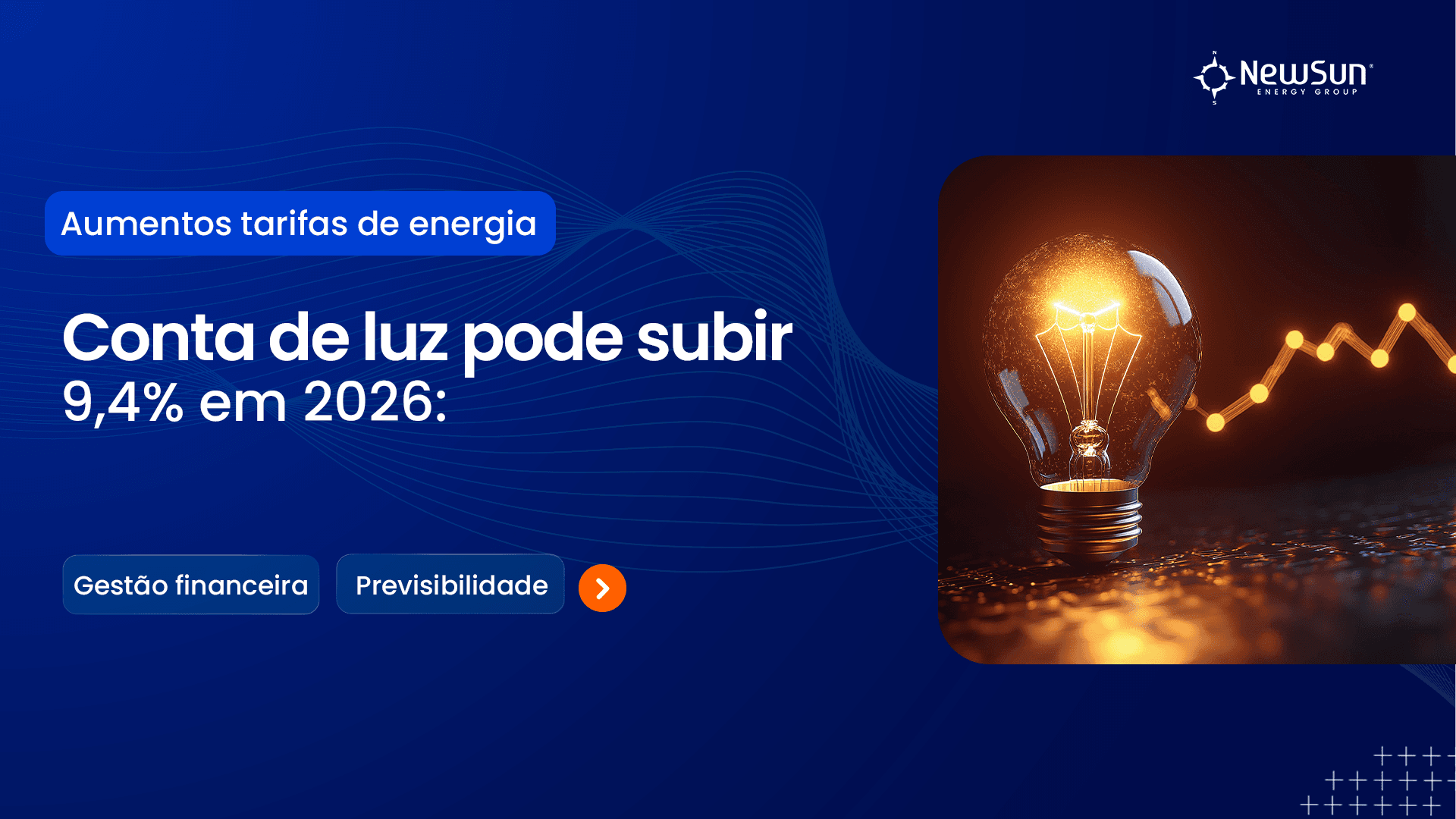
Electricity bills may rise by 9.4% in 2026: what ANEEL’s new forecast means for businesses and condominiums
Electricity bills may rise by 9.4% in 2026: what ANEEL’s new forecast means for businesses and condominiums
Energia por Assinatura
 24/09/2026
 5 min
5 minThe Brazilian Electricity Regulatory Agency (ANEEL) has revised its average forecast for electricity tariff increases in 2026 to 9.4%. The estimate was published in the third edition of the InfoTarifas 2026 bulletin and represents an increase compared with the previous forecast of 8.6%. Although the percentage is a national average, it reinforces a scenario that requires attention.
The regulator’s forecast exceeds the inflation expectations considered for the period, estimated at approximately 5% by the IPCA and 4.4% by the IGP-M. This means that electricity may continue to put significant pressure on the operating costs of several sectors of the economy, especially those with intensive consumption or shared expenses.
What is putting pressure on energy tariffs in 2026?
According to ANEEL, the main factor putting pressure on tariffs is the so-called financial components of tariff processes, which account for around 4.7 percentage points of the national average forecast. These components include adjustments to previous amounts, regulatory compensation and other mechanisms provided for in the tariff structure of the Brazilian electricity sector.
In addition to financial components, the agency points to the influence of sector charges, energy purchase costs, transmission costs and expenses related to distribution. All these elements make up the final tariff paid by consumers and help explain why the estimated increase remains above the inflation expected for next year.
Another relevant factor is the evolution of regulatory investments made by distributors. In some tariff processes planned for 2026, there has been growth in the assets recognised by regulation, which also contributes to the composition of future adjustments. ANEEL monitors these movements through tariff review and adjustment processes carried out periodically in each concession area.
Will the increase be the same for all consumers?

No. ANEEL itself highlights that the 9.4% forecast represents a national average and should not be interpreted as a uniform percentage for the whole country. The effective adjustment will depend on the distributor responsible for supply, the characteristics of the concession and the regulatory components applicable in each region.
The bulletin data indicate significant differences between concession areas. While part of the market may see impacts above 15%, other regions show more moderate forecasts. This variation reinforces the importance of each business and condominium monitoring information specific to its distributor and considering strategies to reduce exposure to volatility in energy costs.
Regulatory resources helped reduce part of the tariff pressure
The current forecast already takes into account mechanisms that help soften the impact of tariffs. Among them is the use of funds from the renegotiation of the Use of Public Asset (UBP) for hydroelectric plants, which resulted in approximately R$5.5 billion being allocated to distributors in certain regions of the country. According to ANEEL, these funds help reduce part of the tariff pressure forecast for 2026.
Even with this reducing effect, the estimate has been revised upwards compared with previous forecasts. This shows that the other tariff components continue to have a significant influence on electricity costs and help explain the scenario of attention being monitored by the Brazilian energy market.
How NewSun’s energy subscription can help business owners and building administrators

In an environment marked by tariff adjustments and regulatory uncertainty, many organisations seek alternatives that provide greater predictability for financial management. In this context, NewSun’s energy subscription emerges as a management tool that can help companies, property managers and management firms better monitor their energy spending and reduce exposure to fluctuations in electricity bills.
For business owners, predictability in energy costs can provide greater security in price-setting, investment planning and cash flow management. For building administrators and property managers, more efficient control of condominium expenses contributes to transparent management aligned with the expectations of residents and owners.
In addition to the financial aspect, adopting models associated with clean energy enables organisations to advance their sustainability and management modernisation goals. Within NewSun’s Energy Ecosystem, the aim is to turn energy into a strategic element, combining predictability, digitalisation and a simpler experience for those managing businesses and developments.
Find out everything about our clean energy subscription.
What should businesses and condominiums monitor in the coming months?
The forecast published by ANEEL does not represent a definitive adjustment, but rather an indication of the factors that should influence tariff processes throughout 2026. Therefore, monitoring distributor announcements, regulatory bulletins and trends in the electricity sector is essential for more prepared management that is less vulnerable to budget surprises.
For business owners, management firms and property managers, the scenario reinforces the importance of including energy in strategic management decisions. In a context of a possible increase above inflation, seeking efficiency, predictability and energy planning is likely to become increasingly relevant to organisations’ financial health.
Conclusion
ANEEL’s new forecast indicates that electricity bills could see an average increase of 9.4% in 2026, keeping electricity as one of the main items requiring attention in the budgets of businesses and condominiums. Although the final percentages will vary by region and distributor, the scenario reinforces the need for planning and constant monitoring of energy costs.
In this context, initiatives focused on predictability, efficiency and intelligent energy management are gaining relevance. For managers wishing to reduce exposure to tariff volatility, assessing alternatives such as NewSun’s energy subscription can be an important step towards more modern, sustainable management that is prepared for market challenges.
You may also like
- Energia por Assinatura
 24/09/2026
 5m
5m - Dicas para Síndicos e PMES23/09/20265m
- Dicas para Síndicos e PMES22/09/20265m


Stop paying more for your energy bill
Find out in less than 1 minute how much you could save with clean energy every month — no works and no bureaucracy.
Join the energy revolution
Subscribe to our newsletter and receive exclusive content