
Electric cars in condominiums: the property manager's complete guide
Electric cars in condominiums: the property manager's complete guide
Dicas para Síndicos e PMES
 27/05/2026
 5 min
5 minThe transition to sustainable mobility in Brazil is no longer a futuristic trend but an established market reality. The rapid rise of the electric car is driving profound changes in urban infrastructure planning, requiring every condominium and residential complex to prepare urgently to meet this growing demand for domestic power supply. Data released by the Brazilian Electric Vehicle Association (ABVE) confirms this rapid expansion: the national fleet has surpassed the significant milestone of 485,000 electrified light vehicles in circulation. In 2025, a record 223,912 units of these efficient technologies were registered in the country, representing historic growth of 26% compared with the 177,358 registrations recorded in 2024.
This energy transition maintained a strong pace of expansion in early 2026, when January alone accounted for 23,706 new registrations of light electrified vehicles, reaching, for the first time, a significant 15% share of total car sales in Brazil. In April 2026, the light electrified vehicle market set another historic record in the series tracked by ABVE, reaching no fewer than 38,516 units sold and raising the segment's consolidated market share to 16.2% of the total light vehicles sold nationally in the period. This significant advance shows that the plug-in electric car (whether fully electric or plug-in hybrid) has become the leading choice for a substantial share of buyers, who now need a suitable charger in their garages.
For property managers and building administrators, this scenario represents a management challenge that calls for swift planning. Home is the primary place where an electric car owner plans to charge their vehicle, making use of the period when it is parked overnight. Therefore, the absence of a safe charger and clear internal regulations in the condominium can quickly devalue the property and generate everyday conflicts between residents. Preparing the condominium for this reality is not merely an innovation edge, but an essential step in preserving property value.
Statistics on the growth of electric cars in the Brazilian market:
In 2025, a total of 223,912 light electrified vehicles were registered, surpassing the previous historic ceiling.
The Brazilian electrified vehicle market has grown by around 20,423% over the past ten years, up from just 1,091 units in 2016.
The plug-in hybrid segment leads national consumer preference, with 101,394 registrations in 2025, followed by 80,178 units of fully battery-powered models.
The state of São Paulo and the Southeast region remain the main hubs of electric car adoption, accounting for more than 46.4% of national sales in 2025.
In April 2026, the market share of light electrified vehicles doubled compared with the level recorded seven months earlier.
Electrical charging infrastructure in the condominium
The technical feasibility of installing a charger to serve residents who own an electric car depends directly on the capacity of each condominium's electricity network. Most Brazilian residential buildings were constructed before this demand for high-power energy in garages became widespread. As a result, the standard wiring, substations and transformers in an older condominium are not designed to withstand the extra electrical load generated by multiple charging points operating simultaneously without suffering severe overloads. Connecting a domestic charger in an unplanned way can jeopardise the stability of the entire condominium's electrical network, resulting in tripped breakers, burnt-out appliances and even serious flickering in the lighting of communal areas.
To mitigate such problems and ensure that each charger is installed with complete safety, the condominium's management must commission a robust technical feasibility study before granting any authorisation to residents. This technical study must include a thorough analysis of energy demand and a survey of the condominium's load curve, allowing the responsible electrical engineer to verify the residual power margin available in the building's transformer. The technical study will indicate precisely the maximum number of electric car charging points the building's infrastructure can currently support safely, as well as pointing out the structural improvements and upgrades that will need to be implemented as residents' demand grows.
A widely recommended alternative for working around electrical limitations without the need to invest in extremely costly upgrades to increase power capacity with the local utility is the adoption of smart dynamic load-balancing systems. This technology monitors the condominium's overall electricity use in real time and intelligently distributes the remaining available power among the stations where an electric car is connected. So, if several residents activate their chargers at the same time in the condominium's parking spaces, the smart system automatically adjusts each vehicle's charging speed, preventing any overload on the shared network and maintaining the electrical integrity of the whole building while keeping costs under control.
New fire brigade rules and charging safety
The significant growth in electric car adoption has also required public safety bodies to update their guidelines to mitigate the fire risks associated with overheating lithium-ion batteries in enclosed spaces. Although statistics show that fire incidents in electric vehicles are rare, the chemical nature of these high-capacity batteries requires special safety engineering precautions, since fighting fires in this type of battery is complex due to the chain-reaction overheating phenomenon. To provide a standardised response to this scenario, the National Council of Fire Brigade Commanders of Brazil (CNCGBM/Ligabom) issued, in August 2025, the National Guideline on Occupancies Intended for Garages and Locations with Electric Vehicle Supply Equipment Systems.
This national guideline has no legal force in itself, acting as a technical reference that guides each state's Fire Brigade in creating its own local regulatory standards for electrical installations and chargers. The main purpose of these preventive rules is to safeguard human lives within condominiums, setting out clearances and barriers that allow residents to evacuate quickly and guarantee a safe access route for fire brigade teams. The deadline for adapting existing buildings is 180 days from the publication of the official standards and technical regulations of each state fire authority.
For this reason, the property manager of a condominium that already has a charger in operation, or plans to authorise new electrical installations for electric cars, must adapt swiftly to avoid severe penalties from inspections. Technical non-compliance with these new safety rules can lead to the loss of validity of the condominium's Fire Brigade Inspection Certificate (AVCB) and, even more concerning, cause insurers to refuse cover in the event of a claim. Keeping each charger's documentation rigorously up to date, with the required engineering technical liability records, is essential to guarantee the legal and physical safety of the entire condominium.
General guidelines of the national fire safety rules:
Creating a safe environment that allows residents of the condominium to evacuate quickly in the event of excessive heat being detected.
Standardising state-level procedures for the technical adaptation of enclosed collective garages in commercial and residential condominiums.
Establishing technical transition deadlines of up to 180 days for each existing condominium to adapt its charging stations.
Full technical liability assigned to the design engineer and the company that carried out the charger installation.
Mandatory inspection and issuance of a technical compliance report for the regular renewal of the AVCB in each condominium.
What Technical Instruction 41 requires for the charger
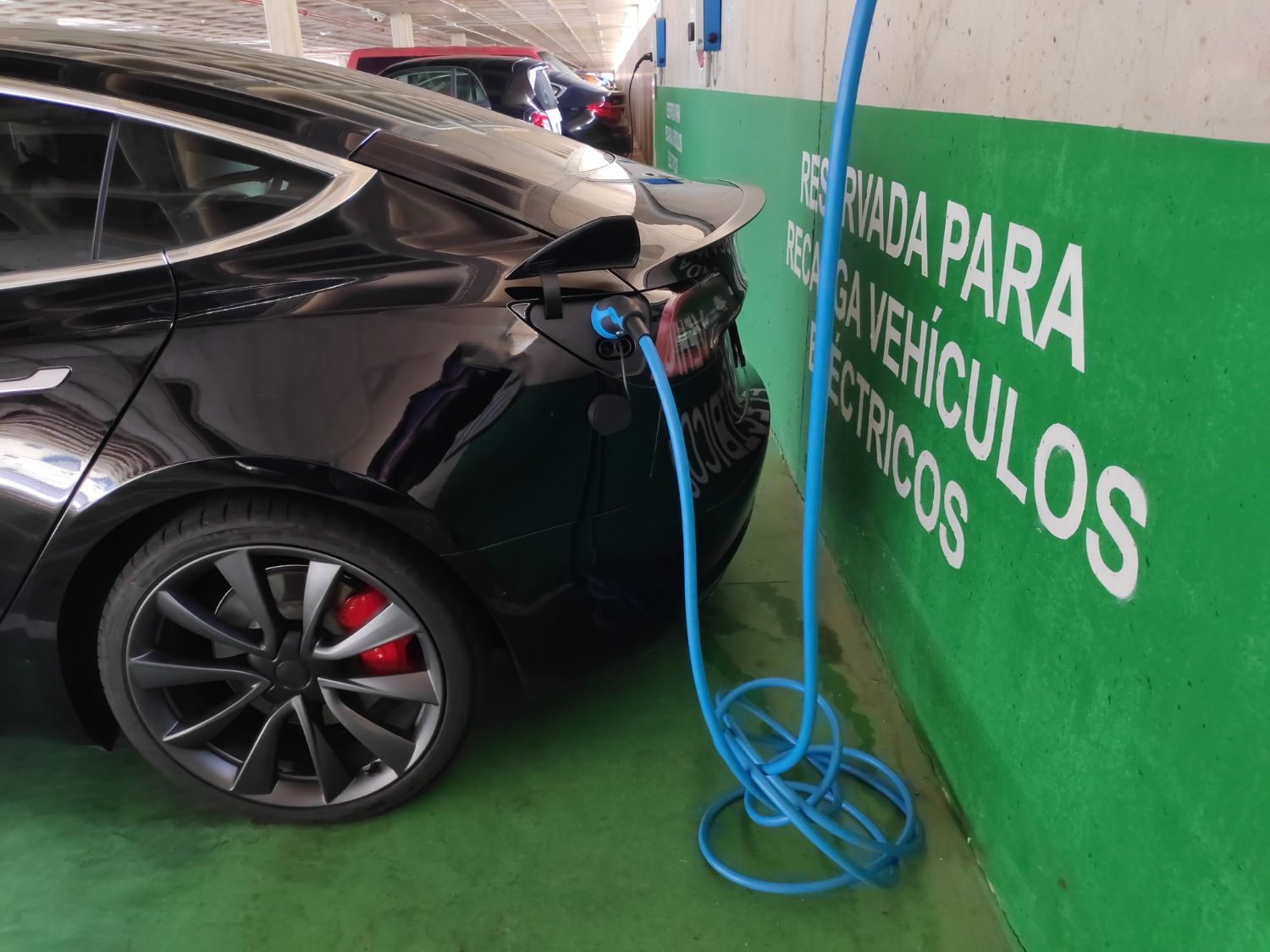
The state of São Paulo took the regulatory lead by publishing, through Ordinance number 003/970/2026, dated 17 March 2026, the full update to Technical Instruction (IT) number 41 of the Military Police Fire Brigade. This fire safety technical regulation is the most comprehensive in force in the country, serving as the mandatory technical model for condominiums in São Paulo and as a technical reference for other states. The ordinance sets fire safety rules for residential garages fitted with Electric Vehicle Supply Equipment Systems (SAVE), applying mandatorily to periodic renewals of the condominium's AVCB.
The new version of IT 41 sets out strict prohibitions and detailed operational specifications aimed at avoiding any risk of short-circuiting or overheating at the stations that supply the electric car. The use of portable chargers, standard general-purpose household sockets, electrical adapters popularly known as "benjamins", or improvised extension leads in the condominium's garage is expressly prohibited, and the installation of a dedicated, certified fixed charger is mandatory. In covered, enclosed garage areas, only electric charging mode 3 (alternating current with smart communication) and mode 4 (fast direct-current charging) are permitted.
In addition, the IT 41 rules set out very strict electrical engineering requirements to shield the electrical networks against incidents. Each charger installed to supply a resident's electric car in the condominium must have a fully dedicated power circuit from the distribution board, individually fitted with a properly rated circuit breaker, a Surge Protection Device (SPD) and a high-sensitivity 30 mA Residual Current Device (RCD) of type A, F or B. Sharing the same RCD between multiple charging points in the condominium is strictly prohibited.
The charger's physical installations must also have physical barriers, such as metal or concrete bollards, installed in the parking space to protect the equipment from accidental collisions during manoeuvring. In addition, the standard requires the condominium to install manual emergency shut-off switches at strategic points. There must be a local emergency switch positioned less than 5 metres from each charger, as well as a general switch per floor (floor emergency switch) placed at the garage entrance or near the stairwell. All this electric car charging equipment must be electronically connected to the condominium's fire alarm panel, ensuring that manual or automatic sensor activation immediately cuts the power to each charger.
Visual safety and electrical hazard signage is also set out in detail by IT 41. The condominium must fix photoluminescent warning signs at specific heights, ranging between 1.20 and 1.90 metres from the floor, clearly indicating the emergency shut-off points, detailed instructions for operating the charger in Portuguese, and clear safety warnings about electrical hazards at the building's power distribution board. Finally, parking spaces housing an electric car charger must maintain a physical safety clearance of at least 5 metres from single escape routes, to prevent a fire from blocking residents' safe evacuation.
How to structure individualised energy billing
Installing an electric car charging system in a residential condominium inevitably raises the question of who should bear the cost of the electricity consumed by the charger. Residents who do not use these sustainable technologies fairly refuse to cover increases in the electricity bill arising from charging other people's private vehicles in the building. Therefore, structuring an individualised electricity billing policy is an essential measure to preserve fiscal and financial fairness in the condominium, ensuring that only the resident who owns the electric car bears the cost of the electricity consumed in each charging session.
To achieve this financial fairness, the condominium's property manager has various technological models available from companies specialising in energy management. One classic technical approach involves installing individual analogue or digital consumption meters integrated with each charger, allowing the management to take a monthly manual reading and add the amount consumed, itemised, to the resident's condominium fee statement. In cases where the private parking space is physically close to the resident's own unit's main electricity meter, it is possible to connect the charger's power wiring directly to the resident's flat electricity meter. In this way, the cost of the electric car is automatically added to the resident's individual monthly bill sent by the local utility.
However, the technical alternative growing fastest in modern condominiums, due to its operational convenience, is the use of smart chargers connected to the internet via Wi-Fi or mobile networks. This modern infrastructure works in an integrated way with software platforms specialising in electricity billing. When they get an electric car, the resident downloads an app linked to the condominium's network and uses a radio-frequency identification key fob (RFID card) or scans a QR code stuck on the charger to start the charging session.
The cloud software instantly records the exact volume of kilowatt-hours fed into the resident's electric car battery during that session and automatically charges the corresponding amount directly to their credit card or via an individual invoice. This automated model does away with any human mediation and reduces the property manager's administrative workload, allowing the condominium to provide chargers in parking spaces without the need to process complex manual billing at the end of the month.
Advantages of smart individualised charging billing:
Elimination of disputes and financial conflicts between residents with and without electrified vehicles in the condominium.
Administrative convenience through full billing automation via apps and integrated cloud-based systems.
Personalised and secure electronic identification of each authorised resident via RFID cards or QR codes.
Automated issuance of detailed periodic management reports on the overall energy consumption of each charger in the condominium.
The possibility of passing on maintenance fees and operating costs of the network only to active electric car users.
Assembly quorum and owners' rights
The legal regularisation of the physical and electrical adaptation works needed to accommodate an electric car charger is another complex aspect that requires the property manager's careful attention. Since the Superior Court of Justice (STJ) has not yet issued a definitive ruling on the rules applicable to these specific electrical installations, disputes in condominiums are decided based on state court case law, which bases its decisions on the interpretation of the general rules set out in the Brazilian Civil Code. The fundamental legal parameter rests on Article 1,342 of the Civil Code, which governs the approval of works in communal areas of co-ownership.
When the project involves installing a charger in a parking space located in a communal area of the condominium, federal law is inflexible. Carrying out works or alterations to communal parts, intended to create additions or innovations for the exclusive use of a portion of residents, requires the consent of two-thirds (2/3) of all property owners at a general meeting. This qualified quorum must be strictly observed, and is required even where the condominium chooses to hold a virtual assembly or adopt a standing voting format. Nevertheless, under this format, the condominium has the legitimate right to approve detailed regulations, requiring the resident to take out insurance, obtain technical reports issued by an engineer with the corresponding technical liability record (ART or RRT), and comply with the utility company's and ABNT's standards.
In the case of garages with individual private parking spaces linked to residents' property deeds, the legal discussion takes on specific contours. Broadly speaking, at national level, the prevailing view in the courts is that the charger's power wiring for the electric car will necessarily need to pass through communal areas of the building, as well as consuming part of the limited power capacity of the condominium's entire shared electrical network. For this reason, even in privately owned spaces, prevailing case law still requires the authorisation of two-thirds (2/3) of unit owners at a regular general meeting to legitimise electrical works.
Exclusively in the state of São Paulo, the passing of State Law number 18,403/2026 introduced an important regulatory exception by guaranteeing residents of São Paulo the right to install a charger in their own private parking space without needing a resolution or quorum approval at a general meeting. Under this São Paulo legislation, the condominium's property manager cannot refuse without justification, or simply prohibit the works on arbitrary grounds, though the manager retains a duty of technical oversight and may give reasoned grounds for a refusal if the resident fails to submit the required electrical reports or breaches the technical safety standards of São Paulo's fire brigade IT 41.
It is essential to point out, however, that this São Paulo law faces constitutional debate. Since the rules on condominium law and property law fall under the exclusive competence of the Federal Union under the Federal Constitution, state or municipal laws that alter these condominium rules may be challenged for formal unconstitutionality in the courts. A relevant precedent occurred in the city of Niterói, in Rio de Janeiro, where the Rio de Janeiro State Court of Justice declared a similar municipal rule unconstitutional in 2025. Therefore, the safest legal course for the property manager of any condominium is always to submit a proposed standard internal electrical regulation on electric car charger installation to the residents' assembly.
Savings for communal areas with NewSun Energy

When planning for the arrival of the electric car and the installation of each charger, the condominium's management should also turn its attention to the building's overall energy efficiency. In this transition scenario, NewSun's clean energy subscription stands out as the ideal partner. NewSun's clean energy subscription stabilises the electricity bill for the condominium's communal areas, shields the bill against tariff flag surcharges and delivers progressive savings. This service protects the shared fund against tariff cost fluctuations, freeing up resources for investment in the electric car charger's own infrastructure. Besides generating real savings, NewSun stands out for offering genuinely human support and an exclusive platform, the NewSun Energy Club, for tracking energy spending in real time, allowing the condominium's management to monitor the entire evolution of electricity consumption with full transparency.
This NewSun ecosystem innovation aligns with the sustainability goals underlying residents' decision to purchase an electric car. A modern condominium should not merely welcome the electric car into its garages, but must seek alternative sources that enable sustainable electricity supply, also reducing the residential building's overall carbon footprint. By taking out the clean energy subscription, the property manager promotes environmentally responsible management, progressively reducing the condominium's expenses without the need to make heavy investments in its own solar panels, since the clean energy is fed directly into the grid from the company's integrated solar farms.
Through the NewSun Energy Club digital dashboard, the property manager and the condominium's management company can track the monthly financial offsets generated, check the ecological impact achieved and organise the overall electricity accounting quickly and simply. This clean energy partnership not only eases the burden of the electricity bill for the condominium's leisure areas and charging garage, but also establishes itself as a strong ecological differentiator that attracts prospective flat buyers seeking high-performance sustainable buildings, where the arrival of each new charger is accompanied by efficient energy conservation solutions.
Find out more How It Works.
Action plan: how to bring the project to the assembly
Presenting infrastructure solutions to accommodate the electric car on the agenda of the general assembly is one of the stages that most demands strategic planning and mediation skills from the condominium's property manager. To mitigate emotional conflicts and avoid systematic blocking of the project by residents who do not intend to own an electric car, the property manager should draw up a robust and transparent technical dossier before sending out the meeting notice. Discussing the installation of a charger with vague arguments or informal financial estimates at the residents' assembly is the most common path to the proposal being rejected by the majority of the condominium.
The first step in this action plan is to hire a qualified engineering professional to develop the executive project and carry out a preliminary technical assessment of the condominium's electrical feasibility. This electrical engineer will issue a report on the actual load capacity available and design the infrastructure project for the communal metal cable trays and conduits that will need to be installed in the garagem to organise the wiring route for each future charger in line with the requirements of the Fire Brigade's IT 41. Presenting an official executive project with the corresponding ART record dispels concerns about short circuits and fire risks on the condominium's premises.
Next, the condominium's property manager should present the available options for individualising electricity costs for the building, clearly demonstrating that only electric car owners will pay for the energy used in the parking spaces. This assurance of exemption from ordinary electricity costs removes the main financial resistance from most residents without electric vehicles. In addition, the property manager should highlight the overall increase in value of all flats in the building, showing that older condominiums that do not offer basic infrastructure for connecting a vehicle charger in parking spaces suffer sharp depreciation in the property market and lose appeal to prospective investors or buyers.
Tactical steps to secure project approval at the assembly:
Preliminary hiring of a specialised professional to survey the condominium's building load demand curve.
Drafting a robust internal electrical regulation setting out obligations and individual technical liability terms for each resident.
Detailed presentation of individual consumption billing technology solutions via cloud software, demonstrating no cost for non-users.
Demonstration of risk mitigation and prevention measures in line with Fire Brigade guidelines, such as circuit breakers and panic buttons.
Calling a preliminary informative assembly to answer questions and present the overall value-appreciation benefits for the condominium's properties.
Mitigating fire risks in lithium batteries
Although technical progress in the development of lithium-ion batteries has brought a high level of safety to new electric car models in circulation, the property manager should adopt permanent, practical measures to contain overheating risks in the condominium's garage. Electric vehicle batteries, when subjected to severe collisions, punctures from sharp objects, internal short circuits from manufacturing faults, or improper current charging due to sockets lacking an SPD, can enter the critical state known as thermal runaway. In this critical state, the damaged cell begins a chemical chain reaction that continuously generates oxygen and excessive heat, making it impossible to quickly extinguish the flames conventionally with ordinary water or traditional portable CO2 extinguishers.
Therefore, rigorous prevention in the installation and control of each charger in the condominium is the main pillar of collective safety. The condominium's first measure is to strictly prohibit the use of portable charging equipment, improvised power extension leads, and connecting vehicles to standard wall sockets that were not designed to withstand large continuous power flows for hours on end. The use of independent dedicated circuits fitted with properly rated circuit breakers and RCD and SPD safety devices ensures that any disturbance in local power fluctuations trips the sockets before heat builds up in the wiring or in the electric car's battery.
Another important factor the condominium's management should adopt is active monitoring and maintenance of natural ventilation or forced extraction in enclosed underground garages. The build-up of hot gases and toxic smoke resulting from a battery fault in poorly ventilated areas hampers access for firefighters and can speed up the spread of flames to other nearby vehicles. Accordingly, the property manager should ensure that ventilation routes remain unobstructed and that emergency shut-off buttons are marked with standardised photoluminescent signs and positioned accessibly, so that any resident or security staff can quickly cut off the electricity to the entire condominium system in moments of panic.
The property manager's role in the future of electric mobility
The consolidation of the electric car in the national landscape positions the property manager as a strategic manager of their community's technology and energy infrastructure. Managing today's condominium no longer involves merely maintaining lifts, staffing the front desk, or resolving basic everyday conflicts; it involves developing modernisation plans to accommodate sustainable e-mobility solutions in a harmonious, safe and financially fair way for all residents living in the condominium. Property managers who take a proactive stance in regulating each charger safeguard social harmony and substantially increase the building's collective property value.
Preventive planning of the condominium's electrical network, combined with the adoption of smart billing technologies via connected mobile platforms, eliminates the tensions inherent in disputes over the use and cost of electricity spent on the electric car charger. At the same time, full alignment with technical parameters and regulations such as São Paulo's IT 41 ensures the preservation of human life and protects the condominium from serious civil liability consequences and loss of insurance cover for building policies in the event of battery fires.
In this way, managers who complement these advances in sustainable garage mobility with integrated ecological services, such as NewSun's clean energy subscription, deliver an efficient, cutting-edge management model that prepares the condominium to thrive in a property market increasingly focused on practical sustainability. The electric car and its dedicated charger are no longer luxury items but have become integral elements of the condominium of the future. With proper planning, up-to-date technical knowledge and innovative clean energy partnerships, the property manager fosters a community environment that is safer, more sustainable, prosperous and in tune with modern technological needs.
You may also like
- Casos de Sucesso
 20/10/2026
 5m
5m - Dicas para Síndicos e PMES16/10/20265m
- Dicas para Síndicos e PMES13/10/20265m





Stop paying more for your energy bill
Find out in less than 1 minute how much you could save with clean energy every month — no works and no bureaucracy.
Join the energy revolution
Subscribe to our newsletter and receive exclusive content