

Digitisation and Cloud Storage for Condominiums
Digitisation and Cloud Storage for Condominiums
Dicas para Síndicos e PMES
 17/03/2026
 5 min
5 minThe landscape of condominium administration in Brazil is going through a period of structural transition, driven by the urgent need to overcome the inefficiency inherited from decades of paper-based bureaucracy. The complexity of the Brazilian tax, fiscal and labour system requires building managers and administrators to maintain a vast collection of documents, often occupying valuable physical space and exposing critical information to risks of environmental degradation and loss.
Faced with this reality, digitisation and cloud storage have stopped being mere technology trends and have become established as fundamental pillars of professional, transparent and legally secure management. Migrating to the digital environment not only solves the problem of physical space, but redefines the practicality, organisation and control over the files that are fundamental to community life, allowing management to meet legal requirements swiftly and giving residents a clear, real-time view of the development's financial and operational health.
The Paradigm of Practicality and the Restructuring of Administrative Routine
The practicality introduced by document digitisation profoundly changes a building manager's everyday workflow. In the traditional model, searching for a specific maintenance contract or a tax payment receipt from previous years involved handling physical folders, often stored precariously in dead-file archives or remote storage rooms.
This manual process not only consumes precious time, but also increases the risk of losing essential documents during the handover between the condominium and the administrator. With the implementation of cloud-based document management systems, retrieving information takes seconds thanks to keyword search tools, turning administrative agility into a governance asset. Being able to access documents from any device with an internet connection allows the manager to respond to residents' requests or demands from regulatory bodies with a precision that physical filing simply cannot offer.
Digital organisation provides a logical structure that goes beyond simply replacing paper with electronic files. It allows the creation of a customised document taxonomy, where files are categorised by nature (fiscal, labour-related, administrative), chronological period and strategic relevance. Different types of documents, from invoices for minor repairs to major service contracts, come to occupy a centralised repository, where correct indexing ensures the information is available at the exact moment it is needed.
This organisation is directly reflected in the transparency of management; when the fiscal council or a resident requests access to the accounts, the administration can provide complete, organised digital folders, eliminating the physical barriers that often generate distrust and communication friction between residents and managers.
Managing Different Types of Documents and Essential Files
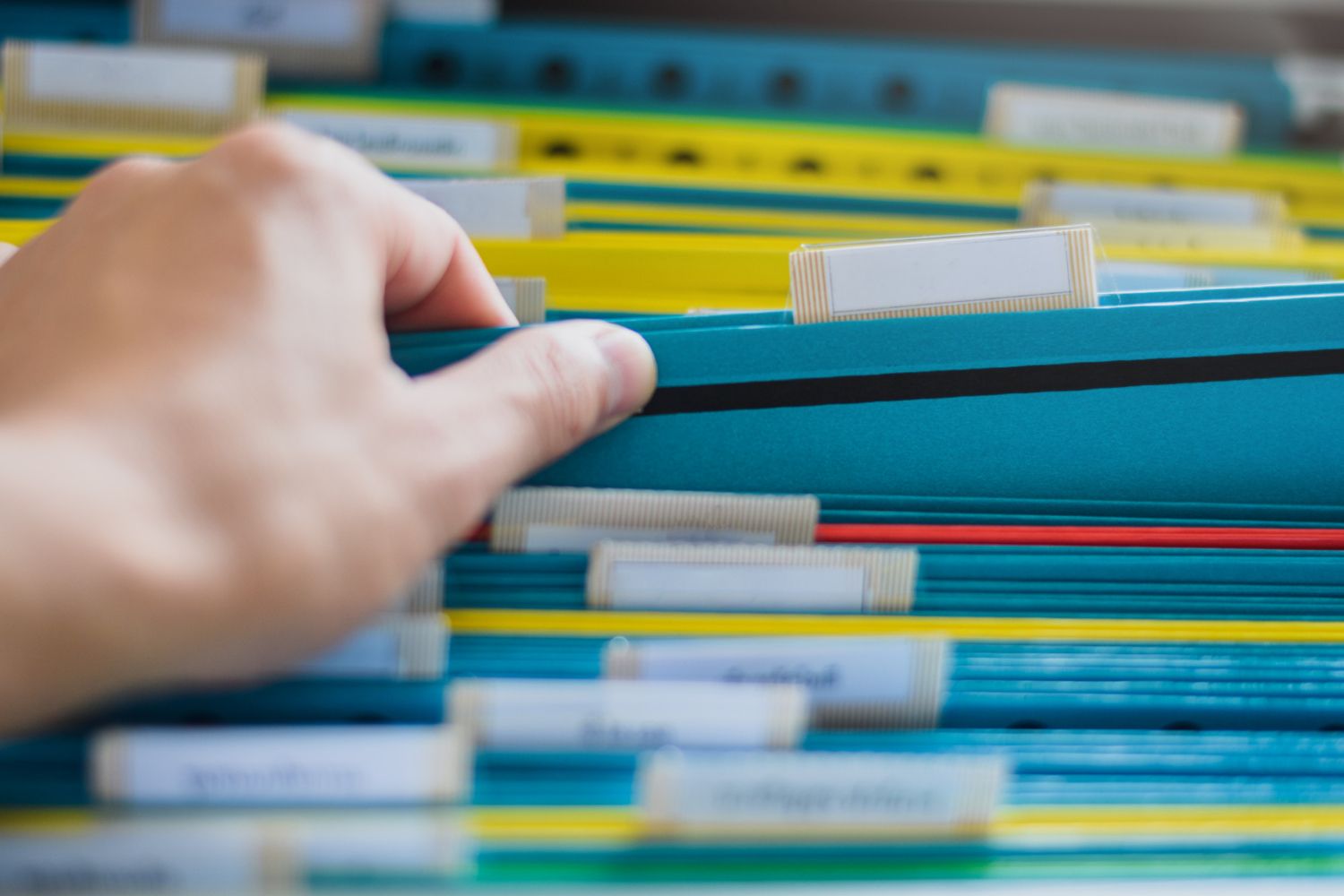
Managing a condominium involves the custody of documents with different legal natures and retention periods, which makes document management a legal compliance challenge. Digitisation makes it possible to treat each category with the necessary rigour, ensuring that statute-of-limitations periods are respected without overloading the building's physical archive.
Identification and constitutive documents, such as the CNPJ registration card, the condominium's bylaws, the internal regulations and the minutes books of assembly meetings, must be kept permanently, as they are the instruments that define the development's legal identity and rules of coexistence. Keeping these files in digital format, with redundant cloud backups, ensures that the condominium's history and legal foundation remain protected against disasters such as fires or floods that could destroy the paper originals.
In the labour and social security sphere, the volume of documentation is even denser and the retention periods are longer, requiring impeccable organisation to avoid legal liabilities. Documents relating to the Severance Indemnity Fund (FGTS), such as payment slips and social security filings (GFIP), must be kept for thirty years, a period during which thermal or ordinary paper often deteriorates or the ink fades, rendering them useless as legal evidence.
Certified digitisation of these records ensures that the condominium can prove it has fulfilled its obligations decades after an employment contract has ended. In addition, the introduction of eSocial for condominiums has unified the submission of labour-related information, making digital proficiency a requirement for transmitting data on hiring, payroll and workplace health and safety events.
Fiscal and financial documents, such as federal tax payment slips (PIS, IRRF), supplier invoices and bank statements, generally must be kept for periods ranging from five to ten years, in line with tax statute-of-limitations rules. Systematic digitisation of these receipts, linked directly to entries in the monthly balance sheet, allows financial reporting to be carried out continuously. Instead of a physical folder circulating monthly among council members, the condominium starts operating with a digital financial reporting folder, where all receipts are attached electronically, allowing auditing and reconciliation to happen in real time, increasing financial security and community trust.
Challenges and Risks of Traditional Physical Storage
The persistence of physical storage in condominiums exposes management to significant risks that can compromise the building's legal and asset security. Paper files are extremely vulnerable to environmental factors, such as damp, excessive heat and poor ventilation, conditions common in the places where condominiums tend to improvise their archives, such as car parks or plant rooms.
Damp encourages the growth of fungus and mould, which not only destroy the fibres of the paper, but also pose health risks to anyone who needs to handle these documents. In addition, pests such as silverfish, termites and rodents find in paper a source of food, and can decimate entire archives in a short time if there is no rigorous, constant pest control.
The risks of catastrophic disasters, such as fires and floods resulting from failures in plumbing systems or extreme weather events, are real threats that can result in the total loss of the condominium's documentary memory. Without a secure digital copy in the cloud, the physical destruction of assembly minutes, architectural plans or labour payment receipts can leave the condominium defenceless in the face of inspections or legal proceedings.
The disorganisation inherent to large volumes of paper also creates operational inefficiency; it is estimated that in poorly managed physical archives, a considerable share of the administrative team's working time is wasted simply locating misplaced or lost documents, which directly impacts management productivity.
Information security is another critical issue with physical storage. Documents containing sensitive personal data of residents and staff, if kept in folders accessible at reception desks or administrative offices without strict access control, breach privacy guidelines. With the General Data Protection Law (LGPD) in force, the condominium has a legal responsibility to ensure that personal data is not accessed by unauthorised people. Physical storage makes it difficult to control who consulted, copied or altered a document, whereas digital systems offer detailed access logs and encryption, allowing management to demonstrate compliance with data protection legislation.
Strategic Advantages of Cloud Storage
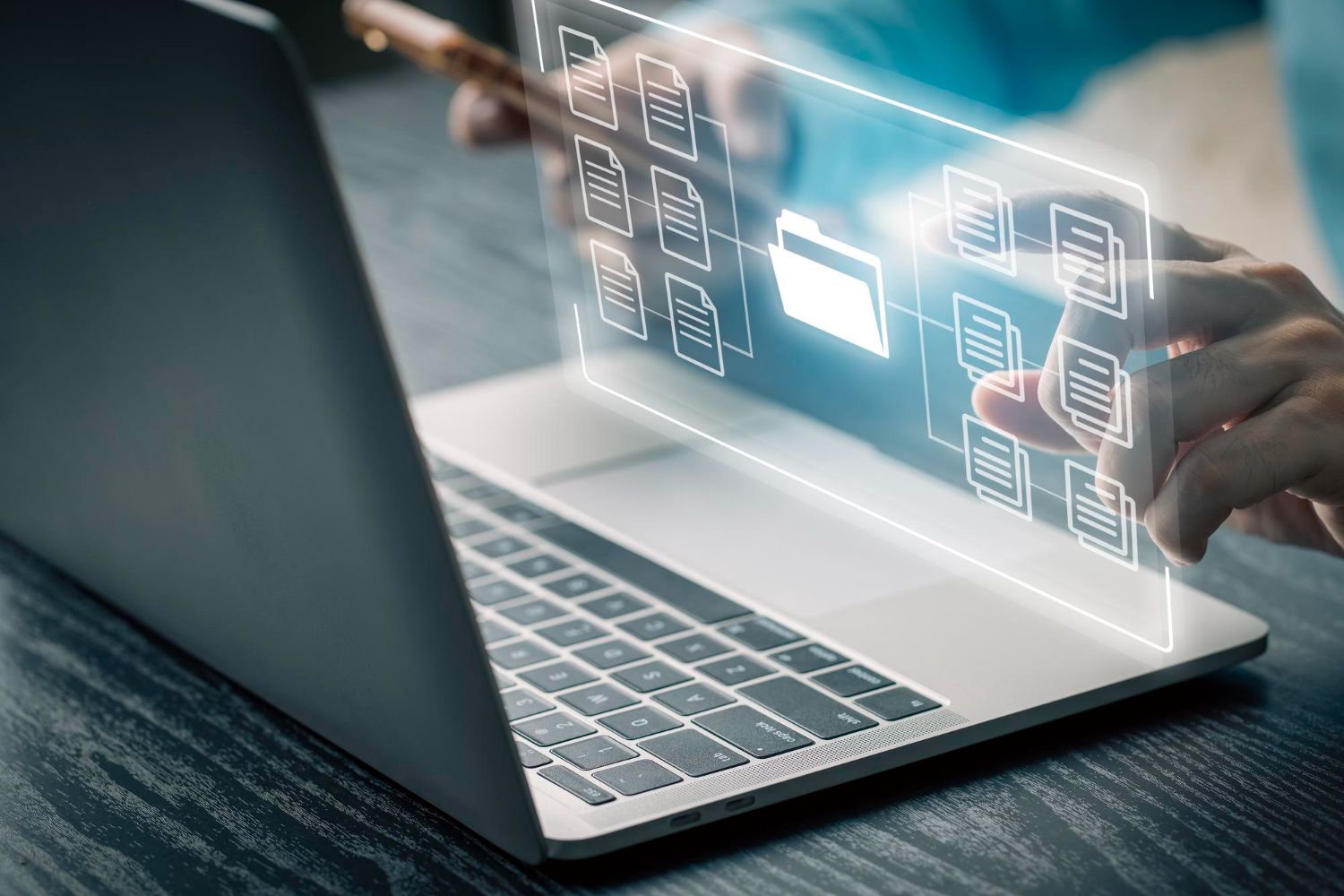
Cloud storage represents the pinnacle of technological evolution for keeping condominium information, offering advantages that surpass any local or physical infrastructure. The main advantage lies in high availability and accessibility; data is not confined to a physical server inside the building or a hard drive at the administrator's office, but is distributed across internationally certified datacentres that guarantee 24-hour access from anywhere in the world. This feature is vital for professional building managers who oversee multiple developments and need agility to check contractual or financial information during meetings or remote inspections.
Data redundancy is another key feature that ensures administrative continuity. Large cloud providers use mirroring systems, where each file is replicated across multiple servers and, often, in different geographic locations. This means that, even if a catastrophic failure occurs at one datacentre, the data remains intact and accessible at another point in the network, offering protection against loss that no physical safe or local server could match. For the condominium, this means the guarantee that its financial history, security footage and legal documents are protected against hardware failures and local natural disasters.
Cybersecurity in the cloud is robust and is constantly updated to address new threats. Data encryption both at rest and in transit, multi-factor authentication protocols and intrusion detection systems are standard on enterprise-grade storage platforms.
By migrating documents to the cloud, the condominium transfers technical responsibility for security infrastructure to specialised companies that invest billions in data protection, which is far more efficient and cheaper than trying to keep an in-house server secure within the building. In addition, the cloud makes it easier to integrate with other digital solutions, such as remote reception desks and smart camera systems that store footage directly on the network, ensuring that security evidence cannot be destroyed or stolen by criminals during a physical break-in.
Technical Requirements and Legal Validity: Decree 10,278/2020
The digitisation of documents for condominiums must strictly comply with the parameters set out in Decree No. 10,278/2020 so that digital files hold the same legal and evidentiary value as the paper originals. This decree regulates the technique and requirements for digitising public and private documents, establishing that, once the standards are followed, the physical document may be discarded, except for those of historical value. To ensure image fidelity, the legislation requires a minimum resolution of 300 dpi for standard text documents and the use of colours that respect the original, ensuring that stamps, seals and signatures remain perfectly legible and identifiable.
The integrity and authorship of the digitised document are ensured through the use of qualified electronic signatures, using digital certificates under the ICP-Brasil standard. This process ensures that the file has not been altered since it was captured and precisely identifies who was responsible for the digitisation.
In addition to the image, the decree requires the inclusion of minimum metadata that allow the file to be located and managed, such as the title, the date of digitisation, the author of the original document and the hash code. The hash works as a cryptographic "fingerprint" of the file; if a single pixel of the image is altered, the hash will change, immediately revealing that the document has been corrupted or tampered with.
For long-term preservation documents, such as plans and contracts, the recommended format is PDF/A (Portable Document Format for Archiving), an internationally standardised variant of PDF designed to ensure the document can be opened and read the same way in the future, regardless of changes in software and operating systems.
Adopting these technical standards is not merely an administrative choice but an essential legal safeguard; following Decree 10,278/2020 protects the condominium against challenges to the validity of its digital evidence in courts and before public administration bodies.
Digitising Old Documents and Large-Format Plans
One of the greatest technical and historical challenges for a condominium is preserving and digitising its old archive, especially the original architectural, structural, electrical and plumbing plans. These documents are essential for the safe maintenance of the building and for overseeing renovations to individual units, as required by standard NBR 16,280. However, old plans are often printed in large formats, such as A1 or A0, and on fragile media, such as tracing paper or blueprint paper, which yellow, become brittle and lose contrast over the decades.
Digitising these large-format documents requires specialised equipment, such as planetary scanners or "overhead" scanners, which capture the image from above without the document needing to pass through rollers that could tear or crease it. For old plans, a capture resolution of at least 600 dpi is recommended to preserve every technical line and small handwritten notes made by engineers of the time. The use of digital restoration techniques can help increase the contrast and legibility of documents where the ink has faded, turning an almost illegible file into a sharp, useful digital resource for future reference.
Before digitisation, careful preparation of the physical medium is necessary. This includes cleaning with soft-bristled brushes to remove dust and biological residue, removing oxidised metal elements and carefully flattening documents that have been rolled up for a long time. Handling these files with nitrile gloves is essential to avoid transferring grease from the hands, which speeds up the chemical degradation of the paper.
The advantages of digitising this historical archive are immense: besides freeing up physical space occupied by tubes and bulky folders, management gains a "digital twin" of the building's infrastructure, making it easier to identify points of intervention in the event of leaks or structural failures, without the risk of damaging the only original in existence through constant handling.
Data Governance, Privacy and LGPD in the Cloud

Migrating condominium documents to the cloud must be accompanied by a robust data governance strategy to ensure compliance with the General Data Protection Law (LGPD). Condominiums handle a massive amount of personal information, from residents' names and CPF numbers to facial images and biometric records at reception. In the digital environment, control over the life cycle of this data must be rigorous, ensuring that information is collected only for legitimate purposes and disposed of securely when no longer needed.
A significant advantage of cloud storage from an LGPD standpoint is the ease of implementing granular access controls. Different permission levels can be configured so that condominium staff, council members and the administrator only access the data strictly necessary for their roles. For example, reception staff need access to residents' names and photos for entry control, but have no legal basis to access financial reporting folders containing detailed financial data on other units. The use of integrated management systems allows for complete mapping of the data flow, promoting transparency and enabling the condominium to respond to requests from data subjects who want to know what information the building holds about them.
Choosing the cloud provider is a critical step in governance. The condominium must make sure that the technology provider has clear privacy policies and that its servers meet international security standards. Servers located in jurisdictions with data protection laws equivalent to Brazil's offer an extra layer of legal security. In addition, implementing an internal privacy policy, clearly communicated to all residents and staff, sets the rules of the game and demonstrates management's commitment to ethics and legality in handling the community's information.
Impact on Auditing and Financial Transparency
Digitisation and cloud storage revolutionise financial transparency in condominiums, turning financial reporting from a bureaucratic monthly event into a continuous, participatory audit process. With documents digitised and centralised on an online platform, fiscal council members can check invoices, statements and contracts at the moment entries are made, without needing to wait for the physical folder to be assembled and delivered. This agility makes it possible to identify inconsistencies or entry errors immediately, preventing bigger problems and ensuring much more accurate financial management.
Digital auditing becomes more efficient and less costly. External auditors can be given remote access to document repositories, eliminating the need for physical travel and handling stacks of paper. Traceability is total: every expense in the digital balance sheet can be linked directly to the image of the corresponding invoice and the bank payment receipt, creating an unbreakable audit trail. For residents, this visibility reduces conflict and increases confidence in management, as the clarity of the data and ease of access remove the shadows where suspicions of mismanagement or fraud often arise.
Digital financial reporting also aligns with legislative trends aiming to make condominium management more transparent and professional. Tools that allow visualisation of expense trend charts, comparisons between budgeted and actual figures, and real-time default-rate indicators raise the level of debate at assemblies. Instead of discussions based on vague perceptions, the community starts deciding based on concrete data and documentation accessible to everyone, fostering a culture of participation and shared responsibility for the common assets.
Innovation and Sustainability: The Paperless Condominium
The transition to a digital management model contributes significantly to the condominium's sustainability and environmental responsibility goals, consolidating the concept of the "paperless condominium". The drastic reduction in the use of paper, printer toner and energy for photocopying not only generates direct financial savings, but also reduces the environmental impact generated by the office supply chain. It is estimated that large condominiums can save tens of thousands of sheets of paper a year simply by digitising their financial reporting and internal communications, which translates into the preservation of trees and a reduction in the development's carbon footprint.
Beyond savings on supplies, digitisation and the cloud pave the way for other sustainable and economical innovations, such as digital management of subscription-based clean energy. Technology platforms allow the condominium to monitor in real time the savings generated by clean energy credits, integrating this data directly into digital financial management. This convergence between information technology and energy efficiency shows how the digital maturity of management can generate multidimensional benefits for residents, combining cost reduction, technological modernisation and environmental awareness.
Digital sustainability is also reflected in the preservation of institutional knowledge. In condominiums where building managers and administrators change frequently, the loss of historical information and technical manuals is a recurring problem that leads to losses in maintenance and renovations. A well-structured digital archive stored in the cloud ensures that technical knowledge about the building — from equipment warranties to inspection histories — remains accessible and organised regardless of who is in the management role, safeguarding the property's longevity and value over time.
Practical Implementation: A Roadmap for the Building Manager
To successfully implement digitisation and cloud storage, the building manager should follow a strategic roadmap that minimises resistance and ensures the technical integrity of the process. The first step is document mapping and defining priorities. It is not productive to try to digitise the entire historical backlog at once; the best approach is to start with current management documents and the condominium's fundamental constitutive files. Defining a clear document retention policy, based on legal retention periods, makes it possible to identify what should be digitised and kept, what should only be kept physically as a precaution, and what can already be safely discarded.
Choosing technology partners is the second pillar of success. The condominium should look for administrators or software companies that offer integrated management platforms, where digitisation is natively connected to the financial system and the resident portal. It is essential to check the security guarantees offered by the provider, including backup protocols, server location and LGPD compliance. Hiring professional digitisation services may be advisable for large archives or fragile documents, ensuring the process uses suitable equipment and produces files that meet the requirements of Decree 10,278/2020.
The third phase involves educating and engaging the community and staff. The shift from paper to digital requires a cultural change; staff accustomed to paper-based protocols need training to operate digital systems, and residents should be encouraged to use portals and apps to access information. Holding a specific assembly to present the project, demonstrating the benefits in terms of security, transparency and cost reduction, helps overcome resistance and establish digitisation as a collective step forward. Finally, establishing a routine for maintaining the digital archive, with periodic reviews of access permissions and folder organisation, ensures that the technology investment continues to generate value for the condominium in a sustainable and efficient way.
Digitisation and cloud storage represent not just a technical modernisation, but an evolution in how we understand responsibility and care for shared property. In an increasingly connected and fast-moving world, the condominium that breaks free from the constraints of paper and embraces digital intelligence positions itself more securely before the law, more transparently before its residents, and better prepared for the management challenges of the future. Preserving history through the digitisation of old plans, agility in financial reporting and data protection in compliance with the LGPD are the pillars of a modern administration that values efficiency and professionalism as keys to harmony and property value appreciation.
You may also like
- Casos de Sucesso
 20/10/2026
 5m
5m - Dicas para Síndicos e PMES16/10/20265m
- Dicas para Síndicos e PMES13/10/20265m



Stop paying more for your energy bill
Find out in less than 1 minute how much you could save with clean energy every month — no works and no bureaucracy.
Join the energy revolution
Subscribe to our newsletter and receive exclusive content