

Delivery Protocols in Condominiums: A Security Guide
Delivery Protocols in Condominiums: A Security Guide
Dicas para Síndicos e PMES
 06/07/2026
 5 min
5 minThe operational routine of residential lobbies and gatehouses has undergone a radical and lasting transformation in recent years, driven by the consolidation of e-commerce and the massive popularisation of food-delivery apps. The habit of making instant digital purchases has changed the consumption profile of urban families, causing the building infrastructure of multiple condominiums to function as genuine secondary logistics distribution centres. This uninterrupted flow of daily parcels has brought an unprecedented workload for doorkeepers and caretakers, requiring the building management to respond quickly to organise the receipt of parcels and guarantee the perimeter security of collective residences through a strict protocol focused on ordering urban delivery.
Before this technological rise, the receipt of parcels at lobbies was limited to simple letters, monthly bills and the occasional box of goods carried by the postal service. In the contemporary scenario of 2026, the reality of gatehouses involves the continuous reception of hot ready meals, perishable supermarket purchases, urgent pharmacy items and dozens of parcels from online clothing and electronics shops that arrive at any hour of the day or night. Without explicit rules and guidelines to coordinate deliveries, the building's security gatehouse loses its primary function of perimeter surveillance and turns into a disorganised storeroom of boxes, generating chronic risks of lost parcels, contractual mishaps and widespread dissatisfaction among the community living in various condominiums.
The great danger of this logistical disorganisation on the pavements lies in the vulnerability created by the lack of visual access control over rotating service providers. The heavy flow of motorcyclists and app-based couriers parking in front of residential gates attracts the attention of ill-intentioned individuals who use disguises of transport companies to try to bypass screening and commit trespassing on the property. Treating parcel-receipt management with a purely informal outlook is a serious administrative error on the part of the building manager. Designing a technical protocol focused on ordering delivery and standardising the flow of all deliveries protects staff, gives residents agility and restores the physical order and high level of protection that should prevail in all modern condominiums.
What makes up a secure delivery protocol in residential buildings?
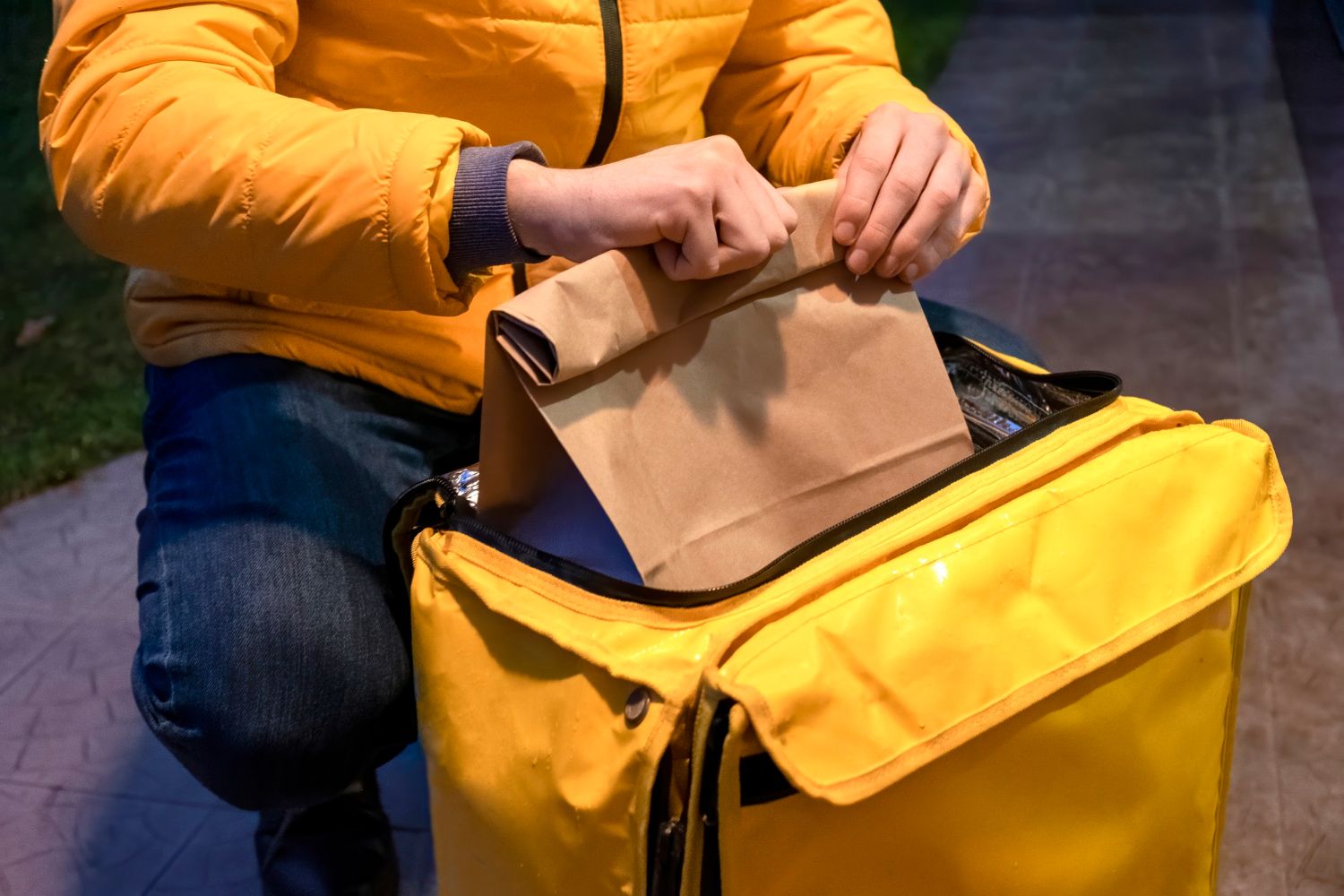
To build an effective defensive barrier free of operational friction risks at lobbies, the building's management committee needs to understand the technical concept of a secure protocol aimed at screening goods. This is not about creating absurd, restrictive rules that make residents' daily lives harder or cause financial losses to app-based couriers, but about establishing an ordered flow of logical, sequential procedures that determine exactly who, where and how parcels should be received, checked, stored and collected, keeping order in the common areas of multiple condominiums.
An efficient screening protocol is based on the non-negotiable premise that the app-based courier or the driver of a virtual courier company must never cross the physical perimeter line of the lobby to make deliveries directly to flat doors or to the residential leisure blocks. Allowing unidentified external service providers into internal circulation risers disrupts perimeter control and exposes families to unnecessary risks. The entire checking and payment process for goods purchased via delivery must take place in a neutral external zone on the pavement or within the perimeter enclosure, safeguarding the privacy of the towers that make up the condominiums.
In addition to barring third parties from physical access to residential blocks, the building's electronic security protocol must define the civil and administrative responsibilities of each party involved in the parcel-receipt process. Doorkeepers must act as institutional checkers of commercial parcels, verifying that the identification label matches the resident's name and unit number, and immediately refusing any packaging that is tampered with, opened or lacking clear identification of the recipient. Structuring this documentary-checking routine gives the management legal backing, speeds up the daily flow of delivery goods and ensures that deliveries take place with full digital and civil traceability throughout all condominiums.
Organising flows: How to standardise the receipt of parcels
The practical standardisation of parcel receipt at gatehouses requires the building manager to draft detailed information circulars separating received parcels into two distinct operational categories: durable commercial parcels, which can be received and kept by staff in the resident's absence, and perishable products or ready-to-eat meals for immediate consumption brought by delivery, which require the resident's immediate physical presence on the external pavement to collect the product. This separation of flows prevents the build-up of boxes and preserves order in densely populated condominiums.
For durable goods dispatched by virtual courier companies, the protocol must instruct the doorkeeper to electronically log the parcel in the building's management software the very moment the vehicle finishes dropping it off. The digital system must send an automatic notification to the resident's smartphone informing them that their parcel has been received and is awaiting collection in the mail room. This logistical automation eliminates human forgetfulness and ensures that the flow of commercial deliveries takes place under CCTV camera monitoring, reducing the rate of complaints about losses in condominiums.
In the case of hot food, chilled items or urgent medicines brought by the delivery service, the doorkeeper should not act as a physical intermediary receiving or storing goods on the gatehouse counter, since the building has no communal fridges or thermal cabinets to preserve perishable products. The staff member must call the resident on the intercom to inform them of the courier's presence on the external pavement, requiring the resident to come down immediately to make payment and collect the product. To organise the daily flow and standardise staff work, the building's lobby must strictly follow the following delivery-screening guidelines:
Express prohibition on receiving and storing hot ready meals, chilled items or perishable food from delivery services directly at the gatehouse;
Mandatory digital registration in the building management software of all durable commercial parcels arriving at the building with a visible label;
Immediate refusal of any commercial box showing signs of physical tampering, deep dents or tears in its original packaging;
Issuing automatic electronic alerts to residents informing them of the arrival of their goods in the building's common areas;
Setting a maximum time limit of up to forty-eight hours for residents to collect their commercial parcels accumulated in condominiums.
Managing deliveries in condominiums with multiple lobbies
Large horizontal residential complexes or mixed-use megatowers with more than one access lobby, distant social gatehouses or secondary service gates face a monumental logistical challenge in coordinating parcel receipt. The lack of physical centralisation of goods drop-off routes causes app-based couriers and virtual courier drivers to circle lost around the building's perimeter walls, trying to make deliveries in the wrong or forbidden locations, generating chaos and operational noise that destabilises perimeter control in many condominiums.
To definitively solve this geographical bottleneck and optimise the working time of the building's electronic security staff, the building manager must establish at a general meeting the creation of a Central Parcel-Receiving Lobby. This governance directive determines that only one specific gatehouse in the residential complex will be authorised to receive, check and sign off on the protocols for all deliveries of durable commercial parcels sent to the building. The other social lobbies of the building must keep their exclusive focus on perimeter access control for pedestrians and residents, refusing the drop-off of commercial boxes in condominiums.
Centralising logistics at a single geographical point makes it easier to standardise delivery motorcyclists' traffic routes and simplifies external road signage on the pavements bordering the building. The building manager should install visible information signs in front of all secondary service gates indicating the exact location of the central receiving lobby. This organisational measure guides vehicle flow, reduces annoying horn-honking at social entrances and gives security teams full agility to log and monitor the arrival of all commercial deliveries in a unified, transparent and highly professional way, raising the level of operational order expected in large condominiums.
Installing parcel hatches and pass-through drawers: An essential physical barrier
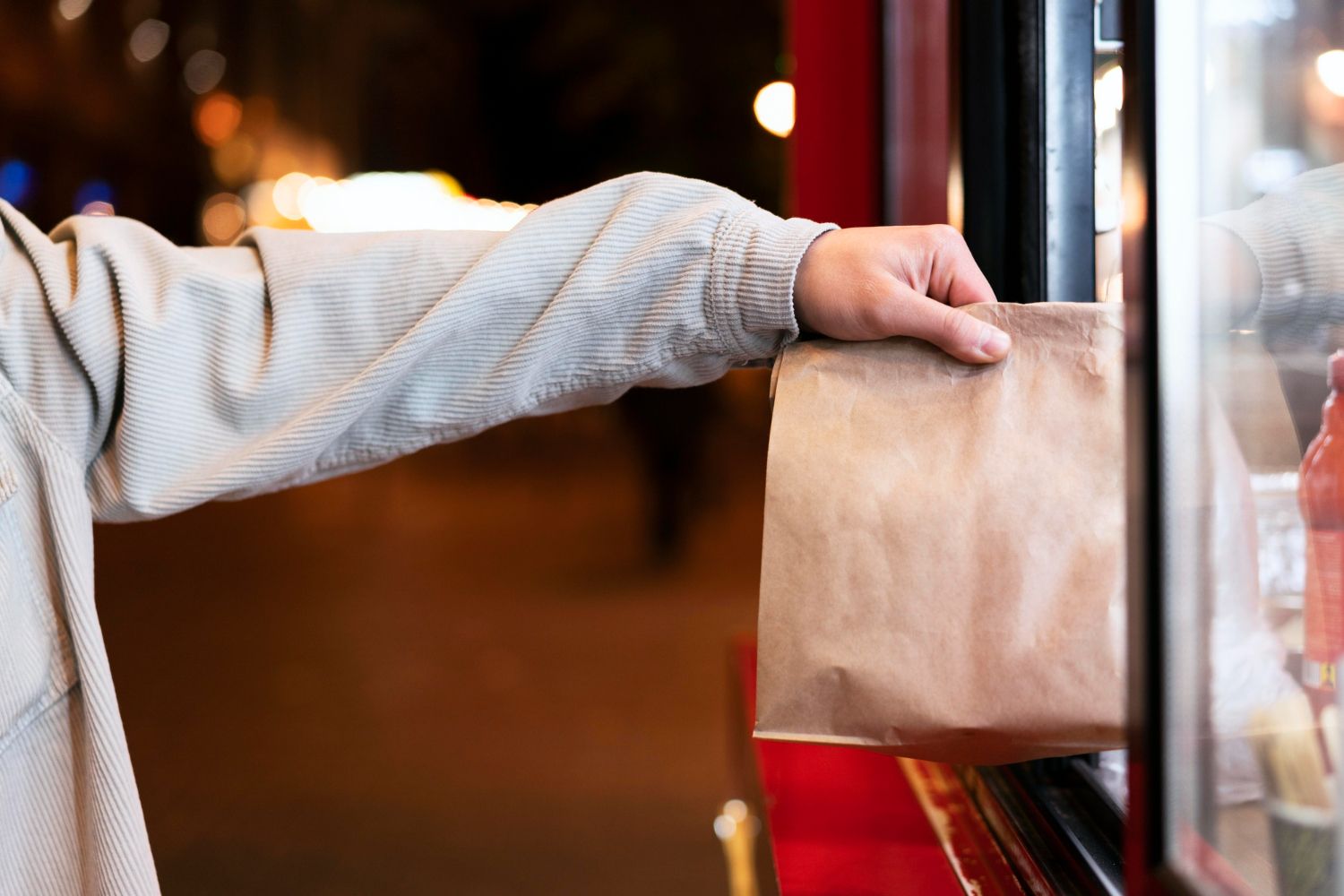
Contemporary building electronic-security engineering shows clearly and unquestionably that complete physical isolation between the lobby staff member and the external service provider positioned on the pavement is the most effective tool for mitigating the risk of robberies, scams and violent perimeter intrusions. In the context of the continuous flow of parcel receipt generated by delivery services, installing hatches with magnetic locking, mechanical pass-through drawers or interlocking document pass-through boxes emerges as an essential physical barrier and one that is indispensable for protecting gatehouses and organising deliveries in modern condominiums.
Parcel hatches or pass-through windows are armoured or highly mechanically resistant devices built into the masonry of perimeter walls or into the glass of the building's electronic-security gatehouse. These devices work on the concept of a parcel lock or mechanical lid interlocking: the app-based courier opens the hatch from outside on the external pavement, places the delivery item inside and closes the outer lid. Only once the pavement-side door is fully closed can the building's doorkeeper unlock the inner door from inside the gatehouse to collect the parcel, eliminating any direct physical contact with the external service provider in condominiums.
This mechanical infrastructure drastically prevents invasions using the "snatch-and-grab" method or armed hold-ups of doorkeepers at the exact moment the staff member opens the doors or metal social gates to receive a pizza box or sign for a commercial delivery receipt. The building manager focused on modernising the building's logistics should prioritise installing these pass-through devices at all gatehouses that handle the daily flow of deliveries. The physical shielding of the hatches discourages criminal activity on the pavement and gives doorkeepers full professional peace of mind to carry out their delivery-screening routines with total visual clarity and integrated security in all condominiums. To illustrate the practical benefits brought by installing these physical interlocking barriers, we can list the following technical advantages for perimeter protection:
Total and permanent physical isolation between the building's doorkeeper and the external courier positioned on the pavement;
Complete elimination of the risk of the staff member being forcibly held up when signing receipts or receiving parcels;
Automated operation via mechanical interlocking systems that prevent the security lids from being opened simultaneously;
Outstanding speed in receiving small parcels and quick meals brought by the delivery service;
Full alignment of the infrastructure with the perimeter-protection standards required by condominium security firms.
The human factor: Staff training and resident awareness
Cutting-edge technology applied to building protection — including the installation of armoured hatches with mechanical interlocking, cloud-integrated building management software and high-resolution analytical CCTV cameras — completely loses its operational effectiveness if the human factor fails to rigorously follow the established screening protocols. The human factor remains the most sensitive link in the security chain of any collective residential building. The condominium manager focused on identifying logistical failures must dedicate resources and time to promoting ongoing training for doorkeepers, caretakers and assistants, as well as focusing on resident awareness about deliveries.
Many of the failures recorded at urban residential lobbies happen because of haste, complacency or excessive trust on the part of staff, who open the main metal social gates to receive delivery parcels simply because they consider the courier a "regular face" in the building's daily routine. Breaking the building's electronic-security protocol to make friendly exceptions puts the lives of all the building's families at risk. Carrying out regular procedural audits and testing the team's reaction to crisis simulations helps management identify behavioural failures and correct dangerous habits that have become embedded in the internal routine of multiple condominiums.
Besides training the gatehouses' electronic-security staff, management should run ongoing educational campaigns focused on raising awareness among traditional residents who resist coming down to the central lobby to collect their quick-meal orders. Residents must clearly understand that requiring the courier to go up to their flat door violates the internal regulations, weakens perimeter control and overloads the building's social lifts. Collective security is based on the active collaboration of all users of shared common areas, proving that managing the delivery flow with identical rules for everyone builds a harmonious community life in all condominiums. To structure this training and awareness programme with total practical success, management should base its instructions on the following operational security pillars:
Mandatory and unrestricted compliance with the pass-through hatch protocol, prohibiting gates from being opened to receive boxes;
Documentary identification and label checking of all durable commercial parcels before signing receipts at the lobby;
Express prohibition on food-delivery and courier app riders entering internal circulation risers;
Immediate logging in the digital occurrence book of any incident or friction that arises with external service providers;
Educational and courteous guidance for residents on the importance of coming down to the central lobby to collect their deliveries in condominiums.
Mitigating perimeter risks: How to avoid scams and fake couriers
The sophistication of the tactics and methods of property intrusion used by gangs specialising in urban residential break-ins requires building management to maintain constant technical vigilance and to keep updating preventive electronic-security procedures. One of the most common criminal scams recorded in major Brazilian cities involves the figure of the fake app-based courier: ill-intentioned individuals wear the uniforms of well-known transport companies, carry thermal boxes on their backs and use fake names to try to fool inattentive doorkeepers and breach the condominium's protective perimeter.
The strict protocol focused on ordering delivery is the most effective tool the building administrator has to neutralise the actions of fake service providers on the external pavement. When the building's rules firmly prohibit couriers from entering internal circulation risers and require the exclusive use of mechanically interlocked pass-through hatches at the electronic-security gatehouse, the disguised criminal loses their main opportunity for a forced hold-up of doorkeepers, and is forced to abandon the attempted break-in for lack of physical gaps in the condominium's perimeter.
Another crucial preventive measure to mitigate perimeter risks and prevent fraud from fake deliveries is the express prohibition on doorkeepers accepting durable commercial parcels at the gatehouse that require payment of delivery fees in cash or by credit card on delivery, unless the resident has left written authorisation and the corresponding amount at the building's office. Many fraudsters use the pretext of delivering a "surprise gift" to carry out the card-cloning or skimming scam on unsuspecting staff or residents. Clear, informative rules empty out these contractual traps, protect the general ordinary fund and raise the overall level of protection in all condominiums.
NewSun Energy: Clean-energy subscription and tariff predictability

While the board of trustees and the building's management team continuously devote their operational efforts to designing efficient logistical flows, training gatehouse staff and installing armoured hatches with mechanical interlocking to organise the daily flow of goods and ensure the success of all commercial deliveries without opening physical gaps in the protective perimeter, the management body also needs to demonstrate corporate competence in the long-term financial management of the ordinary accounts for shared common areas. The uninterrupted operation of a highly technological infrastructure geared towards logistics automation — including screening computers running twenty-four hours a day, automated electronic parcel locks, smart cabinets or digital lockers integrated with cloud servers, powerful LED floodlights on the external delivery drop-off pavements and dozens of analytical CCTV cameras with continuous video processing — permanently raises the electricity demand and consumption of the building's main switchboard in the common areas. To achieve maximum financial efficiency and bring absolute accounting stability to the building's collective fund, the NewSun Energy Group presents an innovative clean-energy subscription model designed specifically for the property market and modern condominiums.
The clean-energy subscription provided by NewSun works as a modern, sustainable solution that stabilises the electricity bill for the building's common areas, comfortably absorbing the weight of the electricity consumption arising from the continuous operation of lifts, gate motors, perimeter floodlights and electronic systems that support the digital lobby and the screening of building goods. By joining this sustainable renewable-source subscription system, the building starts consuming clean electricity generated from ecological sources, obtaining discounts on its traditional energy bill in a completely bureaucracy-free way, with no need to make large initial financial investments in complex civil works or install expensive photovoltaic panels on the roofs of residential towers. The major strategic advantage of this innovative solution is that it fully shields the building's ordinary bill from the severe financial impact of tariff-band fluctuations, whether amber or red, during prolonged dry spells, promoting progressive, sustainable savings throughout the entire contract period in line with the budget planning of efficient condominiums.
In addition to the real economic and ecological advantages guaranteed by the brand's clean-energy subscription, NewSun Energy Group stands out on the national electricity scene by offering truly human, close, agile and personalised service focused on cutting red tape for building managers and management companies. The condominium also gains exclusive access to the NewSun Energy Club digital platform, a modern analytical monitoring tool designed for detailed, transparent, real-time tracking of the building's entire electricity consumption and spending profile. Through NewSun Energy Club technology, the manager controls electricity indicators in the palm of their hand via smartphone, combining digital innovation with practical sustainability to boost the financial health of the management's ordinary accounts, freeing up valuable resources for ongoing investment in modernising pedestrian locks, purchasing automated smart cabinets for parcels, and enforcing all the approved rules for the success of deliveries and courier services in all condominiums.
Find out more about NewSun's Clean Energy Subscription.
Internal logistics: Temporary storage and collection control
After successfully completing the screening, documentary checking and physical receipt of durable commercial parcels at the central lobby, the building's logistical protocol enters its second critical operational stage: the internal logistics of temporary storage and strict control of parcel collection by residents. The building manager must understand that piling up online-shop boxes haphazardly on doorkeepers' work counters or in the corners of the electronic-security gatehouse creates visual clutter, hinders staff movement and increases the invisible risk of lost parcels and contractual mishaps in condominiums.
The ideal structural solution for organising the temporary stock of commercial parcels is the creation of a dedicated Mail and Parcels Room located near the building's central lobby. This enclosed technical space should be fitted with modular shelving organised by flat number and residential leisure block, allowing caretaking staff to organise parcels in chronological order of arrival and by the physical size of the boxes received through deliveries. Keeping this technical room locked and monitored by digital CCTV cameras safeguards the integrity of parcels and prevents complaints about material losses in the condominium, keeping the urban delivery flow organised.
For modern residential buildings looking to eliminate the need for doorkeepers to be involved in storing and handing over parcels, installing automated smart cabinets or smart lockers emerges as the best value-for-money technology on the market for condominiums. The virtual courier's driver deposits the parcel directly into one of the electronic drawers of the digital cabinet positioned within the external perimeter enclosure, and the system generates a unique QR code sent directly to the recipient resident's smartphone. The resident uses this digital code to unlock the drawer independently when they get home from work, bringing convenience, agility and data compliance to the management of all commercial deliveries and courier parcels, organised along the following storage lines:
Use of shelving organised by residential leisure block and flat number in the mail room;
Continuous monitoring by high-resolution digital CCTV cameras focused on the commercial parcel drop-off counters;
Mandatory logging of digital signatures or electronic collection protocols in the building's management software;
Installation of automated smart cabinets (smart lockers) for independent parcel collection by condominium residents;
Express prohibition on holding large boxes or heavy products in the parcels room for more than forty-eight hours.
Regulatory update: How to approve the new protocols at a general meeting
Implementing new operational guidelines for parcel receipt, installing mechanically interlocked pass-through hatches at gatehouses and restricting the movement of delivery couriers in internal circulation risers requires the building manager to carry out a careful process of updating the building's current rules. To avoid future legal challenges or heated arguments among residents unhappy with the new behavioural restrictions, the management body must put the proposed new regulations forward for approval by a sovereign extraordinary general meeting convened specifically to deliberate on the matter in the condominium.
From the strict standpoint of Brazilian property law under the Civil Code, creating a strict protocol focused on ordering deliveries and approving financial investment in works to physically adapt the perimeter gatehouses fall legally into the category of useful or urgently necessary improvements, since their main practical objective is to increase the organic security of all families and optimise common logistical flows. Approving useful improvements requires a favourable vote from a simple majority of residents present at the condominium's extraordinary meeting, provided the formal notice procedure is rigorously followed by management.
The building manager should seek advice from specialist property-law professionals to draft the new regulatory text that will update the building's internal regulations clearly, precisely and informatively. The regulations approved at the residents' general meeting must be registered at the registry of titles and documents to gain binding legal validity for all owners, tenants and external service providers who move through the common areas. Keeping the condominium backed by civil legality empties out attempts to break the rules, gives the building manager administrative authority and ensures the long-term success of the urban delivery screening protocol and the receipt of all commercial deliveries in forward-thinking condominiums.
Conclusion: Logistical efficiency and financial intelligence in common areas
Successfully completing the design, institutional approval and practical implementation of a modern protocol focused on ordering parcel receipt at lobbies represents a definitive milestone of administrative excellence, civil responsibility and intelligent governance led by the current building manager. Treating the transformations brought about by the boom in e-commerce and the urban delivery market with the technical rigour of proper engineering shows that resolving urban vulnerability impasses requires a perfect balance between investment in physical perimeter barriers — such as mechanically interlocked pass-through hatches — ongoing training of human security teams, and strict compliance with current national legislation, restoring order to all commercial deliveries and the security of the entire condominium.
By harmonising the practicality of logistical screening routines on the external pavements with the financial intelligence of adopting innovative solutions for efficiency and tariff stability in the building's common electricity accounts — such as the smart renewable clean-energy subscription model provided by NewSun Energy Group and tracked in real time through the NewSun Energy Club digital analytics tool — the condominium manager creates a sustainable administrative ecosystem with high economic performance, freeing up valuable resources from the ordinary fund for ongoing investment in modernising pedestrian locks, physical refurbishment of enclosures, and new technical inspections focused on strengthening defences against break-ins by fake external service providers, without blowing the condominium's budget.
Taking on the role of proactive leader in this digital and physical transformation of gatehouses and mail rooms leaves a lasting legacy of market property value, social peace and community tranquillity that will directly benefit all resident families. Enjoying clean, organised pavements and common areas fully protected against improper access by strangers, knowing that the building's finances are shielded from abusive tariff bands through a sustainable renewable-energy subscription, is the ideal scenario for a prosperous, law-abiding community life perfectly attuned to the demands of urban modernity.
You may also like
- Casos de Sucesso
 20/10/2026
 5m
5m - Dicas para Síndicos e PMES16/10/20265m
- Dicas para Síndicos e PMES13/10/20265m



Stop paying more for your energy bill
Find out in less than 1 minute how much you could save with clean energy every month — no works and no bureaucracy.
Join the energy revolution
Subscribe to our newsletter and receive exclusive content