

Cost-sharing in condominiums: a complete guide to costs and energy
Cost-sharing in condominiums: a complete guide to costs and energy
Dicas para Síndicos e PMES
 18/03/2026
 5 min
5 minFinancial management of shared buildings in Brazil is one of the pillars of harmonious coexistence and property appreciation. At the heart of this management, the issue of cost-sharing in condominiums stands out as the point of greatest technical complexity and, often, the greatest friction among residents.
The way expenses are divided, whether through the traditional ideal fraction or per-unit cost-sharing, reflects not only an administrative choice but a vision of fairness, proportionality and property rights. In an economic scenario where energy inflation severely impacts monthly fees, the search for modern solutions, such as NewSun Energy Group's clean energy subscription, becomes an indispensable strategy for ensuring the condominium's financial health and social peace at general meetings.
The historical and legal evolution of co-ownership in Brazil
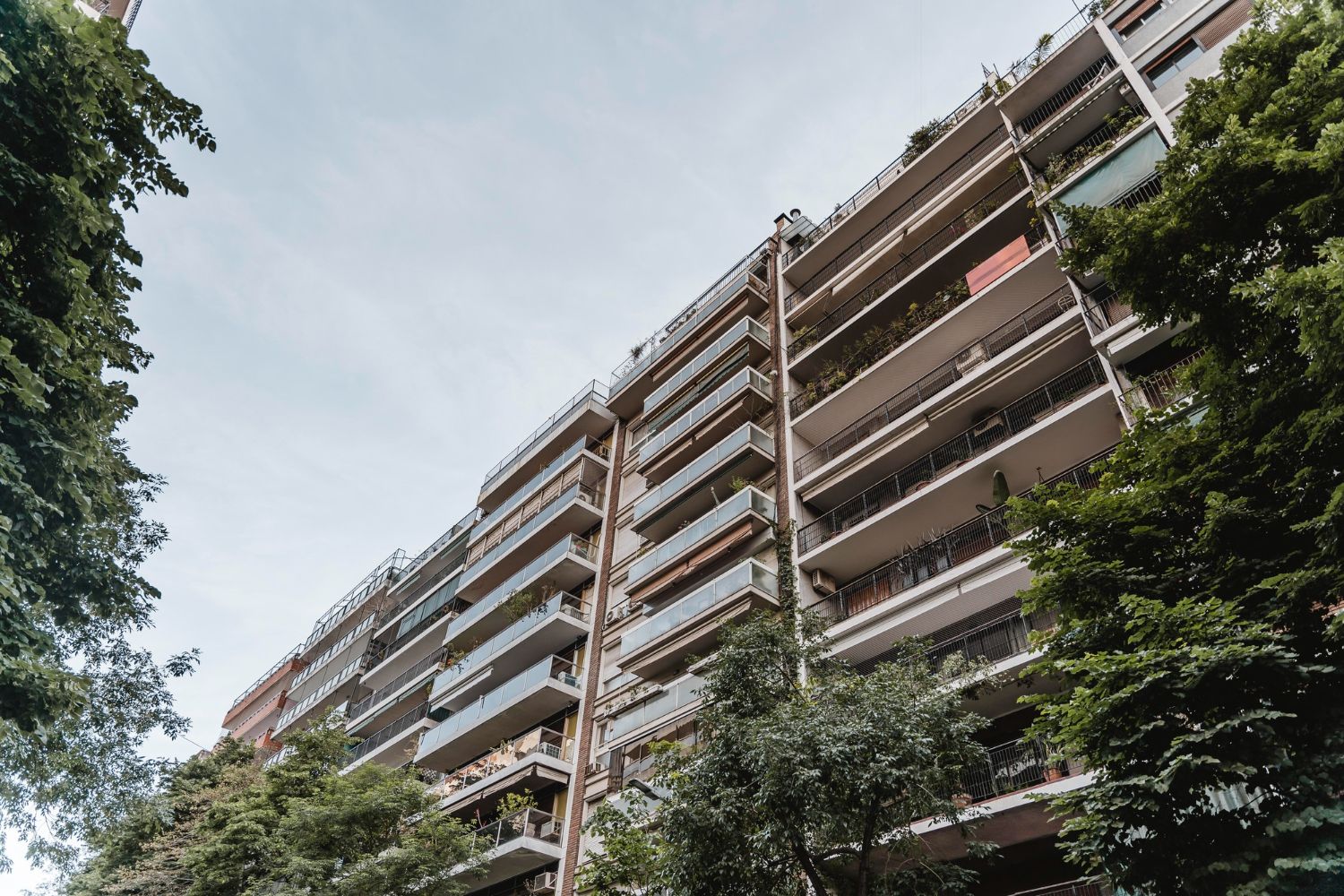
To understand the depth of the debate on cost-sharing in condominiums, it is essential to analyse the trajectory of national legislation. For decades, the sector was governed by Law No. 4,591 of 16 December 1964, a milestone that marked 60 years in force in 2024. Known as the Real Estate Development Law, it was responsible for bringing legal certainty to a market that operated without specific regulation, establishing the concept of ring-fenced assets and the mandatory registration of the descriptive memorandum.
The 1964 Law introduced the premise that each independent unit inseparably holds an ideal fraction of the land and common areas of the building. This fraction, expressed as a decimal, serves as the yardstick for measuring both voting rights and financial responsibility. With the advent of the Civil Code of 2002 (Law No. 10,406), the rules were consolidated in Articles 1,331 to 1,358, keeping the ideal fraction as the standard criterion for contributing to expenses, but introducing the flexibility needed for modern condominiums to adapt by allowing the by-laws to provide otherwise.
The amendment introduced by Law No. 10,931 reinforced Article 1,336, item I, of the Civil Code, establishing that it is the duty of the co-owner to contribute to expenses in proportion to their ideal fractions, "unless otherwise provided in the by-laws". This small legal proviso opened the door for condominium communities to discuss alternative models that consider actual use of services, rather than just property size, as the basis for charging.
Ideal fraction: the philosophy of proportional ownership
The ideal-fraction cost-sharing is based on the classic idea that the owner of a larger share of common property should bear a larger share of the costs of its maintenance. Technically, the ideal fraction is calculated by dividing the unit's private area by the total built area of the condominium, resulting in a coefficient that defines the representativeness of each flat or shop within the whole.
Supporters of this model argue that the building's upkeep — including façade painting, roof maintenance, fire insurance and foundations — benefits the market value of each unit proportionally. If one property has twice the floor area of another, it is understood to represent a more valuable asset and, therefore, its owner should invest proportionally more to preserve it. Furthermore, in the event of the condominium's liquidation or sale of the land, the financial return for this owner would be higher, which justifies the greater share of expenses over time.
Per-unit cost-sharing: in pursuit of equality in services
In contrast to the ideal fraction, per-unit cost-sharing proposes that all independent units pay exactly the same condominium fee, regardless of their floor area. This model gains traction in condominiums where common areas and services offered are the main drivers of expenses, such as round-the-clock security, caretaking, administration and leisure facilities.
The central argument for this model is the principle of equality. It is questioned whether a resident of a 200 m² penthouse uses the lift, pool, intercom or security twice as much as the resident of a 100 m² flat. For advocates of equal division, the condominium fee should not be treated as a property tax (like IPTU), but rather as a cost-sharing of operating costs where the benefit is enjoyed identically by all households.
Many property law experts point out that per-unit division can even add value to the development as a whole, making it easier to sell larger units that would otherwise be avoided by buyers due to the prohibitive fixed monthly cost. However, the transition to this model requires legal care: if the original by-laws stipulate the ideal fraction, any change requires a qualified quorum and a formal amendment of the document to avoid nullity at general meetings.
The penthouse dilemma: should they pay more or the same?
The discussion over whether penthouses should or should not pay a higher fee than other units is at the epicentre of conflicts in condominium cost-sharing. Historically, penthouses pay double or even triple, based strictly on the ideal fraction. Owners of these units have increasingly turned to the courts, arguing that overcharging amounts to unjust enrichment of the condominium, since the service provided is the same for everyone.
The current legal landscape presents divergent rulings that require careful analysis. The Superior Court of Justice (STJ), in rulings such as REsp 1,778,522/SP, reaffirmed that, if the condominium's by-laws provide for cost-sharing by ideal fraction, proportional charging is valid and lawful, even for ordinary expenses. The rationale is respect for the autonomy of will of the co-owners who entered into that agreement when purchasing the property.
However, state courts have shown greater sensitivity to the issue of balance. At the Minas Gerais Court of Justice (TJMG), recent rulings have favoured penthouse owners by holding that expenses of an ordinary nature (such as payroll and cleaning) should be divided per capita or per unit, reserving the ideal fraction only for investments that add value to the structure. For these judges, charging penthouse residents more for a concierge service violates the objective good faith and financial balance of the condominium's social contract.
The hybrid model as a path to social pacification
Faced with the polarisation between the ideal fraction and per-unit cost-sharing, the hybrid model emerges as a technical and ethical solution. This approach proposes segregating condominium expenses according to their purpose and the benefit generated. It is a way of modernising cost-sharing in condominiums, ensuring that no one is unfairly overburdened and that common property is preserved in a technically sound manner.
In the hybrid model, expenses are classified into two large groups:
Ordinary Operating Expenses: These include staff salaries, payroll charges, lift maintenance contracts, cleaning, gardening and security. For these, cost-sharing is usually done per unit or per number of bedrooms, on the premise that the use of these services is not linked to the flat's floor area.
Capital and Structural Expenses: These involve façade renovation works, slab waterproofing, reserve funds, structural refurbishments and building insurance. In these cases, the ideal-fraction cost-sharing is retained, as the investment directly impacts the safety and appreciation of the property proportionally to its size.
The adoption of this mixed system has proven effective in reducing default rates and avoiding prolonged litigation. When the building manager presents a transparent cost-sharing spreadsheet, separating what is a service (equal for everyone) from what is property (proportional to area), resistance from co-owners decreases and confidence in management increases.
Electricity: the hidden cost that unbalances cost-sharing

Regardless of the cost-sharing model adopted, the electricity bill for common areas stands out as one of the largest ordinary expenses of any condominium. Lifts, water pumps, security lighting and leisure systems operate continuously, generating consumption that can account for up to 30% of monthly fixed costs. The major challenge for managers is that this cost is variable and subject to fluctuations in tariff flags and annual adjustments by ANEEL, which are expected to keep rising above inflation in 2026.
The tariff-flag system (green, yellow and red) works as a price signal for consumers, reflecting the cost of energy generation in the country. During dry periods, the activation of thermal power plants makes the kilowatt-hour (kWh) more expensive. For example, red flag level 2 adds a significant extra charge for every 100 kWh consumed, which often forces the condominium to make unplanned capital calls or use the reserve fund to pay the bill. This instability creates uncertainty in the planning of cost-sharing in condominiums, affecting every resident's pocket.
NewSun's clean energy subscription: protection and savings
It is in this scenario of high costs and unpredictability that NewSun Energy Group offers a transformative solution for condominiums. NewSun's clean energy subscription allows the condominium to receive energy credits generated at remote solar farms directly on its electricity bill, without needing to invest a single penny in works, rooftop panel installation or technical maintenance.
The great differentiator of this model is that NewSun's clean energy subscription stabilises the electricity bill for the condominium's common areas, shields the bill against tariff flags and delivers progressive savings. Since NewSun's tariff is linked to the green flag, the condominium is no longer exposed to sudden increases caused by water shortages. For the building manager, this means the ability to set a much more accurate budget forecast for cost-sharing in condominiums, eliminating the negative surprises that tend to spark complaints at general meetings.
The benefits of a solar energy subscription for condominiums can be summarised as:
Immediate Savings: A direct reduction in the electricity bill within the first months of the contract, with no joining fee.
No Investment: No need for structural renovations or purchasing expensive equipment; the process is 100% digital.
Financial Predictability: Tariffs protected against yellow and red flags, ensuring stability in cost-sharing.
Simplified Management: Fast contracting process and specialised support for building managers and management companies.
Find out more about our Solutions for Condominiums.
Projections for the electricity market and tariffs in 2026

Planning cost-sharing in condominiums for the coming years must take into account Brazil's macro-energy landscape. Projections from ANEEL and industry experts point to electricity tariffs tending to rise above inflation in 2026, driven by rising transmission costs and persistent hydrological risk. In states such as Rio de Janeiro, annual increases of more than 15% for distributors like Enel Rio are already a reality, directly affecting the cost of living in major cities.
At the same time, the distributed generation (DG) market — where NewSun Energy Group is a leader — is expected to reach 50 GW of installed capacity by the end of 2026. This shows that consuming energy from renewable sources has stopped being a trend and become the structural foundation of the modern electricity sector. Condominiums that fail to migrate to subscription or self-generation models will become increasingly vulnerable to the inefficiency of the traditional system, resulting in ever heavier condominium fees for owners.
Sustainability and property appreciation: the ESG pillar
Beyond direct savings, implementing solutions such as NewSun Energy Group's places the condominium within global ESG (Environmental, Social and Governance) standards. The environmental pillar is met by replacing polluting sources with clean energy, reducing the building's carbon footprint. On the social pillar, lower fixed costs improve residents' quality of life and make units more affordable. As for the governance pillar, it is strengthened by transparency in accounts and the modernisation of administrative management.
Market data indicates that properties in sustainable condominiums appreciate by up to 10% more than neighbouring buildings that do not adopt efficiency practices. Today, 70% of Brazilians prefer to live in places that use solar energy, seeing it as a sign of modernity and financial intelligence. By choosing NewSun's clean energy subscription, the building manager is not just paying a cheaper bill; they are building a competitive advantage for the assets of all co-owners, attracting more qualified buyers and tenants.
The new era of condominium management
Defining cost-sharing in condominiums is an ongoing exercise in balancing property rights and social justice. Although the ideal fraction remains the legal basis, the move towards hybrid models and a focus on energy efficiency are irreversible paths for managers seeking excellence. The controversy over penthouses and larger units tends to be resolved when management clearly separates what is the cost of maintaining the structure from what is the cost of consuming common services.
In this context, NewSun Energy Group positions itself as the definitive tool for resolving the financial dilemma of energy. By stabilising the electricity bill, shielding the condominium against the uncertainties of tariff flags and offering a fully transparent platform such as the Energy Club, NewSun allows the building manager to focus on what really matters: coexistence and the appreciation of the development. Adopting clean energy through subscription is not just an economic decision; it is a commitment to the future, to ethics, and to the harmony of everyone who shares the same roof.
You may also like
- Casos de Sucesso
 20/10/2026
 5m
5m - Dicas para Síndicos e PMES16/10/20265m
- Dicas para Síndicos e PMES13/10/20265m





Stop paying more for your energy bill
Find out in less than 1 minute how much you could save with clean energy every month — no works and no bureaucracy.
Join the energy revolution
Subscribe to our newsletter and receive exclusive content