

Condominium Auditing: A Complete Guide for the Management Company
Condominium Auditing: A Complete Guide for the Management Company
Dicas para Síndicos e PMES
 25/03/2026
 5 min
5 minManaging large residential and commercial complexes in Brazil requires a level of technical rigour that often exceeds the oversight capacity of the traditional supervisory board. At the heart of this system, the management company acts as the guardian of compliance, but it is the independent audit that consolidates trust between all parties. Understanding the need to commission an external review is a strategic differentiator for any management company seeking excellence and transparency in running a condominium.
The role of auditing in modern condominium governance
A condominium audit consists of a technical, independent and systematic examination of all financial statements, accounting records and supporting documents that make up a management's accountability report. While the review carried out by the supervisory board tends to be a surface-level check, often limited by the members' lack of technical training, an independent audit is conducted by specialist professionals (accountants or administrators) who have the expertise needed to identify deep-seated anomalies, such as sophisticated fraud or latent tax errors.
There are fundamental distinctions between the internal audit, carried out by the board, and the independent one. The internal audit is carried out by elected residents, focusing on checking folders and receipts with relative independence, given their direct link to management. The independent audit, by contrast, is carried out by certified professionals (CRC/CFA), who cross-reference data and perform systematic analysis with total independence, resulting in a detailed technical report with specific findings.
For the management company, the audit acts as a seal of quality that validates its own data-processing work and ensures the condominium is operating within the compliance parameters required by the Civil Code and by tax regulations. The core objective is to ensure that the condominium's income and expenses are recorded accurately and transparently, reflecting the true financial reality of the shared property.
Moments when an independent audit is essential

There are situations in which the absence of an independent audit puts the condominium's financial viability and social harmony at risk, requiring the management company to act in an advisory capacity to mitigate risk. The most common trigger for an essential audit is suspected irregularities or fraud. When residents notice odd expenses, unexplained payments or funds being diverted from their intended purpose, an investigative audit becomes the only tool capable of providing concrete evidence for legal or administrative action.
Another critical moment is the changeover of building manager or management company, a process that calls for a transition audit so that the new manager does not inherit liability for their predecessor's mistakes. Major construction works also call for an essential audit. Structural works or façade renovations involve substantial budgets and a high risk of cost inflation or the use of materials that fall short of technical specifications. In these cases, the audit ensures that every real invested by residents is applied in accordance with the contract approved at the assembleia.
Warning signs for the management company and building manager
Proactively spotting signs of imbalance in condominium management is one of the core functions of an excellent management company. Among the indicators that point to an immediate need for an audit are:
Chronic disorganisation in financial reporting and a lack of standardised records.
Persistent difficulties reconciling bank statements and inconsistencies in the balances presented.
Unexplained increases in spending on utility bills or maintenance contracts.
Recurring questions from residents about how reserve or works funds are being used.
Absence of basic supporting documentation, such as valid invoices and proof of tax payment.
Voluntary audits as a strategic governance tool
Not every audit request stems from a crisis of confidence. In a well-run condominium, an audit can be used as a strategic tool to enhance property value and continuously improve financial and operational management. A voluntary audit, especially in its preventive form, is recommended for medium and large condominiums, where the complexity of operations makes detailed analysis difficult for non-specialists.
In this context, commissioning an audit serves to validate the management company's internal processes and suggest improvements to resource allocation, optimising cash flow. It can also be a competitive edge when it comes to unit values, since a condominium with "audited accounts" immediately reassures potential buyers and investors, guaranteeing that the property is free of hidden liabilities. Many professional building managers use audits as a shield of integrity, protecting their reputation against political attacks or unfounded suspicion.
Situations where an audit may not be necessary
While transparency is a universal value, there are contexts in which the financial cost and operational effort of an independent audit may not be justified, and it falls to the management company to advise the condominium on the best cost-benefit approach. In small condominiums, with few units and extremely straightforward direct management, the need for external oversight can be met by an active supervisory board using digital management tools for real-time monitoring.
If the relationship between the building manager, the board and residents is grounded in complete trust, with free access to all documents and impeccable accountability, an external audit can be seen as an unnecessary expense that won't add immediate value to management. Even so, the management company should point out that the absence of visible problems is no guarantee that latent technical flaws don't exist, particularly in complex areas such as tax and labour matters, where a silent error can lead to heavy fines down the line.
How the audit process works, technically

For a condominium audit process to be effective and produce reliable results, it must follow a rigorous methodological process. The management company plays a key role in preparing the environment and providing logistical support to the independent auditor. The process begins with planning and defining the scope, assessing whether the analysis will be preventive or investigative and setting the sampling or full-analysis procedures.
In this workflow, gathering information requires the management company to organise and hand over digital or physical folders containing trial balances, statements and contracts. The technical analysis involves meticulously cross-referencing data, checking whether income collected matches the invoices issued and whether expenses are backed by valid invoices. The process culminates in the delivery of a final report, in which the auditor presents findings and recommendations for correction. The final stage is presenting these results at a general meeting, where the management company provides logistical support and additional technical explanations.
Residents' rights and the request process
One of the most common questions in condominium management concerns residents' legitimacy to request an audit. Legislation and case law ensure that the community does not depend solely on the building manager's willingness to allow financial scrutiny. If the building manager or supervisory board refuse to commission an external audit even when there are well-founded doubts, residents can mobilise and call an extraordinary general meeting.
To do so, a signed petition is required, bearing the signatures of at least a quarter (1/4) of the owners. During the meeting, commissioning the audit can be approved by a simple majority of those present, and the cost of the service then becomes part of the condominium's ordinary expenses. It is essential that this process take place within the bounds of the law, to prevent the audit report from being challenged in court. In this scenario, the management company must maintain a position of absolute neutrality, acting as a facilitator of transparency.
Stabilising costs with NewSun's clean energy subscription
At the heart of any effective financial audit lies the pursuit of lower fixed costs and budget predictability. One of the biggest sources of negative variation in a condominium's balance sheet is the electricity bill for common areas, frequently affected by unexpected tariff increases and water-scarcity surcharges. The clean energy subscription from NewSun Energy Group emerges as a high-performance solution that stabilises the electricity bill, shields cash flow from tariff surcharges and delivers progressive savings over the course of the contract.
Unlike systems that require major construction work and upfront investment in solar panels, NewSun's model allows the condominium to receive energy credits from remote power plants, cutting operating costs immediately and without structural risk. Beyond the auditable financial advantage, which eliminates unexpected spikes and improves financial-health indicators, NewSun offers genuinely human customer service and an exclusive platform, the NewSun Energy Club. For the management company, this tool is a transparency differentiator, allowing savings data to be presented clearly and digitally in monthly accountability reports, making both internal and external audit work easier.
Discover our Solutions for Condominiums.
The impact of the 2026 Tax Reform on condominium management
From 2026, condominium management in Brazil will face a new challenge with the implementation of the Tax Reform. The creation of the CBS and the IBS, which will replace taxes such as PIS, Cofins, ISS and ICMS, will change the calculation basis for various essential services contracted by the condominium. This change will require the independent audit to be even more vigilant.
Since condominiums are considered end consumers within the tax chain, they will not be able to claim tax credits, which could lead to a significant increase in the cost of contracts for concierge, cleaning and building maintenance services, whose rates are likely to rise. The management company will need to act proactively in reviewing supplier contracts, and the audit's role will be to verify that invoices issued from 2026 onwards comply with the new CBS and IBS disclosure rules. Failures in submitting digital obligations such as e-Social and EFD-Reinf can result in automatic fines, which reinforces the need for preventive audits focused on tax compliance.
Classification of works under the Civil Code and approval quorums
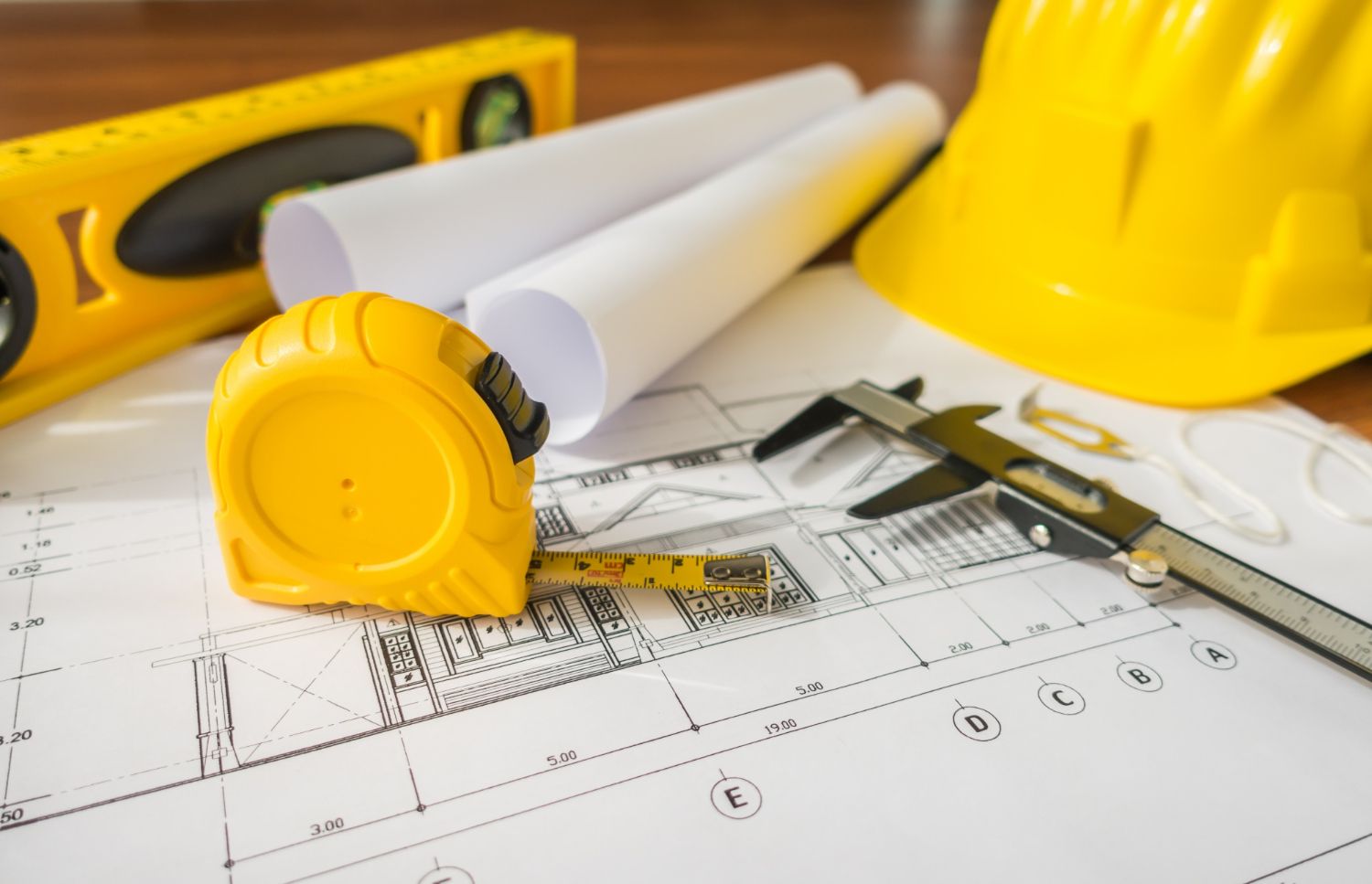
One of the most common errors identified in audits is carrying out works without the voting quorum required by the Brazilian Civil Code. The management company must rigorously guide the building manager on classifying each intervention correctly, to avoid the expense being declared void.
Necessary works are those aimed at preserving the property or preventing its deterioration, such as fixing leaks or electrical maintenance. They may be carried out by the building manager without prior authorisation if they are urgent and do not involve excessive expense. Useful works increase or make it easier to use the condominium, such as installing car park roofing or security systems, and require the vote of an absolute majority of residents. Voluptuary works, meanwhile, involving mere embellishment or indulgence, such as replacing the lobby flooring with a more luxurious material, require the vote of two-thirds (2/3) of all residents.
A lack of diligence in preventive maintenance, or carrying out works without duly proven urgency, can result in the building manager being held personally liable for poor financial management or administrative negligence. By reviewing meeting minutes and quotation processes, the audit ensures that the community's wishes have been respected within the bounds of the law.
Civil and criminal liability in asset management
The building manager, as the condominium's legal representative, carries a burden of responsibility that goes well beyond bureaucratic administration, spanning both civil and criminal spheres. Failing to maintain critical items, such as lifts, fire-fighting systems or concrete structures, can result in damage that forces the manager to answer for it with their personal assets.
Civil liability arises when failure to act, or inadequate action, causes losses, making the building manager liable for damages. Criminal liability arises in cases of misappropriation or negligence involving victims. The audit acts as a protective tool for both the building manager and the management company, as it documents the true state of the accounts and infrastructure, serving as proof of due diligence. In the event of an accident, the existence of preventive audit reports and regular maintenance plans (NBR 5674) can be the difference between acquittal and conviction for negligence.
Auditing as an investment in social harmony and transparency
The decision to commission an independent audit for a condominium should be seen by the management company as a strategic investment in the longevity of its management and in enhancing the value of residents' property. Whether to identify specific errors, prevent fraud or ensure a smooth handover of management, external technical scrutiny is what underpins the trust needed for community life.
By combining the rigour of auditing with the efficiency of solutions such as NewSun's clean energy subscription, the condominium reaches a higher level of governance. The financial stability provided by energy savings, together with the legal certainty of an audited set of accounts, creates an environment in which the building manager can manage with peace of mind and residents can enjoy a well-maintained, financially healthy property. In a world where transparency is the new gold standard, an independent audit is not just a choice but the fundamental cornerstone of the condominium of the future.
You may also like
- Casos de Sucesso
 20/10/2026
 5m
5m - Dicas para Síndicos e PMES16/10/20265m
- Dicas para Síndicos e PMES13/10/20265m




Stop paying more for your energy bill
Find out in less than 1 minute how much you could save with clean energy every month — no works and no bureaucracy.
Join the energy revolution
Subscribe to our newsletter and receive exclusive content