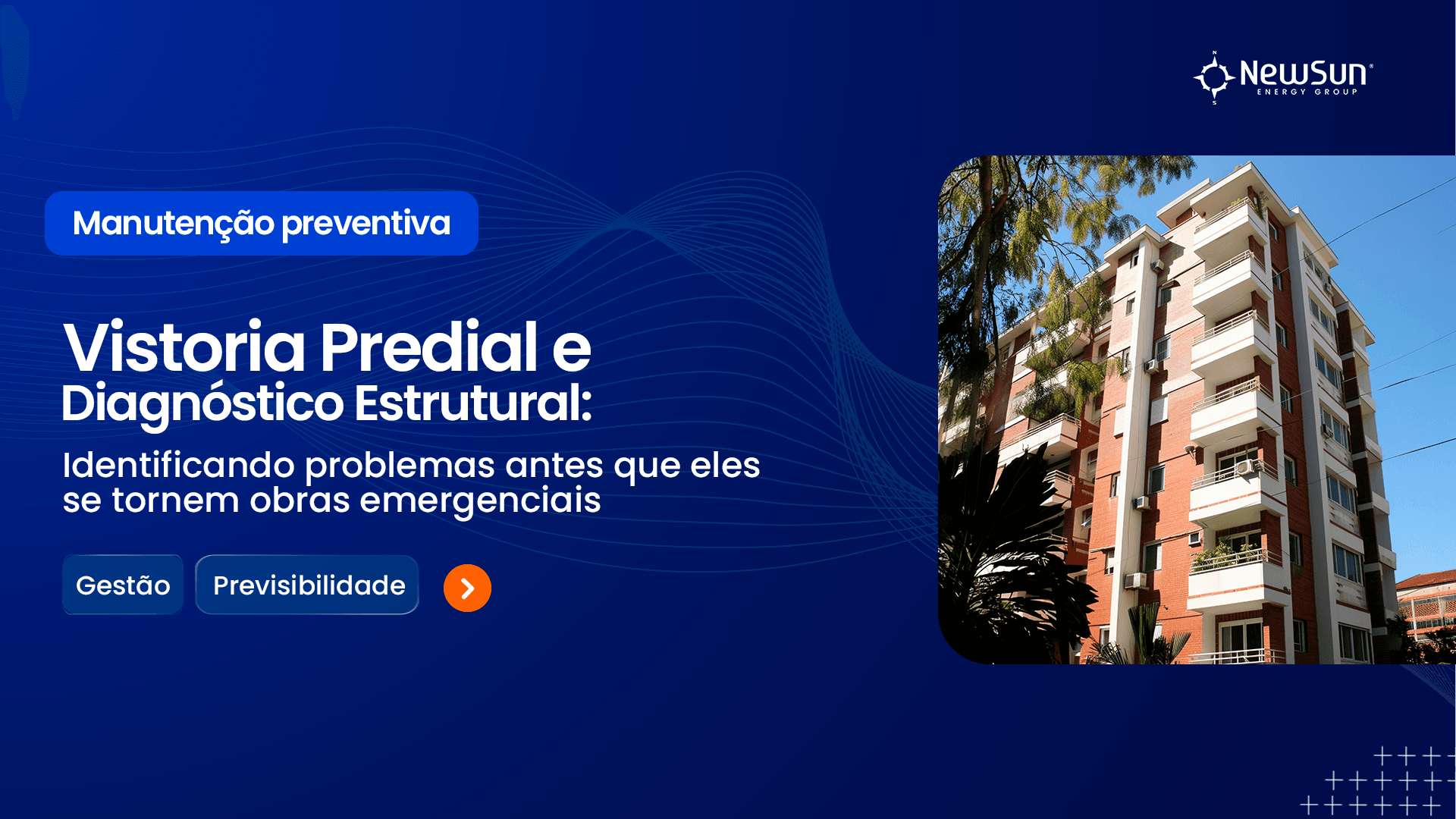
Building Inspection and Structural Diagnosis: Identifying Problems Before They Become Emergency Works
Building Inspection and Structural Diagnosis: Identifying Problems Before They Become Emergency Works
Dicas para Síndicos e PMES
 23/09/2026
 5 min
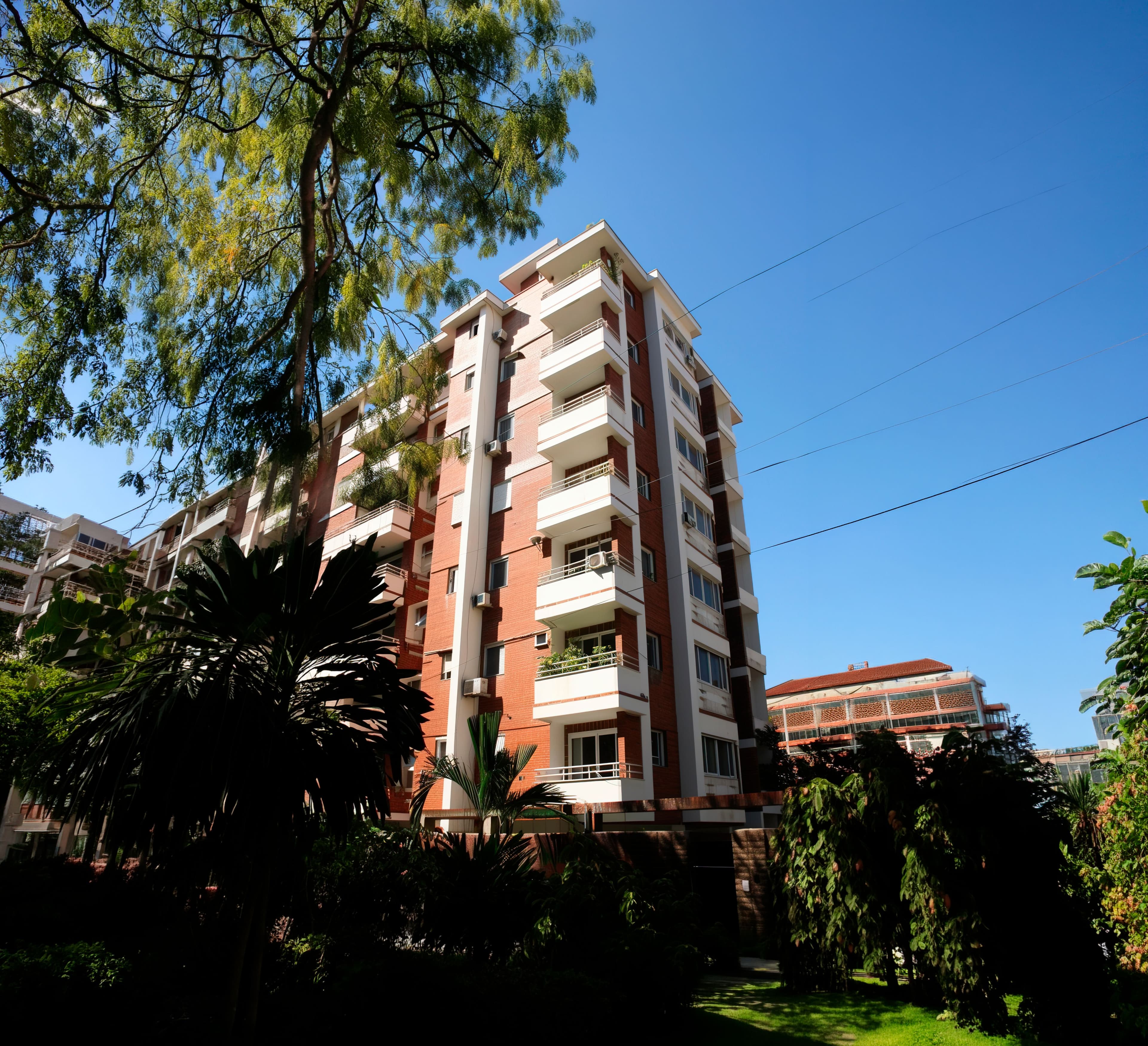
5 minA condominium may go for years without showing any apparent problem. Lifts operate normally, façades appear well preserved and common areas continue to be used without major concerns. However, the absence of visible signs does not always mean that the building is in perfect condition. Often, small deterioration processes happen silently and gradually develop until they become complex and expensive problems to solve.
This is precisely why building inspection and structural diagnosis are considered essential tools for modern condominium management. Far more than pointing out defects or meeting technical requirements, these assessments make it possible to identify risk situations before they affect residents’ safety, compromise the building structure or generate unexpected expenses for the condominium budget.
Preventive maintenance will always be more economical than corrective maintenance. When the property manager can identify anomalies at an early stage, they gain time to plan interventions, seek quotes and carry out repairs in an organised manner. By contrast, when problems are ignored, costs tend to increase significantly as the damage worsens.
That is why understanding the importance of periodic technical inspections is one of the first steps towards preserving the condominium’s assets and ensuring more predictable and safer management.
Why is building inspection so important for the condominium?
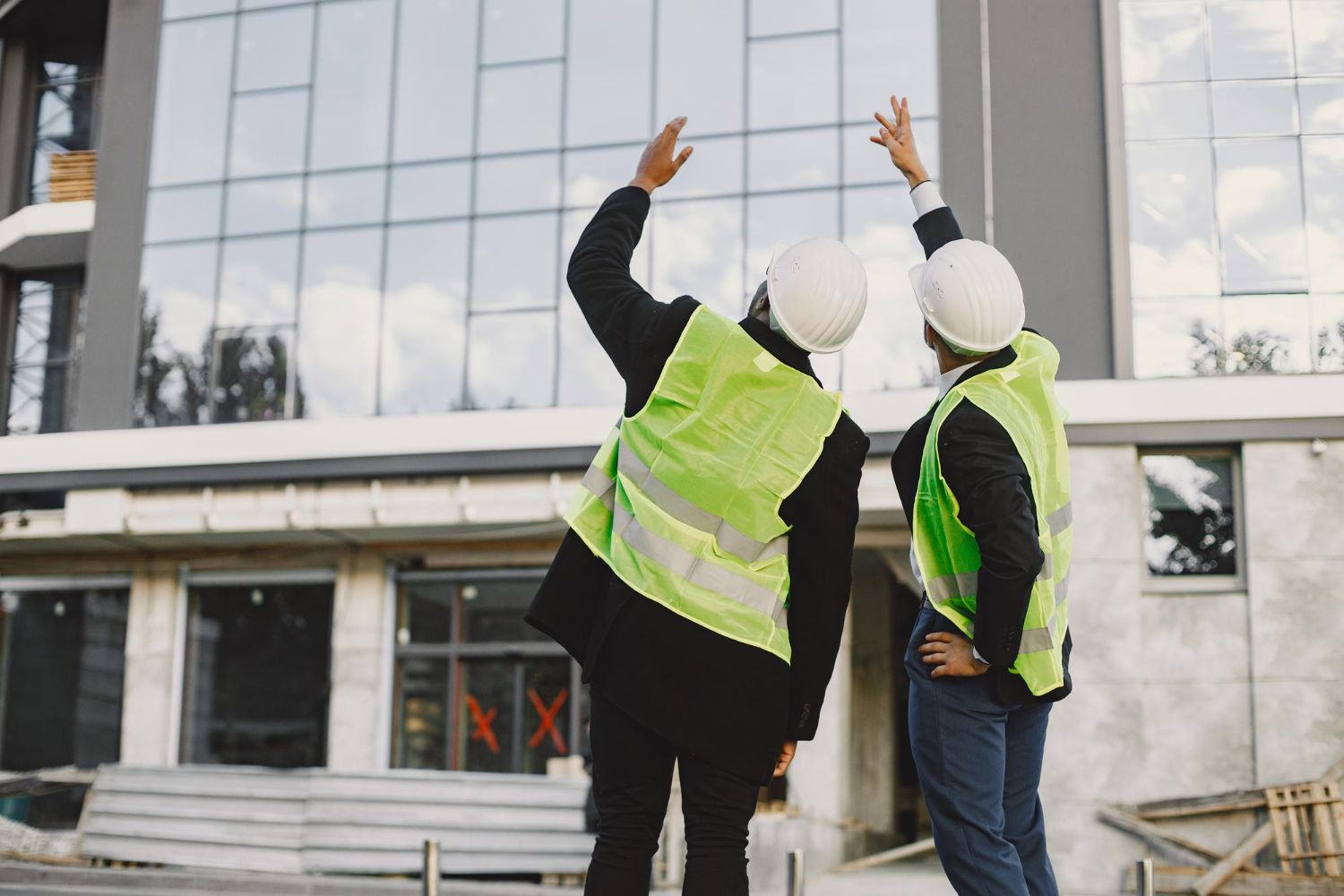
The main purpose of a building inspection is to assess the overall condition of the building and identify possible faults that may affect its performance over time. Although many managers associate inspections only with the identification of cracks or leaks, their scope is much broader.
When carried out properly, the inspection makes it possible to create a complete view of the building’s state of conservation. This helps the property manager understand which problems require immediate attention, which can be monitored over the following months and which investments will need to be considered in future financial planning.
In addition, technical inspection helps increase the service life of building systems. Structures, finishes, roofs, electrical installations and building equipment receive continuous monitoring, reducing the chances of unexpected failures and increasing safety for residents, visitors and staff.
In other words, building inspection should not be seen as an additional cost. It works as a strategic tool to avoid greater losses in the future.
What is structural diagnosis?
While building inspection acts as a general assessment of the building, structural diagnosis has a more specific role.
This process takes place when there is a need to investigate certain manifestations observed during the inspection in greater depth. Persistent fissures, deformations, recurring leaks, reinforcement corrosion and other anomalies may require complementary analyses to identify their real causes.
The aim is not only to verify the existence of the problem, but to understand why it arose, its level of severity and which solutions are most appropriate to correct it.
This stage is essential because many seemingly simple manifestations can have very different origins. A fissure, for example, may be related only to the natural movement of materials or may indicate a structural condition that requires immediate intervention. Without an appropriate diagnosis, any decision risks treating only the symptoms and not the cause of the problem.
For this reason, building inspection and structural diagnosis should be regarded as complementary processes within a preventive maintenance strategy.
Which areas deserve attention during building inspection?
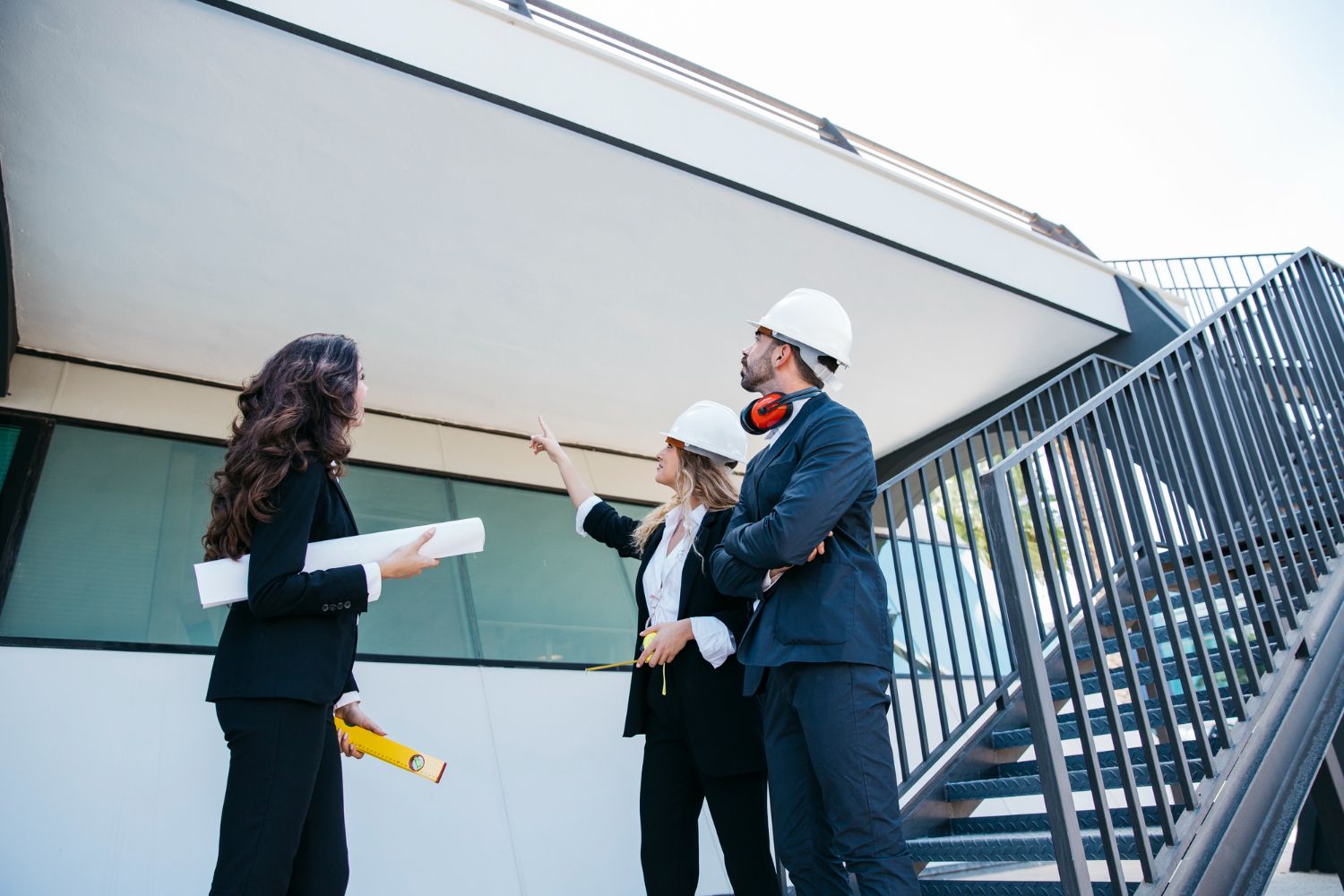
Although each condominium has its own characteristics, there are certain points that normally require special attention during technical assessments.
Building structure
Pillars, beams, slabs, structural walls and the other elements that make up the building’s support system should be carefully observed. Fissures, cracks, deformations, leaks and signs of corrosion may indicate deterioration processes that deserve investigation.
Not every fissure represents a structural risk. However, all of them should be assessed by qualified professionals so that their origin can be properly understood. Ignoring these signs may allow small problems to develop into much more complex situations.
Facades and finishes
The facades are exposed daily to sun, rain, wind and temperature variations. Over the years, these conditions may cause wear to the finishes and compromise their adhesion.
In addition to the aesthetic aspect, detachments pose safety risks and may generate high costs when repairs are postponed. For this reason, periodic observation of façades is part of an important routine for preserving the property’s assets.
Roofs and waterproofing systems
Roofs, roof slabs, gutters, drains and drainage systems are often among the main sources of leaks in condominiums.
Often the problem only becomes visible when the water has already reached internal areas or compromised structural elements. For this reason, preventive inspection of these areas is extremely important to avoid greater damage.
A small failure in waterproofing can result in significant expenses if it is not identified quickly.
Electrical and hydraulic installations
Although they are often associated only with operational maintenance, electrical and hydraulic installations are also part of the development’s structural safety.
Hidden leaks can accelerate deterioration processes in construction elements, while inadequate electrical systems increase the risk of faults, interruptions and even fires.
For this reason, these networks should be included in the general analysis of the building whenever a technical inspection is carried out.
Equipment and systems for collective use
Lifts, pumps, pressurisation systems, automated gates and firefighting equipment form an important part of condominium infrastructure.
In addition to ensuring comfort and safety for residents, this equipment has a limited service life and requires periodic monitoring to avoid unexpected failures.
When should building inspection be carried out?
A common question among property managers relates to the ideal frequency of inspections.
There is no single rule that applies to all condominiums, as factors such as the age of the building, location, materials used and maintenance history directly influence this need.
Even so, it is most recommended that building inspection form part of a periodic management routine and not be carried out only when apparent problems arise.
Older condominiums, buildings exposed to aggressive environments or developments that have undergone significant renovations usually require even greater attention.
In addition, whenever unusual signs appear, such as persistent leaks, recent cracks or noticeable changes in the structure, a technical assessment should be considered as soon as possible.
The logic is simple: the earlier a problem is identified, the smaller its financial and operational impacts tend to be.
Which professional should carry out the inspection?

Building inspection and structural diagnosis should be conducted by qualified professionals with specific technical knowledge of buildings.
In most cases, the work is carried out by specialist engineers or architects in building inspection, expert assessments, construction pathologies and building maintenance.
Depending on the complexity of the condominium, professionals from different areas may be required to assess complementary systems, such as electrical and hydraulic installations or mechanical equipment.
The professional’s experience makes a difference not only in identifying problems, but also in the ability to interpret their severity and propose appropriate solutions.
Opting for superficial assessments or those without technical backing can lead to incomplete diagnoses and mistaken decisions.
Problems that often go unnoticed during inspections
Even in condominiums that carry out regular maintenance, some aspects continue to be frequently overlooked.
A common example is found in technical areas. Plant rooms, reservoirs, pipe manifolds, pump rooms and areas with restricted circulation often receive less attention than they should. Because these places are not part of residents’ routines, small problems may remain hidden for long periods.
Another frequently underestimated point involves expansion joints. When they are not properly maintained, they may allow leaks and accelerate deterioration processes in façades and structures.
Waterproofing also deserves attention. Often the focus falls only on the areas where leakage has already appeared, while seemingly sound regions are not assessed preventively.
In addition, alterations carried out over the years without proper technical supervision may represent silent risks for the building. Drilling, additional installations and structural adaptations carried out by third parties should always be observed during inspections.
How NewSun helps avoid new structural concerns

Many condominiums seek sustainable alternatives to modernise their energy management, but are concerned about the impacts that new installations may have on the building structure.
In this scenario, NewSun’s energy subscription offers an important advantage. As the model does not require equipment to be installed in the condominium, there is no need to carry out works on the roof, structural reinforcements or physical adaptations to the building.
This means that property managers and managing agents also avoid concerns related to the additional maintenance of this equipment, specific inspections of structures installed on the slab or difficulties associated with the ageing of components over the years.
In addition, there is no exposure to risks related to failures in installed equipment, detachment of structures in situations of strong winds or future interventions that could affect the waterproofing and integrity of the building’s roof.
In this way, the condominium can move forward with its sustainability strategy without adding new technical obligations to its building maintenance routine. Find out everything about our energy subscription.
Prevention remains the best investment for the condominium
Building inspection and structural diagnosis are essential tools for any condominium that wants to preserve its assets and reduce risks intelligently.
By identifying signs of deterioration at early stages, management gains the ability to plan corrections, distribute investments and avoid emergency situations that often generate high costs and inconvenience for everyone involved.
More than finding defects, these inspections help build a culture of prevention. A culture that protects residents, strengthens property value and increases the financial predictability of condominium management.
Ultimately, the best time to identify a structural problem is always before it becomes visible to everyone. And that is exactly what makes building inspection one of the most important tools for the future of any condominium.
You may also like
- Dicas para Síndicos e PMES
 23/09/2026
 5m
5m - Dicas para Síndicos e PMES22/09/20265m
- Sustentabilidade e Meio Ambiente21/09/20265m




Stop paying more for your energy bill
Find out in less than 1 minute how much you could save with clean energy every month — no works and no bureaucracy.
Join the energy revolution
Subscribe to our newsletter and receive exclusive content