
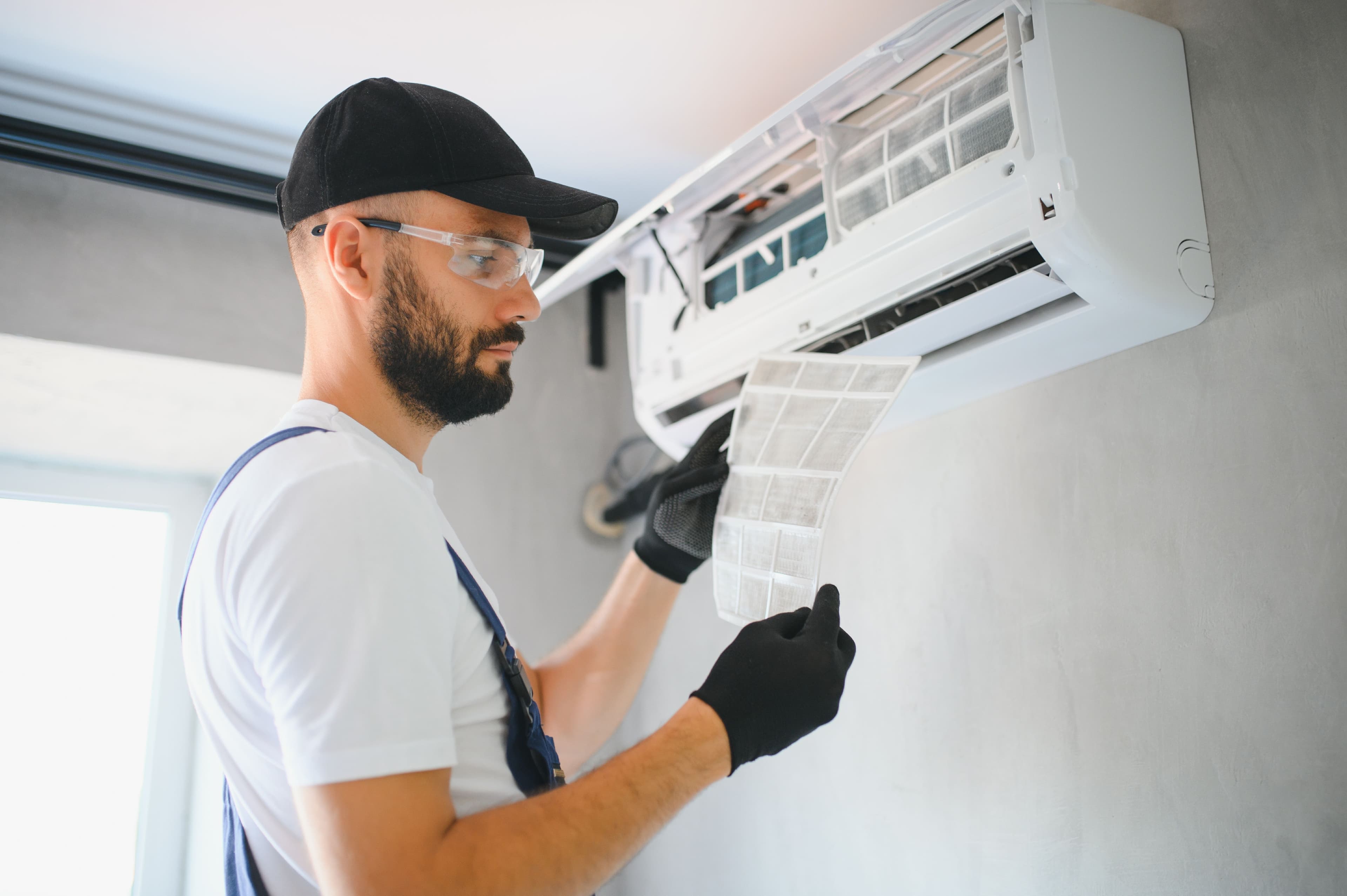
Air-Conditioning Energy Consumption in Condominiums and the Importance of Filter Cleaning
Air-Conditioning Energy Consumption in Condominiums and the Importance of Filter Cleaning
Dicas para Síndicos e PMES
 28/01/2026
 5 min
5 minWith the intensive use of air-conditioning systems in communal areas of condominiums — such as entrance halls, function rooms, air-conditioned corridors and gyms — an important responsibility arises for building managers: maintaining air filters. Dirty filters directly compromise unit performance, increase energy consumption and can affect indoor air quality, with negative consequences for residents' health and the condominium's budget.
Filters are designed to capture dust, particles and contaminants suspended in the air circulating through the climate-control system. When these build up, airflow is reduced and the unit has to work harder to reach the desired temperature. This not only increases energy consumption, as systems with clogged filters can raise electricity costs by up to 15%, but also places greater strain on components such as the compressor and motor — accelerating wear and potentially shortening the system's lifespan.
Another critical point is air quality in communal areas. Saturated filters stop trapping dust particles, pollutants or micro-organisms — such as dust mites and fungi — which are then released back into the air-conditioned environment. This can worsen allergies, respiratory irritation and discomfort for occupants, factors that can lead to complaints from residents and even more serious health issues.
Basic filter maintenance schedule
To ensure efficiency and reduce risks, the technical recommendation is that the air filters of climate-control systems in communal areas be checked and cleaned regularly. In general, this cleaning should ideally take place every 1 to 3 months, depending on frequency of use and environmental conditions — areas with heavier foot traffic or more dust may require monthly.
Cleaning can be carried out by the condominium's maintenance team or by specialist professionals, always following the manufacturer's instructions. In many models, particularly larger systems, filters can be carefully removed and cleaned with water, mild soap or specific solutions, followed by thorough drying before reinstallation. It is also advisable to check coils, drainage trays and fans to ensure the whole system operates effectively.
For building managers, including filter maintenance in the annual preventive maintenance schedule is good practice. A calendar with dates, responsible parties and a history of interventions helps track equipment performance, reduce future costs from emergency repairs and keep energy efficiency high.
Residents' own units
Besides communal areas, it is important to advise residents on the regular maintenance of the filters in their own individual units. The technical recommendation is that these filters be checked and cleaned at least every 1 to 3 months, depending on use, to ensure efficient performance, reduce energy consumption and improve air quality in private spaces.
Building managers can support this preventive education through announcements on the condominium's internal channels, explaining how filter maintenance helps reduce energy costs, extends equipment lifespan and contributes to a healthier environment for everyone.
You may also like
- Casos de Sucesso
 20/10/2026
 5m
5m - Dicas para Síndicos e PMES16/10/20265m
- Dicas para Síndicos e PMES13/10/20265m




Stop paying more for your energy bill
Find out in less than 1 minute how much you could save with clean energy every month — no works and no bureaucracy.
Join the energy revolution
Subscribe to our newsletter and receive exclusive content